

What if your baby were born with cerebral palsy or sickle cell anemia, what would it be worth to you to have stem cells that matched your child exactly? What if your child needed a bone marrow transplant and you could buy stem cells that were a definitive match, how valuable would that be?
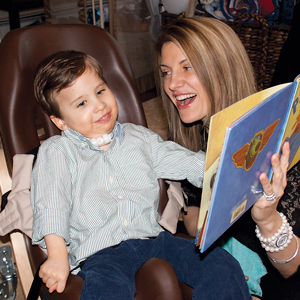
Laura McGrath, a Richmond mother of two, knows the answer. “My pregnancy was normal. Finn was a full-term baby. We did not expect any difficulties. But during labor something happened, his oxygen supply was cut off, and he experienced a brain injury. “The West End mother explained the heartbreaking reality that most of us do not realize – that the lack of oxygen to a newborn affects all the organs – the kidneys, liver, and lungs. Finn was diagnosed with hypoxic ischemic encephalopathy and was given a 30 percent chance of survival. He was on a ventilator for ten days. His Apgar scores were two and four, while normal scores are seven or higher. An MRI showed a severe brain injury. McGrath and her husband were told Finn might have eyesight and hearing problems, mental retardation, seizures and/or cerebral palsy. “We were totally helpless and hopeless,” says McGrath.”We looked desperately for therapies that might help.”
McGrath had saved her baby’s cord blood. “I was aware of the numbers of childhood cancers and the problems with bone marrow matches and just felt it would be a good idea.” On the Internet, she found the stories of Chloe Levine and Sparrow Morris, two babies who had been treated for brain injuries with stem cell infusions. Hopeful now, she contacted the Translational Stem Cell Program at Duke University. She made arrangements to meet with Joanne Kurtzberg, MD, who heads that program, and then the news came: Finn was accepted as a patient.
Utilizing new technologies, technicians at Duke infused Finn with his own cells. Finn at at seven weeks and again at four months, had failed all hearing tests. Hair cells in the ear are susceptible to oxygen deprivation and usually do not regrow if damaged. After his infusions at six months, Finn was able to hear his parents’ voices for the first time.
McGrath adds, “Finn is now an emotionally and cognitively normal, joyful threeyear- old. Physically, he still has effects of cerebral palsy [poor muscle control, constant movement, limited coordination] but we feel he is so much improved from the infusions. And his hearing – now he can hear and react to us!”
When a baby is born, the umbilical cord and the placenta are usually discarded. But they are rich with stem cells – cells that can reproduce and become almost any part of the human body. Researchers have found that when implanted in different organs of the body, remarkable effects can be achieved.Children with cerebral palsy, hearing loss at birth, hydrocephalus, sickle cell anemia, leukemia, severe aplastic anemia, non-Hodgkins lymphoma, neural tumors, brain cancers, and hearing loss are being treated today with infusions of their own cord blood saved from birth. Some have had amazing success.
While cord blood programs have been blood seemed limited, but with advances worldwide in applications, physicians are becoming more enthusiastic.
Victoria Davis, a Richmond OB/GYN says, “What I tell my patients is, while the chances their child will ever have one of these diseases is very unlikely, this is the only chance you get to bank their blood. We don’t know how many other diseases may be helped in the future.” The doctor and mother of three, adds emphatically, “I saved my children’s cord blood.”
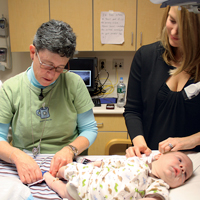
Another success story is that of Parker Hendrix. Amy Hendrix, a marketing specialist for a diabetes specialty care clinic, was in the fourth month of her first pregnancy, when her obstetrician gave her some horrific news. The baby she was carrying had congenital hydrocephalus, a condition that causes the baby’s head to swell with fluids. Her doctor explained that infants born with this condition would have limited mental development and multiple health problems for their entire life. She was told, “Your baby will never develop past infancy.” She says, “I knew what this meant. My Godson had been born with the same condition.I was devastated.”
Because she still had months before the baby was due, Hendrix had time to research her child’s condition. Online she found articles about Duke’s success with stem cell transplants in children with brain-related problems. She said, “I immediately made arrangements to save my baby’s cord blood.” Then she made an appointment with Dr. Kurtzberg at Duke and asked that her baby be accepted into the program.
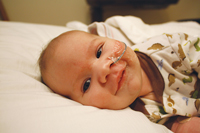
When her daughter Parker was born, there were several immediate problems.Parker needed a shunt to drain excess fluid from her brain; she had nystagmus (a condition that makes the eye quiver continually) and optic nerve hypoplasia (a condition that results from lack of growth of the optic nerves.) ONH is an irreversible condition as optic nerves, much like hair cells in the ear, do not regrow. In addition, Parker could only be fed through a tube inserted into her stomach.
Within a month of her birth, little Parker and her parents were on their way to Duke’s Children’s Hospital for the tiny patient’s first infusion of cord blood.Within three months of the first infusion, her parents saw improvement in her eye movement and focus. After six months the doctors said her eye condition was completely remediated. After the second infusion, they saw major changes in her responsiveness and she began to clap and wave. There was enough cord blood for only three infusions, so her parents decided to save the third infusion for future use. “She is my little miracle baby,” says Hendrix.
The Hendrix family’s miracle baby Parker turned four last year. She is in pre-school and is physically and intellectually on a par with classmates. Her mother attributes these changes and her current ability to the cord blood infusions.
The implications and possible uses of cord blood are remarkable. As this technology, which is currently being studied in more than fifty-six other countries, advances, it may continue to produce medical miracles we cannot yet imagine. In addition to treating some types of brain injury, other research studies in progress now are exploring the treatment of type one diabetes and the notion of cardiovascular repair.
THE PROCESS
During pregnancy, parents choose a cord blood bank. The organization will provide you and your doctor with a collection kit to be used in the delivery room. The placenta and umbilical cord will be saved in that kit and immediately frozen and shipped to the blood bank who will store it for twenty years or longer. It is important that the doctor or midwife delivering your baby is aware of your decision and knows how to harvest cord blood.
CHOOSING A CORD BLOOD BANK
Laura McGrath says, “I decided on Cord Blood Registry because they were the largest and I felt, perhaps, the most stable, with the most sophisticated equipment.” Amy Hendrix had an entirely different reason for choosing the same company, but equally thoughtful.”I wanted the bank to be located in a stable area geographically – so no mudslide, earthquake, or flood could destroy our sample.” Cord Blood Registry’s blood bank is located in Tucson.Hendrix also wanted a well-established company with a long track record.
MORE INFORMATION
For more information on the Duke University Translational Cell Therapy Program, contact Joanne Kurtzberg, MD, at (919) 668-1102. To learn more about Amy and Parker Hendrix visit theturtlemom.wordpress.com
Cord Blood Banks and Donation
While cord blood is a perfect match for its donor, it can also sometimes be a match for other family members, especially siblings. Victoria Davis, MD, of Richmond maintains that although the odds you will ever need the cord blood are still slim, she says banking at least one of your children’s cord blood might prove a very worthy investment. “Blood banked from one child might help another, so you may consider banking at least one of your baby’s cord blood. It can also be a great gift to ask for, or to give to others,” says Dr. Davis.
You can choose from over two hundred private blood banks (see the nonprofit website parentsguidecordblood.org) that will arrange for pickup and storage of your child’s cord blood for a fee: generally, a one-time fee of $1,500 or more, plus an annual fee of $100 or more. If you cannot afford this, there is the option of donating your child’s cord blood to a public blood bank. If you make a public, rather than private donation, it may or may not be available to you in the future, depending upon whether or not it has already been used for another patient.
There is only one hospital in Virginia that is a public donation site, Inova Fairfax, in Alexandria, but your donation can always be mailed in to one of the public banks. The National Marrow Donor Program (NMDP) was selected by the US government to operate the nation’s Cord Blood Coordinating Center. Call 1-800-627- 7692 to arrange for a public bank mail-in donation. Mail-in donations should be arranged before your twenty-eighth week of pregnancy.