
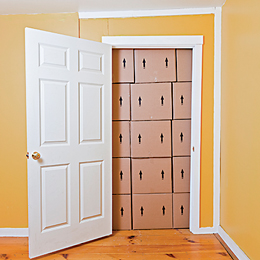
 Jill could see her father’s functioning had been affected by his chronic disorganization and clutter. Some may recognize this set of symptoms as hoarding, but regardless of what you call it, these anxious feelings and behaviors can be debilitating. In fact, hoarding disorder has found its way into the fifth edition of the Diagnostic and Statistical Manual of Mental Disorders and is defined as “persistent difficulty discarding or parting with possessions, regardless of their actual value.”
In hoarding, the accumulation is greater than that of what we call the chronic collector. Possessions fill up active living spaces causing distress and impairment (social, financial, safety) for the hoarder. Just as with Jill’s father, the compulsion to hoard often starts earlier in life but becomes more severe in adulthood.
Hoarding is often considered a relative of obsessive-compulsive disorder (OCD) because many people with OCD exhibit the compulsion to hoard. Hoarders are often perfectionists and have difficulty making what they perceive as the correct decision regarding one item, so they keep everything. Their anxiety is intensified by the thought of discarding something as they become increasingly emotionally attached to their possessions. Those suffering from hoarding disorder often do not recognize that the behavior is a problem and may be non-compliant about getting help, from within the family or outside of it. Sometimes it seems as though the only recourse is to reduce the potential harm for the hoarder, but effective treatment strategies can be implemented with support.
First and foremost, the hoarder must have some control in the situation so they can become invested in treatment. If they feel they are heard, compliance is more likely. Family members can support the hoarder by reframing negative thoughts, letting go of unrealistic expectations and blame, and focusing on solutions. Empower a loved one by communicating in ways that uplift him and allow him to solve his own problems, feel accepted, and make some changes.
In any effective approach, three major areas need to be addressed: processing deficits, maladaptive beliefs about possessions, and emotional distress. Information processing deficits affect the focus of the hoarder as well as related decision-making capabilities. This aspect of hoarding can be addressed with training for problem-solving, decision-making, and organizing. Making decisions with a family member, professional organizer trained in working with hoarders, or a therapist enables the hoarder to have support in learning these skills. The support person can assist the client in sorting, organizing, and discarding items while practicing strategies for letting go. This process can be time consuming, costly, and repetitive but it’s well worth the time spent if new behaviors are learned and they result in lasting changes.
At the same time, the person’s attachment to the possessions and the distress felt when faced with discarding items must be addressed. A therapist can work with the client to process why it’s hard to let go of objects. Some people fear wasting resources, losing valuable information, or parting with sentimental items. Cognitive behavioral therapy to address irrational thinking patterns and replace them with more adaptive thoughts can be effective in reducing the client’s anxiety. In addition, coping skills can be taught to address the intense emotions felt when the client stops avoiding this process.
Oftentimes, people who hoard have other symptoms which need to be addressed. These may include unresolved grief over a loss or trauma, attachment issues, addiction, depression, anxiety, or attention deficits, to name a few. Additional pharmacological and cognitive behavioral treatment strategies may be required to aid in the client’s recovery.
Just like her father is not alone in his disorder, Jill is not alone in dealing with her father’s situation. Between 700,000 and 1.4 million people suffer from hoarding in the United States alone. Self-care and support for both the client and the family is necessary and can be found in many forms.
Notable resources to consider:
Books to borrow or buy
• Buried in Treasures: Help for Compulsive Acquiring, Saving, and Hoarding by David F. Tolin, Randy O. Frost, Gail Steketee
• Digging Out: Helping Your Loved One Manage Clutter, Hoarding and Compulsive Acquiring by Michael Thompkins and Tamara Hartl
• Overcoming Compulsive Hoarding: Why You Save and How You Can Stop by Fugen Neziroglu, Jerome Bubrick, and Jose A. Yaryura-Tobias
• Conquering Chronic Disorganization by Judith Kolberg
• Stuff: Compulsive Hoarding and the Meaning of Things by Randy O. Frost and Gail Steketee
Professional organizers
• Institute for Challenging Disorganization
• National Association of Professional Organizers
• NAPO: Washington DC area
Hoarding-specific websites
• childrenofhoarders.com
• hoardingcleanup.com/virginia
• iocdf.org (International OCD Foundation)