


Snakes. Do you react to this single word with fascination or phobia? Perhaps more than any other pet, a snake can evoke this range of responses. Snakes are not evil, slippery, or slimy. They are smooth, dry, and graceful. There are more than three thousand species worldwide with unique adaptations for survival. Enjoying one of these species as a pet requires some thought and planning. Any pet we choose should be kept in such a way that the life of the pet and owner is enhanced as a result. If someone in the household is truly phobic, it would not be fair to the snake – or anyone else – to keep this pet. If you are curious and willing to learn proper methods of care, snakes are truly incredible.
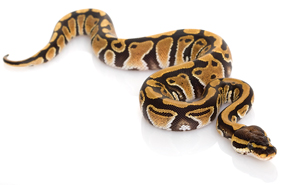
Snakes are successfully bred and raised in captivity for keeping as pets. This is helpful because snakes become accustomed to the housing, handling, and food they will require as your pet. A good pet is a docile, non-venomous species that will not become too large. For example, African ball pythons and corn snakes are good choices.
 A proper snake environment requires careful management. A snake depends on its owners to care for all its needs in a relatively small space. Aquariums with secured wire mesh tops are a popular choice for housing. Within the cage, a decorative item should be provided as a hiding spot. You might opt for something from a pet store or something of your own design, such as a terracotta pot turned on its side. Substrates can be easy-to-clean materials such as newspaper, paper towels, or reptile carpet. Many people prefer something more decorative such as sand or mulch, but these substrates can harbor mold and bacteria or cause the animal’s skin to dry out. If you are a beginning snake owner, you may want to go with the safe and easy choices.
Snakes also require heat. There should be a heating pad or other heat source under a third to half of its enclosure. The temperature should be about ninety degrees Fahrenheit and the snake should be able to fit its entire body over this area. This helps the snake properly digest food and prevents illnesses such as respiratory infections. The heat source should be provided constantly. Incandescent light bulbs can be used for additional heat. The bulb should be placed over the warm side of the enclosure and the temperature should be checked directly under the bulb to make sure it doesn’t get too hot. A snake can receive a serious burn from a heating pad or light bulb that has become too warm.
Snakes should generally be fed about once a week; rodents are the most common food item. Frozen rodents are commercially available as a food source for snakes. For feeding, choose a plastic bin that is large enough for your snake. Place some holes in the lid for ventilation and some newspaper on the bottom. Place the thawed and warmed (in warm water) food and snake inside the bin and cover securely. The snake will anticipate that the plastic bin means feeding time. Leave the snake alone to eat and when finished replace the snake in his environment. Generally check on the snake in an hour, and if the food item is not consumed within several hours, it should be discarded. The feeding bin is easily cleaned and disinfected, and the snake’s regular environment remains clean.
Moisture and humidity needs are important and can vary from species to species, but fresh water should be offered daily. Ideally, the water bowl should be large enough for the snake to curl up and soak. Additionally, moisture can be provided with what’s called a humid hide, a plastic bin with a cover. A hole is cut in the side so that the snake can enter and exit. Fill it with Sphagnum moss, available at the pet store, and mist it to provide humidity. Regular hiding spots or furniture should be removed so that the snake has to use the humid hide, which can be offered as needed to keep the snake’s skin and scales healthy and to help the snake shed.
Shedding occurs as the snake grows. This is the removal of the external skin and scales, and occurs in one large piece. A young, fast-growing snake will shed more often than an adult. Prior to shedding, the eye caps will turn opaque and whitish blue in color. During this time, the snake cannot see, it may be less willing to be handled and food may also be refused. It is acceptable to skip the weekly feeding if your snake is preparing for or is actively shedding.
Pet snakes are docile and can become accustomed to handling. In the absence of arms and legs, these animals naturally want to curl around you or be supported by you. You are responsible for making sure the animal doesn’t fall. But, do not let the snake wrap around anyone’s neck or torso. With proper feeding and care, however, a snake can become a valuable member of your family.