


It was 1986 when Sharon Ledford of Hopewell became a mother. Her son, Justin, was born by cesarean section that January, healthy and robust at 7 pounds and 14 ounces. Like most new parents, Sharon was looking forward to the milestones to come: first words, first steps, all the exciting discoveries of a new life.
“I was ecstatic,” she says. “I was thrilled to be a mom.”
When Justin was six weeks old, Sharon returned to work. With her husband working days, she opted for the overnight shift at a nearby gas station so that one of them would always be with their baby.
Early one morning, as she was finishing her shift, Sharon was notified by a coworker that she needed to get home because “something was wrong with Justin.” She raced to the house, and then to John Randolph Hospital, where she was told her son was being transferred to MCV with a serious head injury. When she finally arrived at MCV, she was completely horrified by what she saw.
“He was strapped down, with IVs in his little legs and arms,” she says. “His eyes were taped closed, and his bed rocked back and forth to keep the fluid from pooling in one spot. He had no covers on, but I couldn’t hold him.”
Sharon’s husband told her that Justin had rolled off of their waterbed, landing headfirst on the hardwood floor. The medical staff said the damage to his brain was substantial, and that Justin might not make it.
The next three days were a blur. Sharon watched over her tiny son, feeling helpless and worried about what the future held.Then a physician approached her with a question that stopped her cold.
“He looked me in the eye,” Sharon recalls, “and he said, ‘You know this baby didn’t fall off the bed, don’t you?’ I just looked at him, and he said, ‘Come with me. Your husband is going to tell you exactly what happened.’”
She was led to a room where two police officers and a hospital chaplain waited, along with her husband. As she sat down across from him, he explained that on that fateful morning, he had been awakened by Justin’s crying. He couldn’t explain why, but he confessed that he had picked his son up and shaken him violently–until he stopped crying, until he stopped breathing.
“I stood up and tried to get across the table at him,” Sharon says. “The police had to restrain me and calm me down. I just couldn’t believe it.”
How It Happens, What It Does
What we now call shaken baby syndrome was first noted as early as the forties, when radiologists began seeing serious internal head trauma in infants with no apparent external impact (as from a fall or a blow to the head). Advances in medical imaging over the next several decades showed that infants who had been violently shaken presented with the same three symptoms: bleeding in the retinas of the eyes, bleeding under the dural matter of the brain (a subdural hematoma), and swelling in the brain. Those findings now help physicians determine when a caretaker’s explanation for a child’s head injury may not be truthful.
Shaking incidents are usually triggered by the infant’s cry, which the parent or caretaker may have trouble quieting.Sleep deprivation and inexperience with childcare can often contribute to the frustration, leading to a fleeting impulse to shake the child.
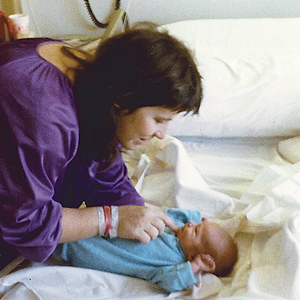
A baby doesn’t have to be shaken very long or hard to experience devastating health consequences. Compared to adults, babies have very heavy heads, weak neck muscles, and delicate blood vessels in their brains. This combination means that even a few seconds of frustrated shaking can send their brains bouncing violently around in their skulls, injuring brain tissue and causing bleeding and swelling that bring even more damage.
The immediate consequences may include respiratory arrest, seizures, loss of consciousness, or vomiting. Long-term consequences – in the babies who survive – may include blindness, physical disabilities, intellectual disabilities, and lifelong seizures.
There is currently no method to collect Specific data on the prevalence of this kind of injury, but research by the National Center on Shaken Baby Syndrome suggests that up to 1,300 cases occur annually. Locally, this year alone, shaking was cited in the death of a four-month-old Henrico boy in February and a six-week-old Chesterfield boy in March.
Justin’s Recovery
Justin spent nearly two months in the hospital after his injury, and the prognosis when he was discharged was bleak.“They said the damage was so bad that he would be blind,” says Sharon.
“They said he would never walk, talk or recognize his family members. They recommended that I put him in an institution, but I said no. I said, ‘I’m taking him home with me, and we’ll see what happens.’”
Justin went to therapy three to five times each week for years, working on everything from sitting up to grasping toys to speaking and eating. Sharon says that his progress gave her a reason to be grateful for something she never thought she’d see as silver lining.
“I’m actually glad that this happened when he was so young, if it had to happen,” she says. “If he had been hurt that badly later in life, I would worry that he might be bitter about all the things he couldn’t do anymore.”
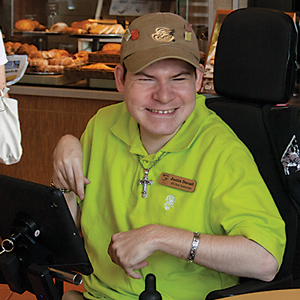
Now 27, Justin has worked as a greeter at the Panera in Colonial Heights for
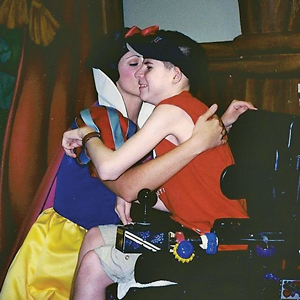
five years. He uses a wheelchair to get around and welcomes customers as they come in by hitting buttons on his iPad that bellow friendly greetings. In his off time, Sharon says he loves to go to country-music concerts, ride in cars with the windows down, and take vacations at Disney World.
“He’s taught me a lot about tenacity,” says Sharon. “If there’s something he wants to do, he will keep trying. For him to have the disabilities he has and the attitude that he does is awesome. He smiles and he’s happy. I love that about him.”
Justin’s father was charged with malicious wounding of a child and was given a five-year suspended sentence. When he failed to comply with the terms of that sentence (including child support, continuous employment, and ongoing counseling) he was ordered to serve the final two years in prison.
“I still can’t believe that’s all he got for all he took,” says Sharon. “But I can’t hold on to anger. It doesn’t do me any good, or Justin either.”
Sharon has a Facebook page about Justin’s experience and his life today (facebook.Com/ShakenBabySurvivorJustinDuvall). She hopes not only to raise awareness and prevent future injuries, but also to offer hope for parents raising a child with a brain injury.
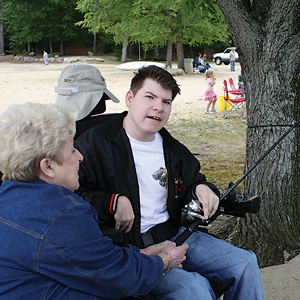
“Don’t let doctors tell you what they [the child] won’t do,” she says. “Everything Justin does is something that doctors said would be impossible. Kids will let you know what they can do. Just love them, and see for yourself.”
And what about parents who worry that their frustration with a child could lead to harm?
“Get help,” she says. “Put that baby down, walk away, and ask someone to help you.”
The Period of PURPLE Crying
Many hospitals now offer an abuseprevention program developed by the National Center on Shaken Baby Syndrome. It’s called “The Period of PURPLE Crying,” and it’s meant to show new parents that infant crying may seem unbearable at times, but it is normal and it won’t last forever.
Here, the word “purple” spells out what to expect when caring for an infant:
Peak of Crying: Crying peaks during the second month, then decreases during months three to
five.
Unexpected: Crying may come and go unexpectedly for no apparent reason.
Resists Soothing: Crying may continue despite all soothing efforts by caregivers.
Pain-like Face: Infants may look like they are in pain, even when they are not.
Long lasting: Crying can go on for 30 to 40 minutes at a time, and often for much longer.
Evening: Crying may occur more in the late afternoon and evening.
But even when you know it’s normal and that it does end eventually, prolonged crying from your baby can be very hard to take. If an infant is inconsolable and you are close to losing your temper:
• Put the baby down and get some distance.Step outside if you need to.
• Remind yourself that this is normal and it will pass. Your baby isn’t trying to give you a hard time.
• Call a friend or family member who can come and take over for a bit.
• Call the National Child Abuse Hotline at (800) 422-4453, and ask to speak to a counselor who can help you calm down.