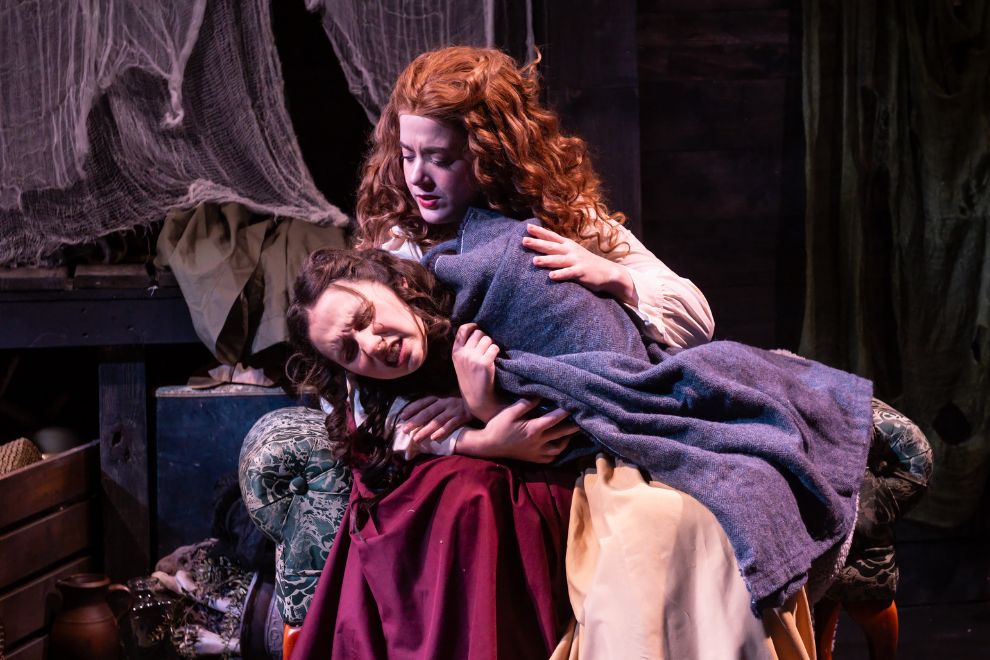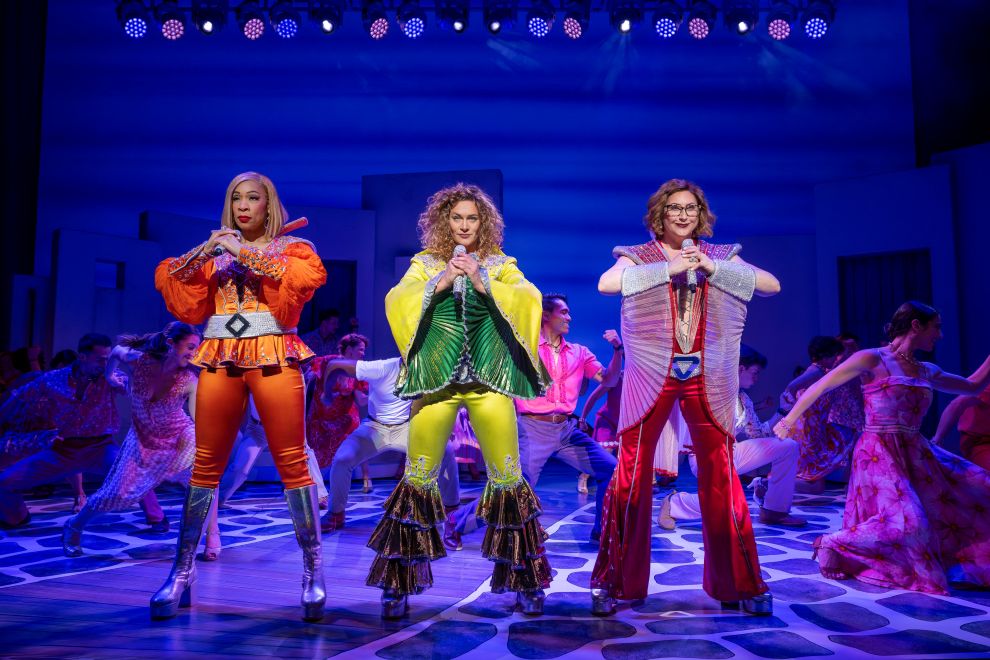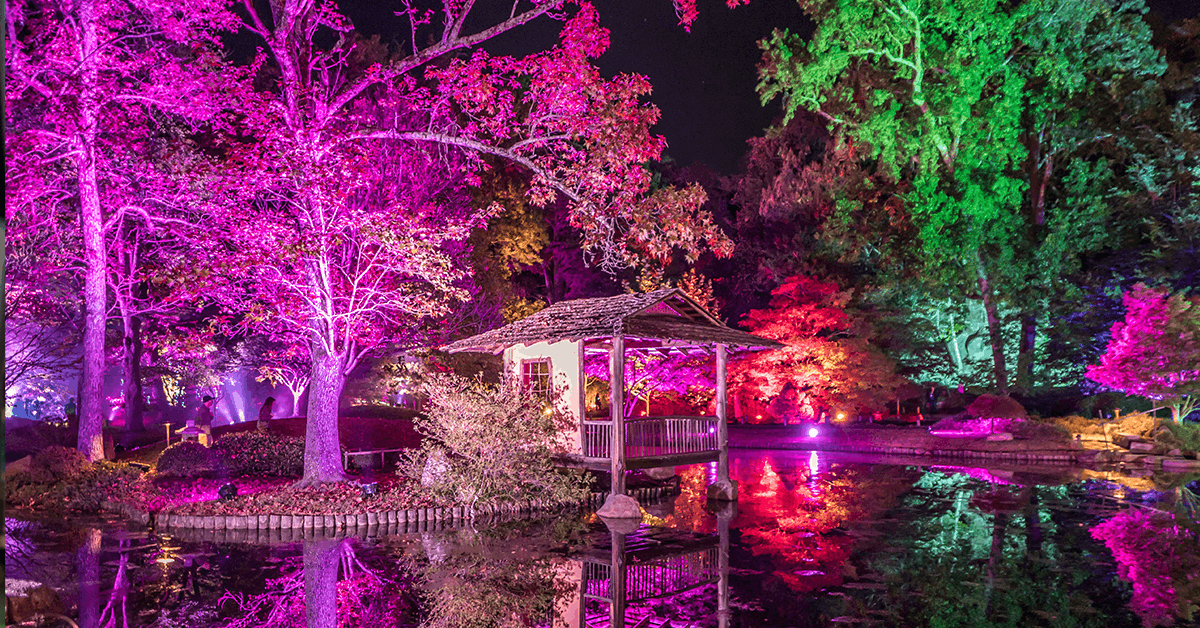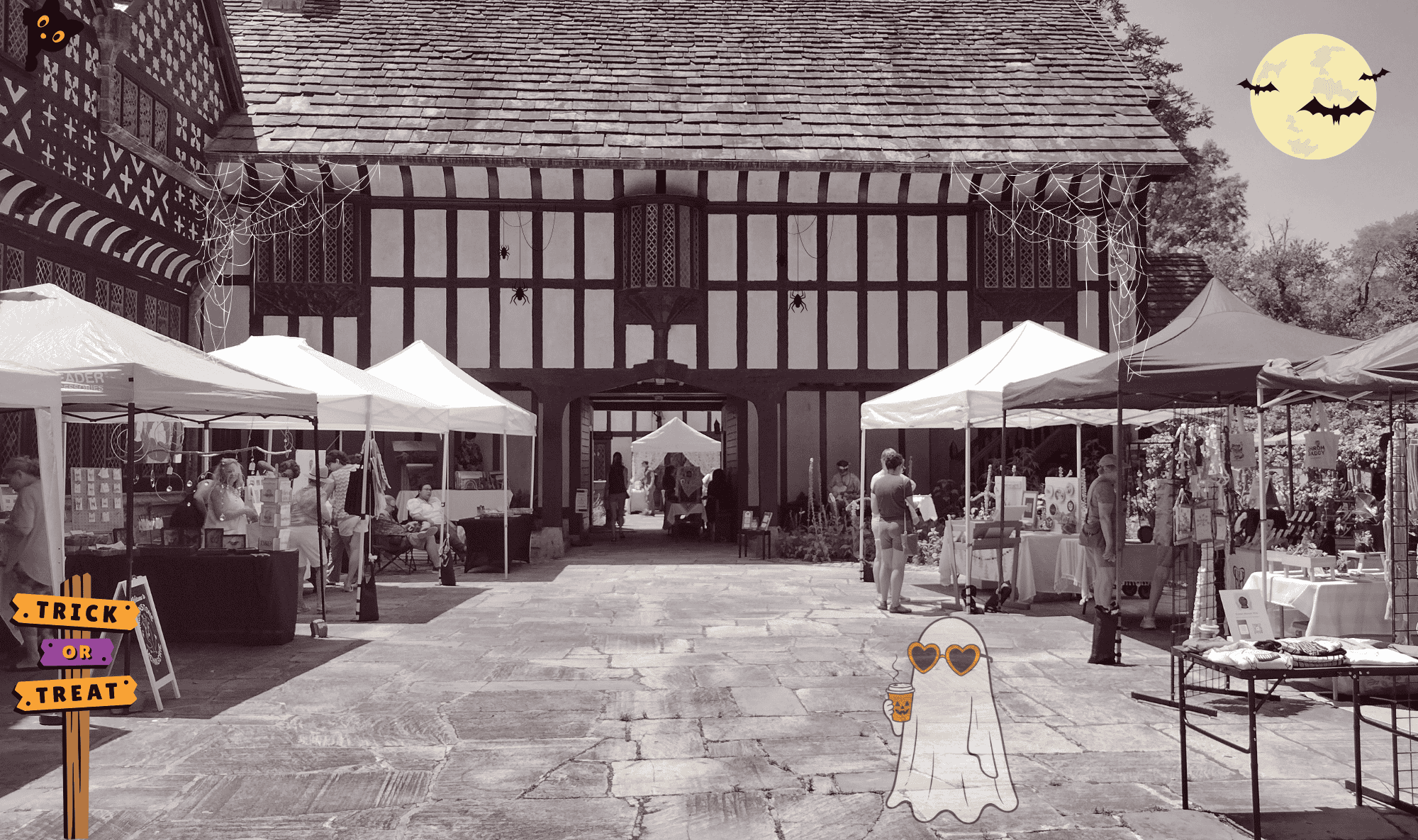


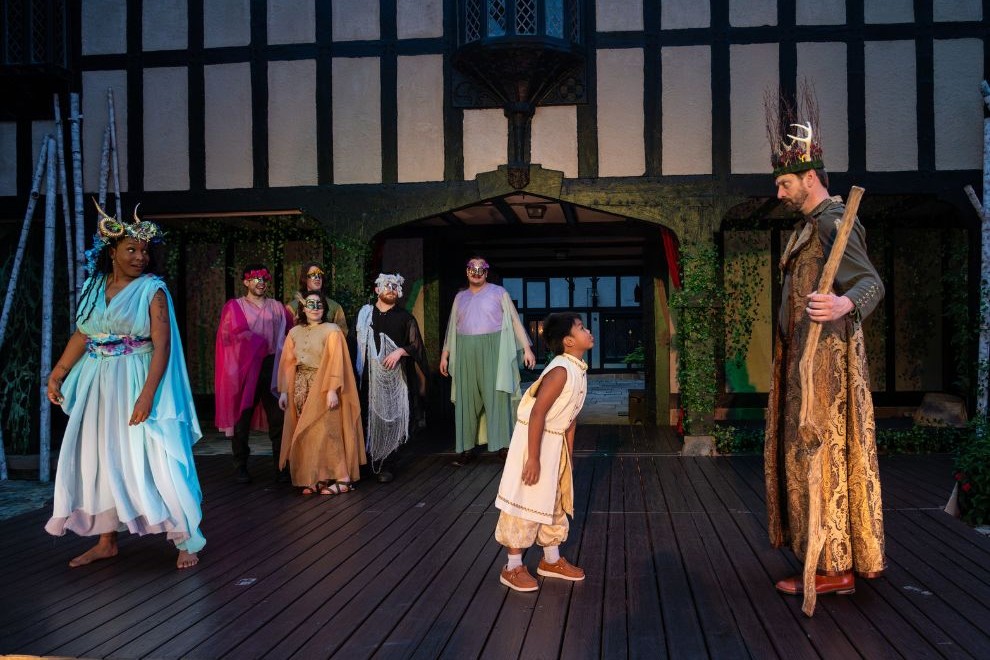
Most productions of A Midsummer Night’s Dream have to rely primarily on scenic and sound design to create the atmosphere of a summer evening filled with magic and mischief. At the Richmond Shakespeare Festival, the environment lends a helping hand. Agecroft Hall’s open-air stage envelops you in the story as the sun sets and the crickets start to chirp. It’s always a great place to watch Shakespeare, but this combination of story and venue is special. The onstage greenery mingles with the flower beds at the sides of the stage, and the sunset fades into the purple and green and red of the stage lights. The overall effect elevates this already impressive production of A Midsummer Night’s Dream into a can’t-miss piece of theatre.
Adapting the Spirit of Shakespeare
Richmond Shakespeare completely embraces the silliness, rowdiness, and vibrancy of the material, prioritizing the feeling of Shakespeare’s comedy over perfect faithfulness to his script. They respect the work by making choices that maximize its funniness and meaning for their audience. A Midsummer Night’s Dream is a lot: there are a lot of characters and plots, and it moves at a strange pace. I’ve been fortunate to see several excellent productions of this play over the years, but the performance I saw from Richmond Shakespeare this summer felt like the first time I really got it. Characters and storylines that seemed less compelling to me in the past came alive and really made me laugh.
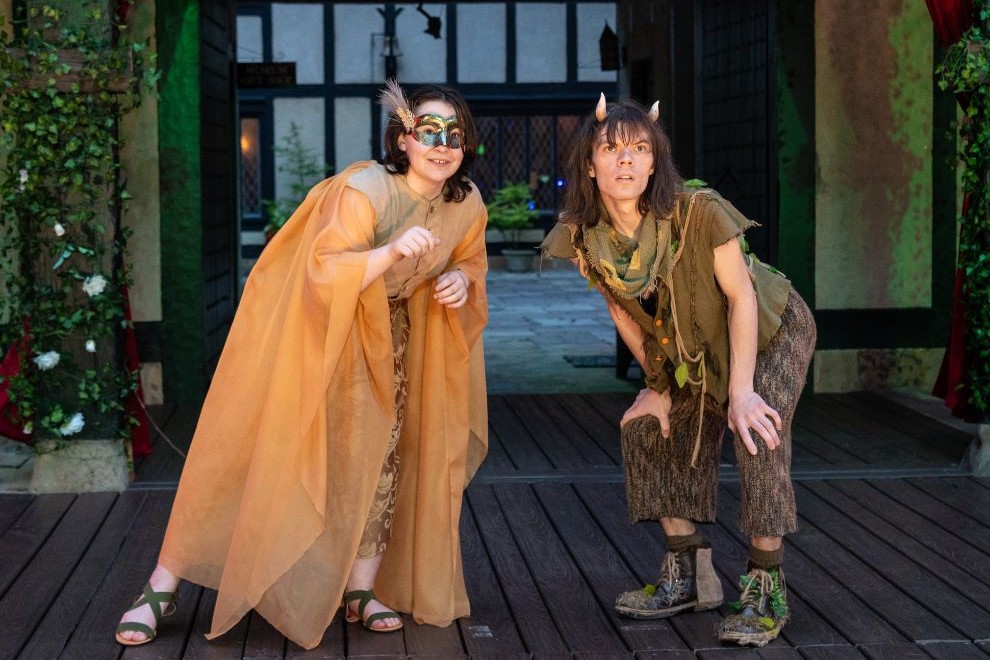
This production, under James Ricks’s direction, approaches A Midsummer Night’s Dream in an accessible way that highlights the best things about the play. It picks a time and place that allows the characters’ costumes and mannerisms to serve as a more useful shorthand for the audience, but these choices enhance rather than distract from the story at hand. It uses those tools in an unobtrusive way to communicate quickly and effectively to the audience things like social status and who’s cool and who’s a nerd in Shakespeare’s Athens. It’s easy to follow the cadence of everybody’s speech and catch every word. There are lots of great moments where the players will deliver lines and tell jokes in disarmingly modern and familiar ways—using both Shakespeare’s words and their own.
No Small Roles
The show boasts an extremely silly, very talented cast. As the story unraveled, I felt like I was constantly discovering more of what they had to offer and how much rambunctious energy they could bring. Many of them sing beautifully. Jianna Hurt and Elle Meerovich give two particularly memorable vocal performances: Hurt’s because their gorgeous vocals and beatific expressions make Titania’s humorous infatuation feel so earnest, and Meerovich’s because they so effectively deliver a performance that both showcases their chops and embraces the play’s absurdity. I enjoyed the jukebox energy the songs brought to the production.
Paisley LoBue is exceptional as Helena, and probably made me laugh out loud more than I’ve ever laughed at a live performance. She completely embodies the experience of having an excruciating crush and thinking your friends are being mean to you. She radiates self-consciousness and despair and desire, flinging her voice, flinging her hands, flinging herself across the stage. Her Helena reminds me of a cartoon character; she is astonishingly funny. Meerovich and Erica Hughes are scene stealers that use every resource at their disposal to make their scenes feel larger than life. I also really appreciated Arik Cullen as Oberon: I thought his performance added more to the character than I had seen before. His combination of poutiness and authority was great—and I enjoyed his reality-TV-audience investment in the mortals’ drama. Abe Timm is a great Puck who embraces the trickster character’s goblin side and brings a lot of compelling movement and energy. Nobody blends into the background of this production, and every person onstage is bringing something to the scene.
A Magical Atmosphere
What nature provides around the courtyard at Agecroft Hall is definitely enhanced by the show’s scenic, sound, and light design. These elements are employed with a light but thoughtful hand. The different magic sounds are effective, and the timing is phenomenal. Especially when the magical characters are setting people to sleep, the sound and actors’ movements work in tandem—it really feels like they’re pulling the consciousness out of the Athenians. I also loved the costuming choice to have Lysander, Hermia, Demetrius, and Helena—the figures in the play’s love square—lose their outer layers as the play goes on. It imbued the production with an increasing sense of frenzy and chaos. And A Midsummer Night’s Dream is raunchy! This production tells Shakespeare’s suggestive jokes, and it also does well highlighting the implicit undertones and social risks of situations like the young Athenians being found together in the woods.
The atmosphere of the Richmond Shakespeare Festival is wonderful. Like many other theater goers that evening, my parents and I arrived early at Agecroft to enjoy a picnic in the grass and listen to monologues. It’s an opportunity to celebrate the sticky, beautiful Richmond summer as well as a fantastic theatre experience. I honestly can’t recommend this show highly enough; I loved it. I laughed so much and relished in the messiness. I really felt like part of a tradition of people enjoying Shakespeare’s weird and funny story—surrounded by other people enjoying it with me—in an open, energetic outdoor venue.
A Midsummer Night’s Dream runs through Sunday, July 27 at the courtyard at Agecroft Hall. These outdoor performances are subject to weather-related cancellation, so make sure to review the policy and check the forecast. The show is in two acts with a 15-minute intermission. More information and tickets can be found here.