
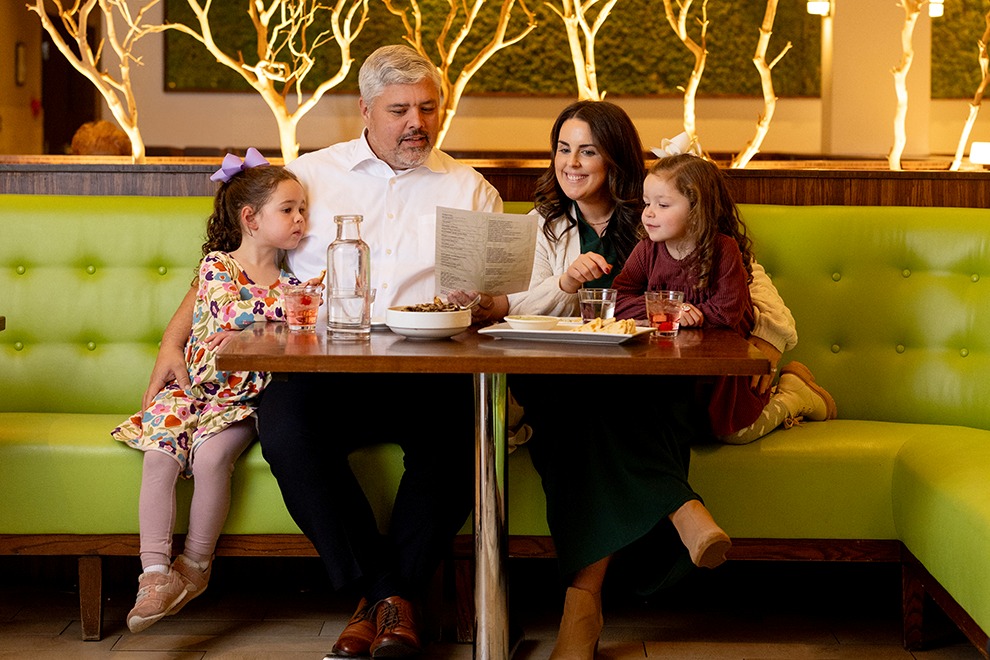
My family loves going out to eat. We enjoy trying different foods, not having to cook or clean up, and visiting new restaurants. It might seem easy to just hop in the car and go since we’re past the days of toting a diaper bag around, but we can’t be completely carefree. We still have to remember to take a different bag with us: the one containing my son’s AUVI-Q epinephrine injectors.
We found out about Luca’s peanut allergy in 2021 when he was about 1 year old. Since then, we’ve had the responsibility of bringing his medication along wherever there might be food present, alerting people about his allergy, and keeping a watchful eye over anything he eats. Now that he’s 5 years old, I’m glad he’s learned to be cautious of new foods on his own, asking, “Does this have peanuts?” before taking a bite.
Managing Luca’s peanut allergy has been a big adjustment, but I know we’re not alone. According to Food Allergy Research & Education (FARE), food allergy prevalence among children has increased—up 50% between 1997 and 2011 and again up by 50% between 2007 and 2021. Currently, more than 33 million Americans have life-threatening food allergies, which includes one in 13 children.
Many families with food allergies prefer to cook their own food at home because they’re better able to ensure their own kitchen is free from food allergens. When dining out, there are a lot of factors you can’t control and a lot of unknowns. What ingredients are in a dish? What allergens are present in the kitchen? What allergens have utensils and cookware come in contact with? But with enough preparation, clear communication, and an allergy-aware restaurant staff, it is possible to stay safe when dining out with food allergies.
Food Allergies, Explained
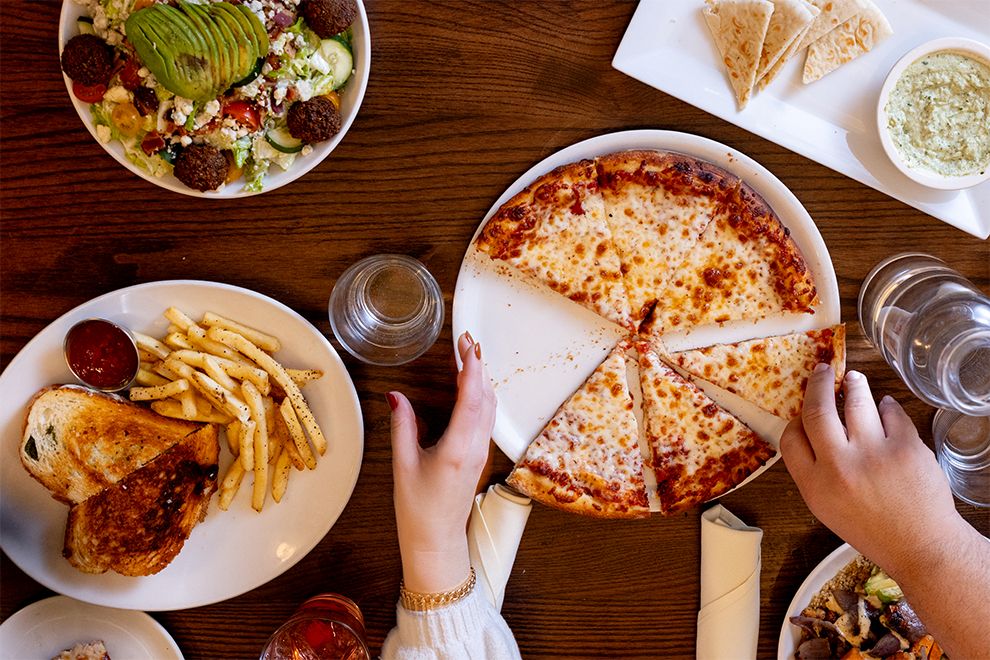
According to FARE, a food allergy happens when a person’s immune system overreacts to certain foods. The most serious allergic reaction is anaphylaxis, which often involves swelling, hives, lowered blood pressure, and in severe cases, shock. If anaphylactic shock isn’t treated immediately, it can be fatal. There are currently nine major food allergens recognized in the U.S., with peanuts, milk, shellfish, and tree nuts being the most common among children.
Dr. Kelly von Elten of RVA Allergy has been a board-certified allergist for 12 years. She explains that people typically get diagnosed with food allergies as children, when parents are introducing new foods between the ages of 6 months to 1 year. Some allergies, like milk, egg, and wheat, are more likely to be outgrown by the time a child turns 5 or 6, while other allergies like peanuts and tree nuts are less likely to be outgrown. “People who have other types of allergies are more likely to have food allergies,” says von Elten. “If one has eczema or asthma, that patient is more likely to develop what we call an IgE-mediated food allergy, different from intolerance. So, in families where there are some allergies in general, whether it’s environmental or skin conditions, I’d be a little more alert for food allergies.”
Kathy Argel, a mom of two in Chesterfield, has seen a huge change in allergy awareness over the past 20 years. Her kids, Tristan and Nina, now 19 and 23, were both diagnosed with food allergies as toddlers. She recalls that when her kids were growing up in the early 2000s, it was challenging because many parents didn’t know about food allergies. “As a mom, I had to educate the parents at school, and a lot of them were not accepting of it,” says Argel. “They didn’t feel that they should avoid bringing peanut butter into the classroom. They didn’t understand the consequences.” She shares that today it’s very different because there are more support systems available, even noting, “There are a lot of parents who set up foundations because their children have died from food allergies, and it gave them that stepping stone to speak out and advocate for every child.”
Staying Safe When Dining Out
Food allergies should always be taken seriously, especially when dining out. FARE has a helpful downloadable guide, “Safely Dining Out with Food Allergies,” on their website which has great tips for families. Key recommendations include picking an allergy-safe restaurant, preparing before you go, and telling the restaurant staff about your allergy so you can eat safely.
Choosing an Allergy-Safe Restaurant
Dr. von Elten recommends that a person avoid their allergen(s) as much as possible. For example, if someone is allergic to cashews, they might want to avoid dining in restaurants that use cashews heavily in their cuisines, such as Indian or West African restaurants. Similarly, if someone is allergic to shellfish, they might not want to visit a seafood restaurant.
Even if a person is careful to only order food that doesn’t contain the allergen, there’s still a chance they could be accidentally exposed through cross-contact or even just the presence of the allergen in the restaurant. FARE suggests avoiding restaurants with a high risk for allergen exposure such as buffets where many foods are close to each other, bakeries where items are not individually wrapped, and eateries with pre-made foods that have ingredients the staff may not be familiar with.
Families managing food allergies often turn to online groups for advice when it comes to choosing a restaurant. There are Facebook groups specific to the Richmond area like NNMG Food Allergic Families of Richmond, VA and Richmond Food Allergy Support Group. There are also groups that aren’t geographically defined, such as Dining Out With Food Allergies.
Dionne Kumpe, a mother in the Far West End, is well aware of these food allergy support groups. Her son John is 16 and has life-threatening allergies to peanuts and tree nuts. When he was younger, their family mainly went to national chains like Red Robin, McDonald’s, Maggiano’s, and MOD Pizza when dining out because they knew what to expect in terms of allergy-safe items on the menu. Kumpe found that learning how national chains handled food allergies helped teach her what to expect and what to ask for when dining at smaller local restaurants.
Kumpe also found that there are proactive measures some restaurants take to accommodate food allergies, which can signal that it’s most likely a safer place to eat. For example, a server might ask before taking food orders whether there are any allergies at the table. Labeling is also helpful. She recalls visiting an ice cream shop that had signs next to each flavor indicating whether it contained nuts, gluten, or dairy. The staff there even used designated scoops for the different flavors and sanitized the scoops in between uses.
One of the things that makes Argel feel more comfortable dining out with allergies is when a manager says that they’re going to personally handle the meal and discusses how they’re going to prepare it. Some restaurants have designated kitchen areas where they prepare food for people with allergies, using different cooking utensils that may be color-coded to prevent cross-contact. Some have different fryers and can use a cooking oil free of one’s allergen. “That’s what makes it more reassuring: when the manager is very educated [about allergies], and they have systems in place to make you feel comfortable, and they even check up on you throughout the meal and show a very genuine sense of understanding the need to keep it safe,” says Argel.
Sometimes, though, avoidance may be the best option. After arriving and reviewing the menu, if you don’t feel comfortable dining in a restaurant with your allergy, there’s nothing wrong with politely telling your server that you need to leave. Dr. von Elten acknowledges that like most health issues, a lot depends on an individual’s risk tolerance and how comfortable they are with a restaurant’s procedures.
“It’s important to remember that an allergy is a serious medical condition and your safety is what matters most.”
Planning and Preparation Is Key
Bringing your own food to a restaurant or an event can also be a way to avoid allergens, especially with toddlers. Keshia and Gregory Brown live in Chesterfield with their 2-year-old daughter Gabby, who is allergic to eggs, peanuts, and tree nuts. “If we go somewhere, especially birthday parties, we try to take a cupcake that’s vegan, that we know doesn’t have egg in it,” Keshia explains. “And whenever we go [to a restaurant], I try to look at the menu to see if there’s something she can eat before we go. But for the most part, we just try to go or bring food if we aren’t confident in what’s being offered.”
When kids move beyond toddler age, however, bringing one’s own food to a restaurant isn’t usually an option. Argel and Kumpe have both pre-screened restaurants by looking at their menus online and also called to ask how allergies are handled at the restaurant. This pre-planning can help avoid the disappointment of arriving at a restaurant and finding out that their allergy practices don’t meet your needs. Just remember to call during a day and time when the restaurant isn’t busy, ask to speak with a manager, and have a list of questions prepared.
Another resource is the downloadable chef card on the FARE website. It can be filled out to list the items that someone is allergic to, carried in a purse or wallet, and shown to a restaurant’s chef or manager. The downloadable card is available in English, Spanish, Chinese, Italian, and other languages.
Even with careful preparation, there’s always a chance something may go wrong. Dr. von Elten recommends that one should always be prepared for an allergic reaction. Having a plan in case of a reaction is important, which should include carrying an EpiPen or other epinephrine system, understanding when and how to use it, and knowing where to go afterwards, which is usually the nearest hospital emergency room.
Communicating About Your Allergy
When dining out, Dr. von Elten recommends that one of the first things people do is tell the staff and servers about their food allergy. In addition to asking whether an item on the menu contains your allergen, you can also ask how the food is prepared and whether there is any cross-contact in the kitchen that may introduce your allergen into the food.
The Browns are no strangers to this process. Because of Gabby’s egg allergy, any fried food can be questionable. They always ask about ingredients in the batter or breading and whether it was made with egg. When in doubt, they typically order something plain for Gabby like grilled chicken, since they know it should be free from egg.
“When it comes to desserts, we have to check,” Keshia explains. “A lot of people don’t know that ice cream can be made with eggs. And if it’s a granola or some oatmeal, that could have nuts in it, so it’s just really hard.”
Asking where your food is being prepared can also be important. For example, someone with a shellfish allergy might ask if their chicken would be cooked on the same grill as seafood. Dr. von Elten acknowledges that these types of questions can be difficult. “It’s hard, because there’s a level of trust that has to go into it when someone else is making [the food],” she says. “But doing your best to communicate clearly what the allergies are and that it’s a life-threatening food allergy helps people take it seriously.”
When a child becomes a teenager, they often take a larger role in advocating for themselves in terms of their allergy. “We want them to be safe and have some freedom, but also still communicate their allergies, check food labels, and have their emergency auto-injector of epinephrine. And so, I try to discuss as a team—mom, dad, patient—in the adolescent population, the importance of taking ownership of managing and preventing food allergy reactions,” says Dr. von Elten.
Kumpe mentions that one of the biggest shifts in their family dynamic has been John taking the lead in managing his allergies. He’s learned to avoid certain types of foods when eating out, such as baked goods and granola bars that are more likely to have cross-contamination from allergens. When visiting restaurants, John does the talking when it comes to communicating about his allergies. “When you’ve been vigilant for so long as a parent, the challenge, for me, is letting go and trusting,” Kumpe admits.
It might seem daunting to advocate for yourself and your children or ask questions of the restaurant staff, but it’s important to remember that an allergy is a serious medical condition and safety is what matters most. If you’re allergic to dairy, you may want to ask if an item is prepared using oil or butter. For those with a peanut or gluten allergy, ask if there is a dedicated prep area in the kitchen to avoid cross contamination. You’re not asking a restaurant to change their way of doing things, you’re simply asking questions about how they do things so you can make an informed choice about what’s best for you and your family.
The Food Allergy Journey Continues
While dining out with food allergies can be challenging, it gets easier with time. Identifying allergy-safe restaurants, preparing for a safe dining experience, and communicating confidently about one’s allergies often become routine for families with food allergies. Over the past few years, many restaurants have also improved their allergen management practices and have introduced food allergy training for their staff.
Kumpe mentions that her family enjoys visiting Burtons Grill & Bar, a chain restaurant with a location in Carytown. In addition to having a separate gluten-free menu, Burtons has a page on their website that details their allergy commitment, explaining their extensive allergy protocols and stating that allergy training is required for every member of their team. Burgerworks and Wong’s Tacos are other Richmond-area restaurants her family frequents that are allergy-aware, in their experience. “We started expanding where we dined out as a family to give John experiences more like the ones he would have on his own once he was driving and in college,” Kumpe explains.
Argel reflects on her 20-year journey managing food allergies. “As a parent, it was my job to teach [my kids] about their allergies and help them feel confident,” she says. “And to teach them that a food allergy doesn’t define who they are; it’s just part of what they have to live with and navigate throughout their lives.”
As someone who didn’t grow up in an allergy-aware household, I’m constantly learning when it comes to navigating my son’s peanut allergy. I’m thankful that we’ve found ways to still enjoy dining out while taking certain precautions. And as food allergy awareness and acceptance continues to grow, I hope that more restaurants in the coming years will offer a safer, more inclusive dining culture for everyone, including people with food allergies.