

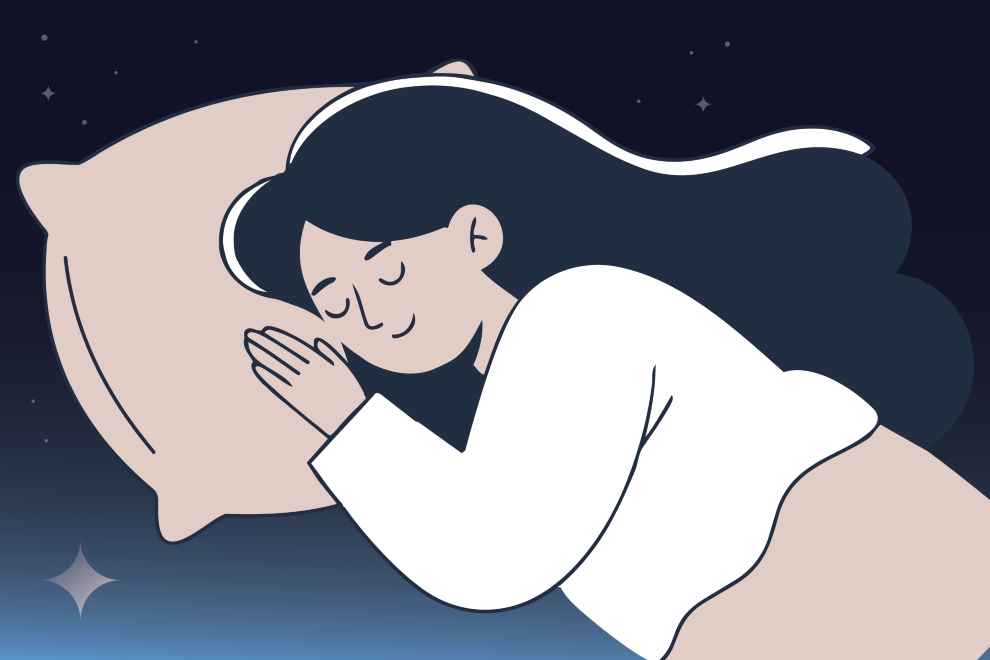
The Importance of Sleep Cannot Be Overstated.
We all know how good it feels to wake up refreshed—“bright eyed and bushy tailed” as the saying goes. A full night of quality sleep starts the new day off right— with clarity of mind and purpose and energy to tackle what lies ahead. But quality sleep does more than just make us feel good in those waking moments.
“We all think that being awake is active, and that sleep is the opposite of being awake, but it doesn’t work that way,” says Dr. Maha Alattar, chair of VCU Health’s Division of Sleep Medicine. “Sleep prepares you for wakefulness. We spend one-third of our lives preparing for the other two-thirds.”
Sleep acts as a trash remover, Alattar says, enabling the body to reset its systems and clear toxins, especially from the brain. “If you go to a store when it’s closing, you’ll see empty shelves and workers coming in to refill,” she says. “There’s a lot of activity at night. It’s the same for our bodies; sleep restores us.”
Know the Basics
Even if we recognize the importance of a good night’s slumber, we likely aren’t getting as much sleep as we should. Recommendations from the Centers for Disease Control and the National Sleep Foundation show ranges in sleep requirements for different age groups, allowing for individual proclivities and genetic dispositions. Children and adolescents need more sleep than mature adults because sleep helps to fuel the ongoing growth of their bodies and brains. That’s why babies need the most sleep, up to 17 hours a day, and why sleeping hours drop off as age increases. There is widespread agreement that school-age children should have a minimum of nine hours of sleep a night, teens should have eight hours, and adults should have seven hours of shut-eye.
Jennifer Peele, MSN, APRN, FNP-BC, PMHNP-BC, is dual board certified in family and psychiatry mental health and works at River Road Psychiatry as a dedicated sleep medicine specialist. She notes that at every age, quality sleep supports a person’s ability to function well. “Making sleep a priority is going to help us perform better at accomplishing our tasks,” she says. “We’re going to have more sustained focus, get through the day with better clarity, better quality of work, and concentrated attention. Sleep not only helps us feel better, but helps us think better as well.”
Peele, a mother of two herself, knows how hard it can be to keep a family on the right track in terms of sleep. “Families are on the go constantly, and it can be hard to shut [life] down,” she says. “But in the family unit, the parent is the role model. Children will follow what the parents are doing. If [parents] make sleep a priority, following the priority as a family will help everyone get through the day.”
A good first step to establishing a healthy sleep routine, Peele says, is to create a dedicated sleep environment. “I truly believe the bedroom is the place to sleep and not to hang out. There can be an area of the room devoted to studying with a desk and chair, but the bed is for sleep,” she says. “Consistency is key. You want to develop muscle memory in the brain: where to sleep, the time to sleep. You want the brain to know, ‘This is where I feel safe and calm; this is where I need to go [to sleep].’”
Families don’t need elaborate rituals at bedtime, Peele says, but certain habits are useful. Good nutrition—wholesome foods that aren’t heavily processed and laden with preservatives, avoiding caffeine for kids and limiting for adults, plus regular mealtimes and healthy snacks—is beneficial at every age. In the two hours before bedtime, she recommends avoiding strenuous physical activity, television viewing, and scrolling on devices. If evening family time includes some TV watching, Peele notes that can be okay but recommends putting the TV in “dark” or “night” mode. This dims the screen and reduces blue light, which has been shown to energize our minds and bodies rather than relax us.
Peele counsels clients to think about how their natural sleep drive, also known as circadian rhythm, guides wakefulness. Bright lights, especially LEDs, in the home at night can disrupt those natural inclinations and rhythms. She recommends that blinds and curtains be open wide for morning stimulation to shut down melatonin, a naturally occurring hormone that factors in the sleep-wake cycle. Then in the evening, dim lighting and a lower household temperature will signal the body to settle for sleep.
“Sleep prepares you for wakefulness. We spend one-third of our lives preparing for the other two-thirds.”
Showing the Way
Katie, a mom of two, has struggled with a form of insomnia on and off for years. She could fall asleep easily enough, but then would wake in the middle of the night and not be able to return to sleep. She consulted with her primary care provider and OB/ GYN, investigated the topic herself, tried medication, and finally found a provider who focuses on sleep and offered approaches that work for her.
“Medication is often prescribed, but I didn’t want to be on medication long-term, and I didn’t want to sleep too hard, because I’m a mom and I want to be available and alert for my kids,” Katie says. “The advice I finally got has to do with good sleep hygiene and healthy habits to help reduce [relying on] medication.”
As Katie has developed her own sleep strategies, she has also made a point to help her daughters, ages 10 and 8, develop good habits, too. Katie says she tries to limit sugar at night. “That’s easier said than done, as kids love dessert,” she notes. She also allows some TV viewing but not falling asleep in front of a screen.
Katie has found meditation apps useful both for her and her children. She often turns to Headspace, which has programs designed specifically for calming before sleep, and she also likes Calm Kids sleep stories from the Calm app. “My two girls are wildly different; what works for one doesn’t work for another,” she says. “One daughter likes it to be pitch black and likes listening to a sleep story or sometimes sleep music—no screen, just the sound. My other daughter doesn’t like to listen and wants night lights.”
Katie also sees the benefits of regular exercise helping her sleep and doesn’t consume caffeine after lunch. But she does admit to having her phone in hand longer than is recommended. “I don’t know anyone who’s really turning their phone off an hour before bed,” she says, though she does make a point not to turn to it in the middle of the night, should she happen to wake up.
Now, she says she has a more consistent approach that seems to be working. “I will still have insomnia periodically, but the general things—no caffeine after lunch, exercise—are part of my routine and really help my physical and mental health.”
A Lifelong Process
VCU professor Alattar says it’s common for sleep issues to develop as we advance in age. “Problems do emerge when people get older, usually due to psycho-social reasons,” she says. “People have more responsibilities weighing on their minds, stress that we take to the bedroom. The brain can fall asleep when it feels safe. When there are negative thoughts, the brain thinks it should be taking care of these things.”
The most common sleep challenges among adults are difficulty falling asleep and waking during the night without being able to quickly fall back to sleep. “People end up not getting enough sleep, or they might get enough, but it’s not deep, restful, and satisfying,” Alattar says.
Additionally, obstructive sleep apnea, a fairly common sleep disorder according to Alattar, can lead to frequent awakenings through the night. Someone experiencing obstructive sleep apnea might wake with a headache or feelings of depression, specifically in the morning, and could develop high blood pressure and heart disease. Anyone who suspects they might be experiencing sleep apnea should talk with their doctor, who might prescribe a sleep study. Snoring can be an indication of sleep apnea, too, because it signals that there’s an airway in the body that isn’t fully open. “Ask a bed partner if there’s snoring, which can indicate obstructive sleep events,” Alattar says.
When a person tells their medical provider they’re experiencing insomnia, more conversation has to follow. “The term ‘insomnia’ is used very loosely,” says Alattar. “It could mean difficulty falling asleep, early awakening, or you’re sleeping and waking up not feeling refreshed. What’s common is that insomnia is caused by anxiety, stress, obstructive sleep apnea, aging, or unfavorable habits like drinking caffeine later in the day, not being active enough, and late-night exposure to blue-spectrum light.”
Alattar says establishing a consistent daily routine with light, food, and movement will improve quality of sleep. “You want light 16 hours before you plan to go to bed,” she says. “Be regular with your eating; you have to respect your body and have regular timing for meals. The same goes for activity. We sleep to restore; if you’re sedentary all day, your body is going to wonder what it needs to restore. You want to be physically active and mentally active. You don’t have to run a marathon, but you want to work, socialize, be engaged with life.”
She notes that some sleep disruptions can be managed occasionally with sleep aids like melatonin or Benadryl. A warm nighttime shower or hot water bottle at the feet can also provide helpful relaxation at bedtime. “But if you start to have issues day after day, week after week, then you need to see your primary care doctor or a sleep specialist,” Alattar says. “If you’re waking up at night consistently, it could be obstructive sleep apnea, which is a breathing issue.”
Peele echoes this, saying sleep supplements are tempting quick fixes, but she suggests trying external strategies like a warm shower, a sound machine, even a night light in red, orange, or yellow hues. An active child might also enjoy a weighted blanket. “Families are leaning on melatonin because of all the stimulation,” she says. “Really, it goes back to setting boundaries—around TV and phones especially.”
Sometimes, a person can figure out on their own what’s affecting their sleep. “Ask ‘What am I doing wrong in my day and night, in my lifestyle?’” Alattar says. “Are you working too much, or are there social stressors? See if you can take action.”
It’s essential, Alattar says, to remember that sleeping is an active state. By paying attention to how we feel during the day, we can discern if our sleep health is adequate. “The basic rule is that if you get a good night’s sleep, you should feel rested like a child and full of energy,” she says. “If you don’t, your body will suffer, and you will know it.”