


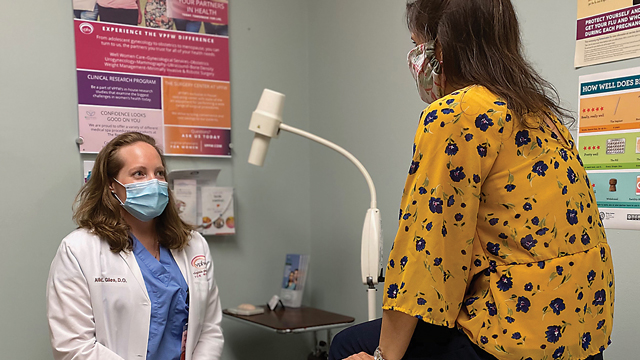
Congratulations! You’re pregnant. It’s exciting and nerve-wracking at the same time. What can you do to ensure your pregnancy is a healthy one? How will your obstetrician make sure your pregnancy is proceeding normally? There are all kinds of tests we do for exactly those reasons. These include physical exams, blood tests, and ultrasounds – some of which are done at your first visit with your obstetrician, while others are done throughout your pregnancy. Let’s talk about the most common tests you’ll encounter along the way.
1. Pap Smear and STD Testing
Your first visit to your obstetrician, usually around eight to ten weeks into your pregnancy, includes screening for cervical cancer and STDs (sexually transmitted diseases) to determine any risk to your baby. Screening for these kinds of infections is required by the Commonwealth of Virginia at the onset of prenatal care. If you are due for a Pap smear (cervical cancer screening), you’ll also receive this test.
What to expect: The Pap smear and STD testing require a pelvic exam just like you’d normally have at your annual visit to the gynecologist. Testing for STDs also requires a blood test for hepatitis, syphilis, and HIV. It is important to note that Virginia is an opt-out state when it comes to HIV testing. This means that your physician is required to let you know that HIV testing is recommended for pregnant women and included in the blood work unless you decide you don’t want to be tested for HIV. Your doctor will discuss the results of these tests and any implications for you and your baby.
2. Additional Blood Work
The blood work completed at your first visit will determine your blood type and your immunity to rubella (a virus that causes flu-like symptoms and is dangerous for a developing fetus). Depending on your obstetrical history and any medical conditions, your doctor may order other blood tests, including thyroid function tests, early gestational diabetes testing, or liver and kidney function tests if you have high blood pressure or did in a previous pregnancy.
What to expect: Your doctor will discuss these tests with you during your first visit. All the blood testing will be done at the same time to minimize the number of needle sticks.
3. Ultrasounds
Ultrasounds are much more than gender reveals or cute pictures of your unborn baby. They allow your doctor to observe the development of your baby at multiple stages of your pregnancy.
Your first ultrasound is typically conducted at your first visit to your obstetrician. This ultrasound will help your doctor determine your due date, which gives her a better idea of when certain milestones will be reached throughout your pregnancy. It might also be the first time you will hear your baby’s heartbeat.
A second ultrasound may be done at twelve or thirteen weeks, depending on what you and your obstetrician have decided regarding genetic testing.
At twenty weeks, you’ll have a detailed anatomy ultrasound to carefully examine and measure the fetus. Your doctor will look for anatomic abnormalities. You will also be able to find out the sex of your baby during this ultrasound (if you want to know!). If your pregnancy is uncomplicated, this is the last ultrasound you’ll need.
During visits around twenty-four weeks, your obstetrician will measure your abdomen to estimate if your baby is growing appropriately. If it appears that the baby is too big or too small based on these measurements, an ultrasound is usually ordered to get a more accurate estimate of the baby’s growth. If you are diagnosed with or have any medical issues, you may need more frequent ultrasounds.
At thirty-six weeks (almost there!), your obstetrician will examine your belly and check your cervix. If it is difficult to tell if the baby is in the head-down position, an ultrasound will be ordered to determine the baby’s position.
What to expect: The ultrasonographer will apply a gel to your skin, then move a transducer around your abdomen to send high frequency sound waves into your uterus that will translate into images on the screen. You may feel pressure, but likely not pain. Don’t empty your bladder before the scan in case having a full bladder will enhance their ability to obtain the images needed. Occasionally during pregnancy, the ultrasound will need to be performed with a transvaginal probe. This probe is not painful. Cell phone use is generally not allowed during ultrasound exams, but you will be provided with a picture of your baby. Your doctor will discuss the results of the scan with you.
4. Genetic Testing
At your first prenatal care visit, your doctor will discuss genetic testing options meant to determine if your baby is at increased risk for a variety of disorders. These disorders include, but are not limited to cystic fibrosis, certain types of birth defects, and chromosomal disorders such as Down syndrome.
What to expect: This testing is usually conducted using a combination of ultrasound results and blood tests performed at specific times during your pregnancy. Your doctor will discuss the results with you. If there are abnormal results, you will have the option of meeting with a perinatologist (high-risk specialist) to discuss the results, their implications, and any further testing that might be recommended.
5. Glucola Test
You might be wondering, When do I have to drink that sugary drink? The glucola test is routinely given around twenty-eight weeks for all pregnancies. It tests your glucose tolerance to determine if you have gestational diabetes (high blood sugar that develops as a result of hormones produced by the placenta). If you are overweight (BMI is greater than thirty) or have other risk factors for developing gestational diabetes, this test may be administered earlier in pregnancy, usually at the first or second visit.
What to expect: There is no need to fast before the glucola test. You will drink a sugary drink and wait for an hour in the waiting room without having anything to eat or drink. Then, your blood will be drawn for the test and you might be finished. If the results of your hour-long glucola test are abnormally high, you will be scheduled for a 3-hour test during which you will drink a larger quantity of the sugary drink. This time, your blood will be tested before you drink the drink and at hourly intervals afterwards. If you need the 3-hour sugar test, you will be asked not to eat or drink for eight hours prior. If the result of the 3-hour test is also abnormal, you will most likely be referred to an endocrinologist and a high-risk pregnancy specialist for management of gestational diabetes.
Testing Needs Vary
While these tests are the most common, we have only scratched the surface of the types of testing done during pregnancy. Each pregnancy is individual, and testing will vary from woman to woman. You and your obstetrician are a team, and together you will determine the most appropriate tests to perform to ensure a happy, healthy pregnancy.