

Across Richmond, students are discovering new ways to explore science, technology, engineering, arts, and math (STEAM) in the classroom and beyond.
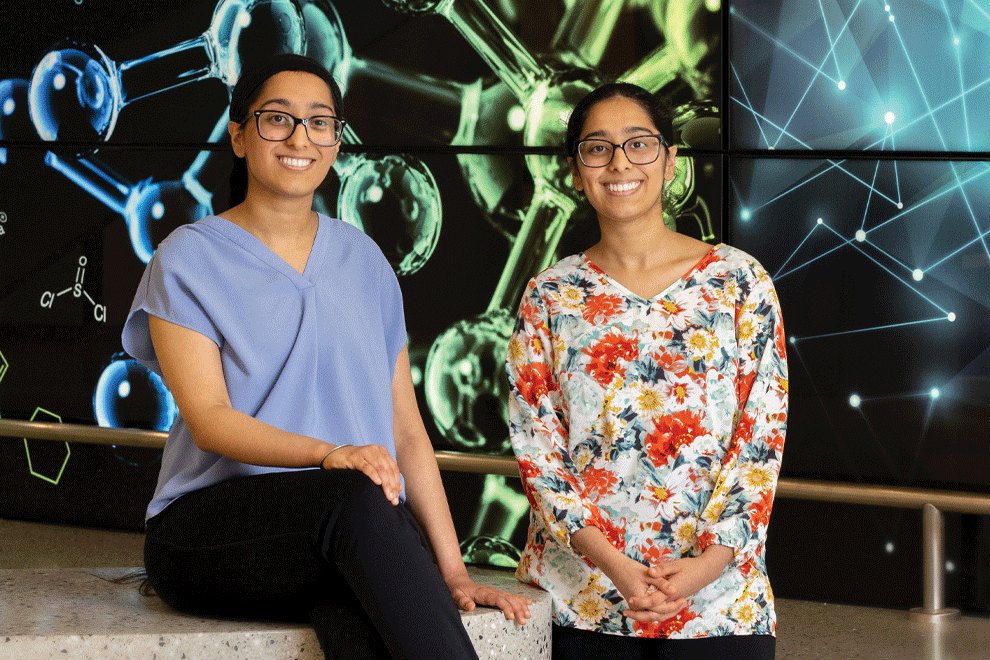
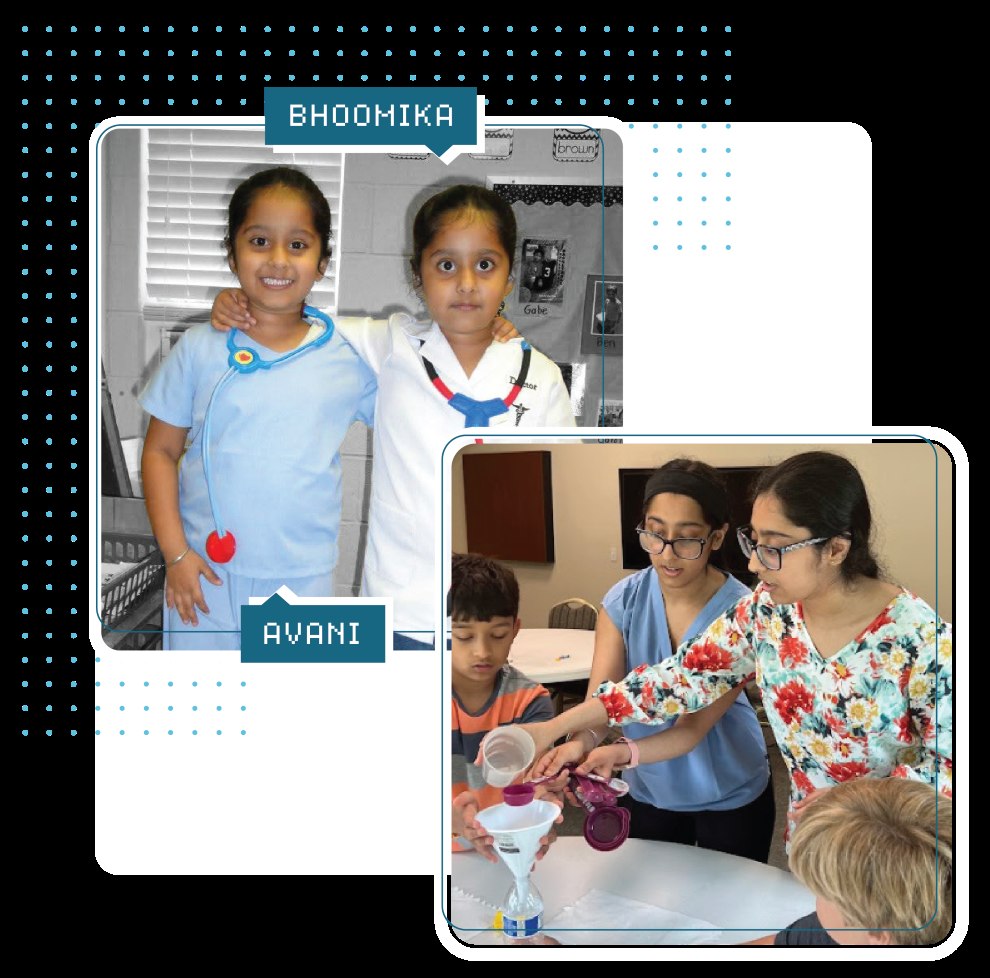
Eighteen-year-old twins Avani and Bhoomika Kaur have done science experiments with their parents for as long as they can remember. While some families enjoy game nights or movie nights, this Henrico family of four bonded over “science nights.”
Early experiments were simple, like a papier maché volcano that explodes thanks to a solution of baking soda and vinegar. As Avani and Bhoomika have gotten older, the experiments have become more complex, sometimes complementing their school curriculum. They’re now seniors at Mills E. Godwin High School’s Todd Allen Phillips Center for Medical Sciences, a specialty center for students interested in medicine and health science.
They also both do research at local universities – an activity often reserved for upper-level undergraduate or graduate students. Avani studies a novel drug molecule that could potentially treat Alzheimer’s disease at University of Richmond, and Bhoomika researches how sugar molecules in the body impact prostate cancer progression at Virginia Commonwealth University.
Additionally, the sisters are entrepreneurs. They run the organization Osmosis STEM to help younger students and their contemporaries get excited about these subjects. They teach workshops at Twin Hickory Library and Godwin, and they lead virtual classes. They also partner with organizations in Kenya and Oman and lead virtual workshops in health education, digital literacy, and other STEM topics.
Avani and Bhoomika are just one example of a new generation building on a 25-year legacy of STEM education. STEM first hit the scene as SMET (science, math, engineering, and technology) in the 1990s. That acronym didn’t exactly roll off the tongue, so it was changed in 2001 by biologist Judith Ramaley. The overall concept emerged alongside the tech revolution, when there was an increased demand for graduates with skills in STEM-related fields. In 2006, educator and researcher Georgette Yakman, then a graduate student at Virginia Tech, added the arts to STEM, birthing the now widely used concept of STEAM.
Many public and private schools in Richmond have since incorporated STEM and STEAM programming into their curricula – some with robust programs including required and elective courses and others infusing it into traditional subjects. There’s also a growing number of public museums, centers, and learning programs in the city offering STEM and STEAM activities. This local momentum mirrors national trends. K-12 institutions now dedicate over $1 billion annually to STEM education, according to the Federation of American Scientists, showing that schools and communities are increasingly invested in STEM and STEAM programming.
Today, STEAM education in Richmond is helping students build not only academic knowledge but also curiosity, collaboration, resilience, and empathy – skills they’ll carry into the future.
Curiosity
When Avani and Bhoomika’s parents planned experiments and STEAM activities, they focused on topics that elicited their daughters’ curiosity. “We would ask [our parents] a billion questions, and based on those questions, they kind of understood the trend of the topics we were curious about,” says Bhoomika. “Based on that, they would find experiments online or create them themselves using household materials.”
Curiosity is a vital part of science and technology. Every research project, every experiment, and every innovation starts with a curious person asking questions.
“Science should be fun and playful and energetic and creative,” says Timshel Purdum, Virginia C. Ellett Deputy Director of Education at the Science Museum of Virginia. “Scientists are serendipitous. They like to learn about everything, because you never know where the next good idea is going to come from.”
That’s why the Science Museum’s exhibits focus on interactive activities where visitors can learn about science concepts through play. Their mission is to inspire all Virginians to enrich their lives through science. “We want to encourage you to be so curious and engaged that you’re going to go out and on your own dig a little deeper,” said Purdum. “We want you to leave more curious and with more questions than when you came in.”
Schools also try to leverage kids’ natural curiosity through STEAM programming. St. Christopher’s School’s BUILD program, which stands for Boys Using Innovation to Learn and Design, “taps into what we know about boys and their curiosity and sense of wonder, says Jim Guion, JK-12 BUILD Coordinator and Upper School teacher at St. Christopher’s. Because the projects are usually hands-on, they reinforce the message that learning can be fun and exciting.

That’s especially important as students encounter what educators call the middle school engagement cliff. “Kids in elementary school tend to feel engaged in learning and connected to their teachers, but in middle school, they tend to disengage a bit,” says Taylor Snow, Director for Teaching and Learning for Henrico Public Schools.
The Center of Innovation at John Rolfe Middle School combats that trend with STEAM projects that incorporate the knowledge students glean from their core classes. This past year, the seventh-grade students used the lessons from such classes to find solutions to food insecurity. “They learned about policy structures in their social studies class,” says Snow. “They learned about persuasive writing in their English class, they learned about innovative approaches to farming in their science class, and they learned how to use innovative farming structures in their design class.”
Feedback from students has been encouraging so far. “Students say they’re much more engaged,” says Snow. “They love using their content skills to diagnose a problem and find a solution.”
Collaboration
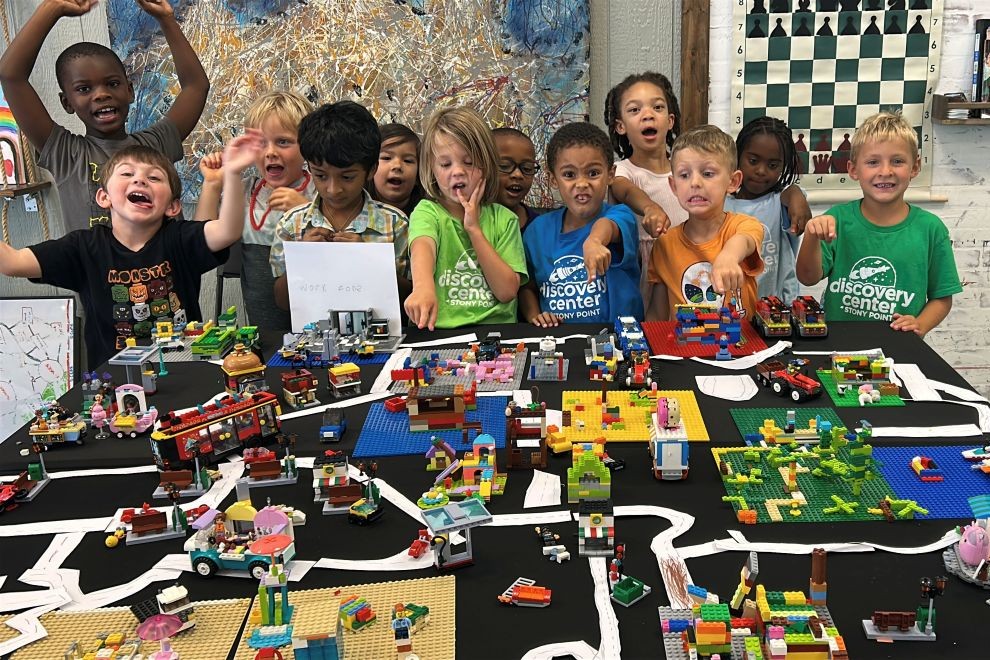
For David Shin, middle school science department chair and teacher at St. Christopher’s, the best part about the BUILD program is seeing boys support each other. “If they’re doing a project, and it starts working, they’re so happy for each other. They’re literally jumping up and down.”
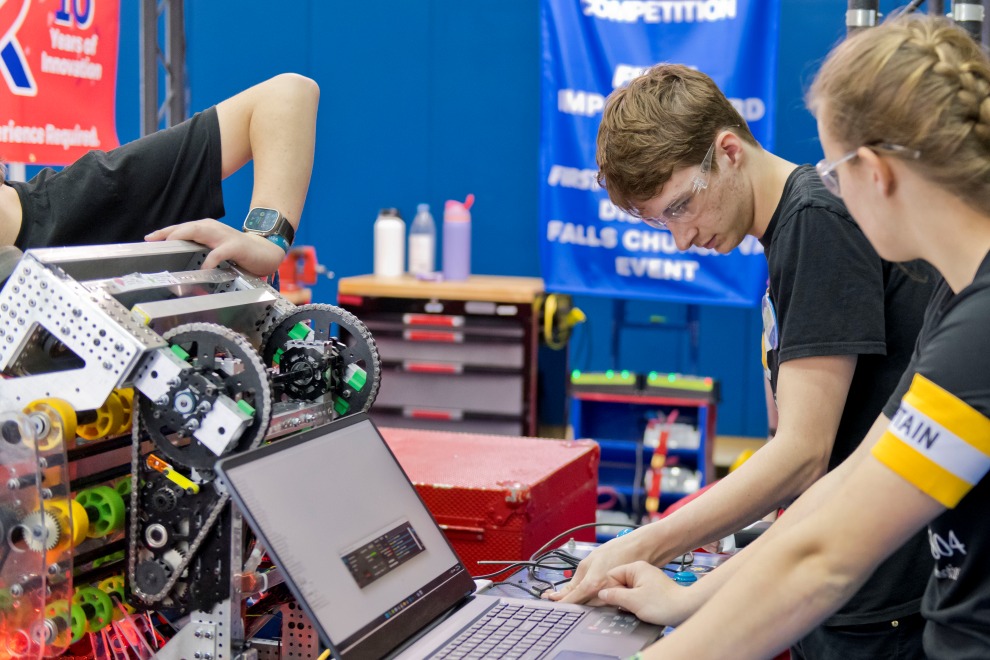
That collaborative and cooperative energy is especially apparent in robotics, the anchor of most STEAM programs. Many local robotics teams participate in competitions held by the organization FIRST (For Inspiration and Recognition of Science and Technology). This global robotics program encourages “Gracious Professionalism,” which encourages both intense competition and respect for others, and “Coopertition,” which encourages cooperation during competition.
“One of the best things about FIRST Robotics is that a team in the pit may run out of a part that they need to fix their robot, and they’re competing in 10 minutes. Another team will give them that part,” says Tung Trinh, Dean of Faculty at Collegiate School.“ That won’t happen in many places, but ultimately the belief is that we’re all trying to do the same thing, which is to create the best robot possible to compete.”
Ellen Bonbright’s son James is a senior at Collegiate, where he’s been a member of the school’s robotics teams since middle school. In the past three years, he’s participated in three international competitions. “If you had told me four years ago that I would be cheering at a robotics competition the way I would at a football game, I’d have told you you’re crazy,” says Ellen. “But it has been a fascinating ride for the whole family, and it’s been great for James.”
At the competitions, a school’s team works with two teams from other schools. They often haven’t worked with those teams beforehand. “The students have to learn to work with other people. They have to understand how to be good role models and citizens,” Ellen says.
Resilience
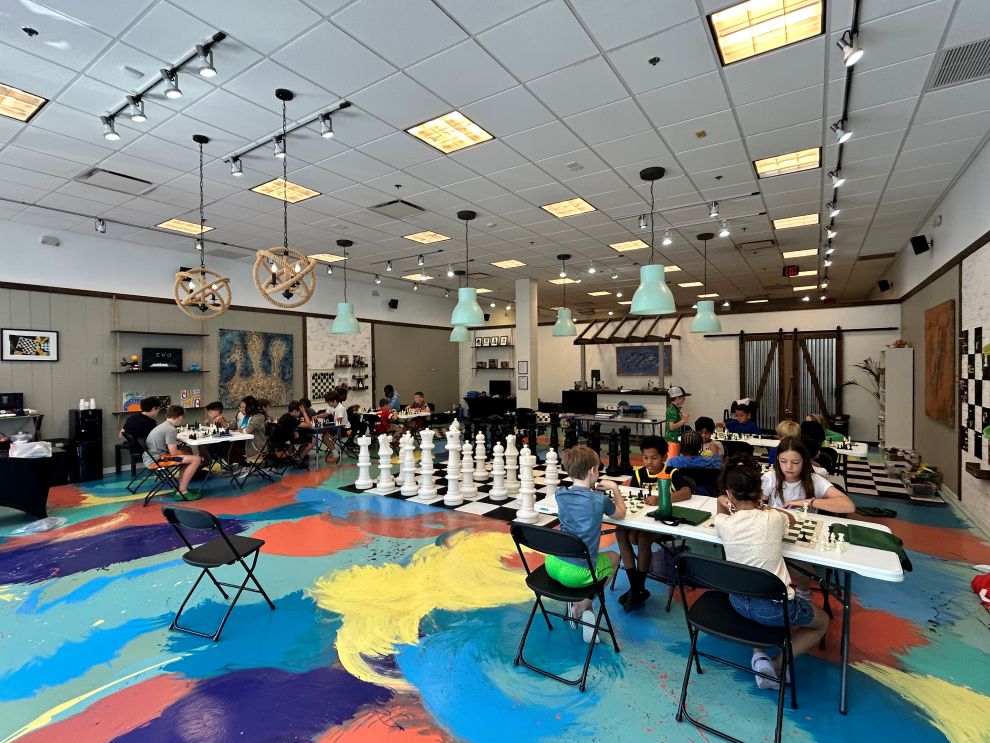
Another key life lesson STEAM teaches students is perseverance. “Not all science experiments go as planned,” Avani says. “And persistence was a very essential skill when we started researching in more professional college-level labs.”
That’s a lesson reinforced by organizations like STEAM Discovery Academy, started by science teacher Mike Bruscia. His main space is in Charlottesville, but he leads four weeks of summer camp in Richmond at St. Edward-Epiphany Catholic School. The campers’ T-shirts sport his motto: Fail fast and innovate.
“The edge of learning happens at failure,” Bruscia says. “The faster you can go through that process and fail, the more likely you’ll achieve success with limited resources. STEAM programs develop grit within students, so that when they run into headwinds, they won’t quit.”
Discovery Center at Stony Point also taps into that resilience. “‘This is tough, but I am tougher,’ is our motto,” says Khjyetta Singleton, coach of the organization’s afterschool programs and summer camps. She repeated that mantra recently when helping young elementary students close a circuit. “When it’s not working, they want to throw it in the trash,” she says. “But we try to retrace our steps and figure it out together.”
Jennifer Vermillion, Director of Innovative Teaching and Learning at St. Catherine’s School, says that their focus on iteration reinforces the importance of sticking with a project until they get it right. “We have the girls intentionally make things out of cardboard and other inexpensive materials, so they don’t want to get too attached to their design,” she says. “Once they get feedback and incorporate that feedback, they can devote more time to the actual development.”
Empathy
STEAM also fosters empathy, which has been a driving force behind Avani and Bhoomika’s research. Bhoomika, for instance, decided to study prostate cancer because of a patient she got to know while volunteering at St. Mary’s Hospital, and Avani chose to study Alzheimer’s because of a patient she befriended while volunteering at a local hospice.
Vermillion says that many of the projects at St. Catherine’s start with empathy. “Before students create this great cool technological solution, we try to get them to dig a little bit deeper and really understand the needs of the person that they’re designing for,” she says.
For one of their projects, eighth-grade students at St. Catherine’s ask fourth-grade students to share their concerns about starting middle school the following year. The eighth-grade students then create a product that helps the younger students transition more easily.
Rob Short, Head of School at Trinity Episcopal School, says students in an advanced placement government class created prototypes of monuments they recommended be added to the city’s Monument Avenue. While working in the sculpture studio or using computer-aided design, they considered whom to memorialize and how those choices would resonate with residents.
For Short, STEAM projects are about strengthening concrete skills while also focusing on what makes us human. “With all of the different changes that we’re seeing in automations and efficiencies, we don’t want to lose the meaning and purpose for work or that very human quality of discovery, invention, design, dreaming, and building,” he says.
While STEAM education was created to prepare students for high-demand careers, it has evolved into something bigger. Activities like a robotics team provide a home to students who share similar interests. Hands-on experiences capitalize on children’s natural curiosity to foster a love of science, technology, engineering, and math. STEAM projects help students develop soft skills, like collaboration, empathy, communication, and life-long learning that they’ll use throughout their lives.