

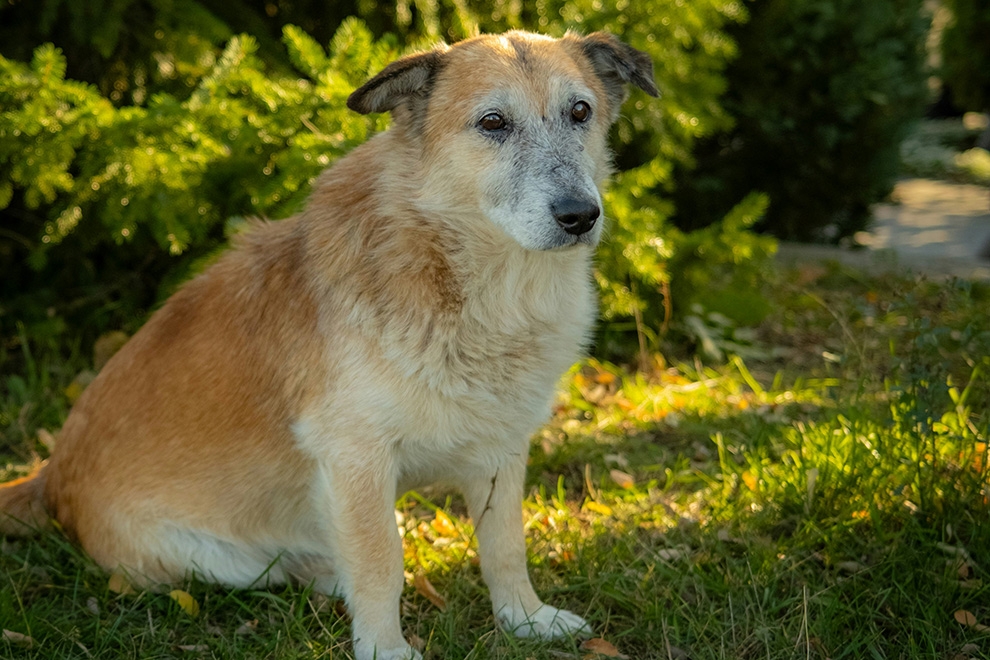
Getting older is rough (or should we say, ruff), especially for dogs. Their lives are so short that it seems to accelerate the aging process. As dogs age, their behavior often changes in ways that can feel confusing or even concerning to their families. Just as people experience age-related shifts in memory, activity, and social patterns, senior dogs’ mental functions can decline quite rapidly as they age. It is referred to as Cognitive Dysfunction Syndrome (CDS).
Studies show that the rate of prevalence of CDS in senior dogs is high, ranging from 28% in 11- to 12-year-old dogs to 68% in 15-to 16-year-old dogs. For this reason, families may see their older dogs acting strangely or doing things that don’t make sense. While these behaviors can be unsettling, they are often normal signs of aging.
Below are some of the most common ways CDS can affect senior dogs and what families can do to help.
Strange Behaviors
Social Interactions
Changes in social behavior are often among the first things families notice. This may look like a lack of interest in playing with pals, less enthusiasm when greeting people they know, and even less engagement with family members. For example, a pet that once curled up on the couch every evening may start spending more time alone in another room.
Some distancing is to be expected as dogs work through the different stages of cognitive dysfunction, but in more advanced stages of CDS, dogs may become increasingly irritable or agitated during social interactions. They may snap, growl, or even bite. If your furry friend has never shown signs of aggression in the past but suddenly, with age, exhibits these symptoms, they may be in a moderate to severe stage of CDS, and you may want to consult with a veterinarian.
Changes in Sleep and Activity
Like humans, it’s normal for aging dogs to sleep more than they used to. They get tired more quickly and need more downtime. However, as some dogs age, CDS can cause sleep patterns to change drastically. Some dogs may start to confuse nighttime and daytime or sleep all day and wander all night. Some may also suffer from disturbed, uncomfortable sleep and cry or whine throughout the night. Depending on the behavior, changing sleep patterns can range from moderate to severe CDS.
A dog’s daily activity can change as they get older too. They may not want to walk very long, not walk as fast as they used to, or have fewer active play moments throughout the day. These changes are part of the natural aging process, but combined with altered sleep cycles, they can also be signs of CDS.
House Training
One of the more frustrating symptoms of cognitive decline is a loss of house training. Senior dogs may begin eliminating indoors, forget how to let you know that they need to go outside, or maybe they go in unusual places like the porch, the deck, the sidewalk.
But it shouldn’t be assumed that a dog’s sudden lack of house training is solely because of aging. Many medical conditions can lead to house soiling, such as kidney disease, bladder infection or stones, diabetes, Cushing’s Disease, and more. There can also be psychological reasons for eliminating indoors that have nothing to do with their age. A veterinary exam can help determine whether accidents are related to CDS or an underlying health condition.
More Serious Symptoms
As CDS progresses, symptoms may become even more severe. Dogs may lose their appetite entirely and refuse to eat or drink. Or they may try to eat but have trouble keeping food in their mouths or remembering where their food and water bowls are. They may also become fearful or not even recognize their name. These changes are also often accompanied by decreasing eyesight and hearing and aches and pains like arthritis.
These changes can significantly impact a dog’s quality of life, making ongoing support from families especially important.
Helping Your Senior Dog
While CDS cannot be reversed, families can take steps to help their senior dogs remain comfortable.
Prioritize Nutrition.
Nutrition plays a huge role in senior wellness, so you may want to reevaluate their current diet to give them the best nutrition possible to minimize the effects of aging and enhance their quality of life. Talk to your veterinarian about dietary supplements such as fatty acids and antioxidants.
Offer Gentle Care.
Help them into their comfy bed if they’re lying on the floor. Walk at their pace when outdoors, no matter how slow. Try not to startle them since they may not be able to hear or see you approaching them. And don’t make them do anything they seem uncomfortable doing, even if they enjoyed it as a younger dog.
Respond with Patience.
Refrain from punishing them for soiling in the house. Most dogs are likely just as distressed as their owners when these incidents occur.
Love Them Through It.
They need you more now than ever, so let them know they can depend on you.