For generations of families, Colonial Williamsburg has been a place to experience history firsthand. Whether it’s listening to the Fifes and Drums, exploring a new art exhibit, learning about the flora and fauna of the time period, or waving hello to Thomas Jefferson as he strolls through the Historic Area, there’s always something new to discover.
It’s hard to believe that a century ago, under the Great Oak Tree on the grounds of what is now Bassett Hall, two men came up with an idea to revitalize a struggling Williamsburg community. Their discussion led to the establishment of Colonial Williamsburg, now considered one of the largest and most beloved living history museums in the world.
But preserving Williamsburg has never been simply about restoring historic buildings or recreating life from the 18th century. Over the past 100 years, Colonial Williamsburg has evolved from an ambitious restoration project into an educational institution dedicated to uncovering, preserving, and sharing the stories that shaped America. Colonial Williamsburg’s centennial offers an opportunity to reflect on its remarkable history and the importance of preserving that history for generations to come.
Before Colonial Williamsburg
In the 1600s, Williamsburg was a village known as Middle Plantation. It was later renamed after replacing Jamestown as the capital of Virginia in 1699 due to its higher elevation between the James and York Rivers. Williamsburg made its mark in colonial Virginia as the place where George Washington, Thomas Jefferson, George Mason, Patrick Henry, and James Madison gathered to strategize the plans that led to the Revolutionary War.
After Virginia’s capital moved to Richmond in 1780, Williamsburg’s population declined, and over time, many of its buildings fell into disrepair as the result of a slower economy. By the early 20th Century, much of the Williamsburg that played such an important role in the nation’s founding was at risk of disappearing.
A Vision for Preservation
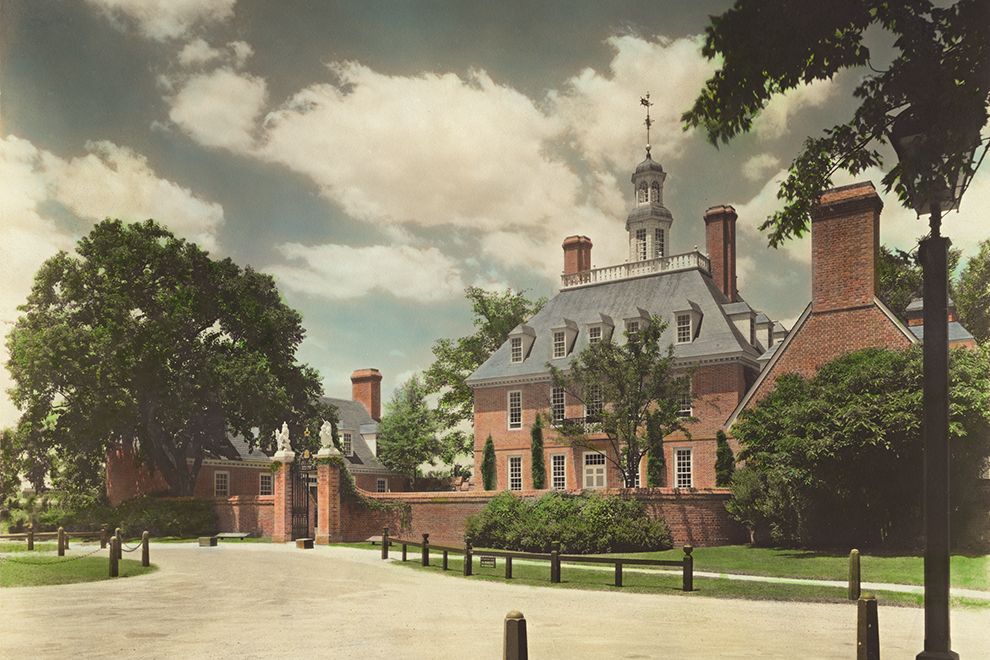
Special Collections, John D. Rockefeller Jr. Library, The Colonial Williamsburg Foundation
In 1923, Reverend Dr. W.A.R. Goodwin dreamed of restoring the town, fearing what the advent of the automobile industry would do to the landscape. Goodwin didn’t want the city he cherished to become oversaturated by parking lots, gas stations, and mechanic shops, so he shared his vision of revitalizing and preserving the community with philanthropist John D. Rockefeller Jr., in hopes of receiving financial support. After touring the city with Goodwin, Rockefeller — who had spent time in the area after contributing to the construction of Phi Beta Kappa Hall at the College of William & Mary — agreed to fund first a portion of the restoration and eventually decided to underwrite the whole project.
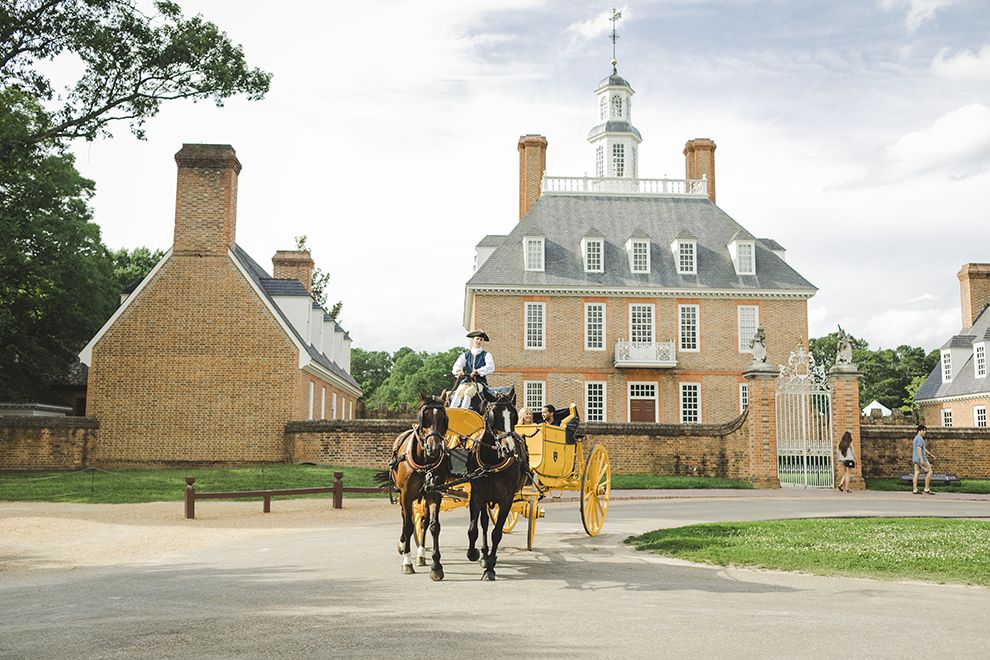
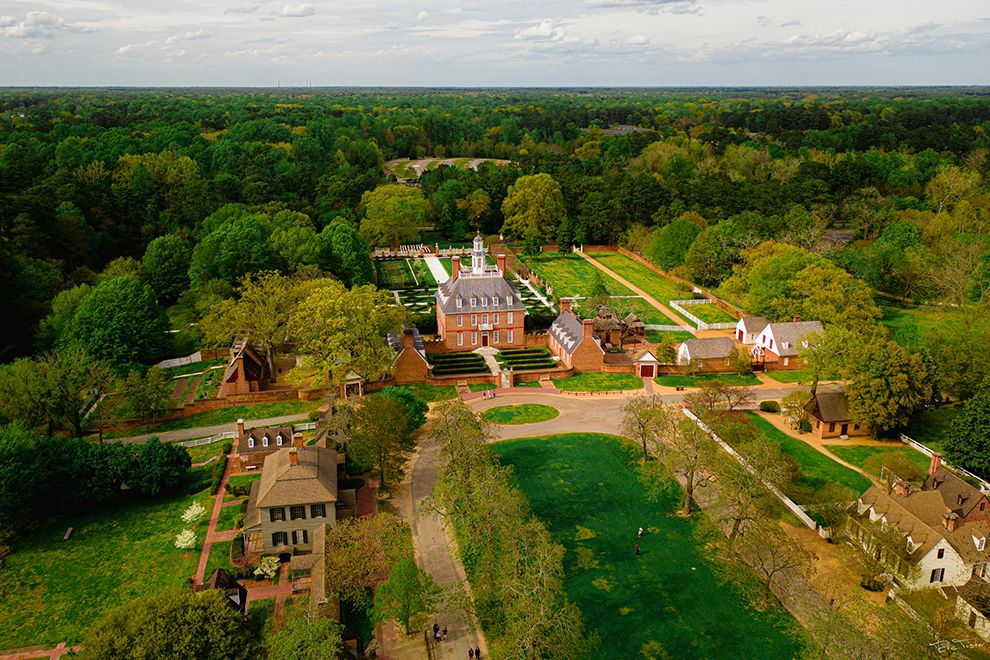
Reconstruction began in 1926, with architects using a map of the area drawn by an unknown French soldier in 1782. The first reconstructed building, Raleigh Tavern, opened in 1932 with the Governor’s Palace, its outbuildings, and gardens following two years later.
The Colonial Williamsburg restoration effort has since grown to encompass 301 acres and more than 300 buildings — 89 of which are original 18th century structures. Over the past 100 years, it’s become a world-renowned educational institution, spreading knowledge to visitors about the people, places, and events that led to the foundation of America.
“The original vision was about preserving the town,” says Ronald L. Hurst, Colonial Williamsburg’s chief mission officer, who leads the foundation’s historical programs, research, and education initiatives. “There was not an education component at first. Then there was a pretty significant shift about 50 to 60 years ago.” Over time, that shift transformed Colonial Williamsburg from a project focused primarily on preserving a historic community to one dedicated to helping visitors better understand the people and events that shaped the nation.
Rockefeller’s wife, Abby Aldrich Rockefeller, also played a pivotal role in the restoration of Colonial Williamsburg. She often visited the city with her husband and developed the concept for the Williamsburg Inn, right down to its furnishings. Additionally, she helped fund other community projects, including the construction of a public school for the Black population when segregation was still in effect.
Abby also loaned her famous folk art collection for an exhibit at Colonial Williamsburg’s Ludwell-Paradise House in 1936, before turning the artwork over to Colonial Williamsburg permanently. The Art Museums of Colonial Williamsburg now house her pieces, and it’s the largest collection of American folk art in the country.
Bringing History to Life
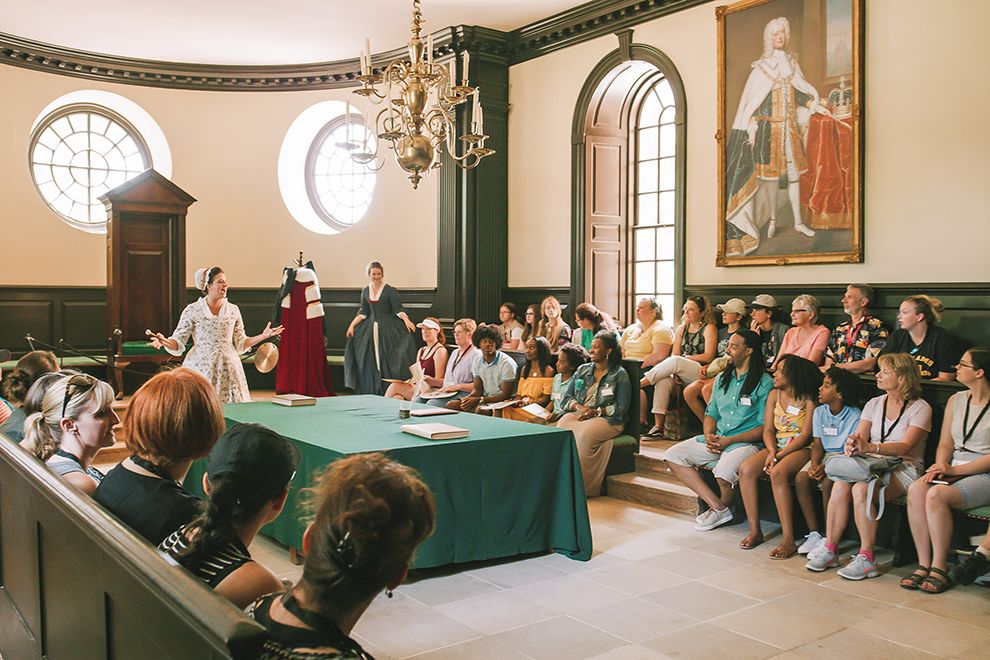
As more discoveries were unearthed, Colonial Williamsburg expanded its programming, adding historic interpreters and skilled tradespeople to demonstrate to visitors what life was like for colonists prior to the start of the American Revolution. Through the years, archeologists and historians learned more about those who lived during that time period, and Colonial Williamsburg eventually began incorporating the experiences of all the people who lived in Williamsburg at the time, including women, enslaved individuals, and Native Americans.
“What makes us unique is we are one of the few museums that focuses on an entire city and all the cross sections: Black, white, rich, poor, old, young,” Hurst says. “No one else really does that, and that’s what makes us so special in my view. Our goal is to ensure that the whole story of the founding of our country is told — good and bad. We are not here to tell people what to think, but it is important that they know the whole story.”
Colonial Williamsburg’s programming includes depictions and reenactments of what daily life was like for those enslaved during the American Revolution, the shifting roles of women once the war began, and the influence of the American Indians on the shaping of our nation.
Interpreters were first introduced in the late 1970s, with Colonial Williamsburg’s Nation Builders program launching in 2005. This program features reenactors portraying famous figures throughout the Revolutionary War, including George and Martha Washington, Thomas Jefferson, Patrick Henry, James Lafayette, Marquis De Lafayette, and others. Interactions with the costumed performers and immersive history lessons are what have kept many people enthralled with Colonial Williamsburg for decades.
Maryland resident Sandy Sacra and her husband honeymooned in Williamsburg in 1970 and have returned nearly every spring since, introducing their children and grandchildren to Colonial Williamsburg’s charm.
“Most visits include a walk to the Raleigh Tavern Bakery, dinner at King’s Arms Tavern, and a visit to some of the sites that are new or have been updated,” Sacra says. “We have brought visitors from England, Germany, Italy, and Bahrain, and no one has been anything less than amazed.”
Beyond the historic interpreters, guests get a thrill out of engaging with the animals through the Rare Breeds Program, which was created in 1986. Visitors spending time along Duke of Gloucester Street and the surrounding area will often see horses, sheep, oxen, or chickens.
“Any time there are animals involved, you have an audience,” says Susan McCall, a volunteer who helps with monthly behind-the-scenes tours of the horse barn. “Some people have never been around a horse before, and it’s exciting to see some of them pet a horse for the first time.”
McCall first made her way to Colonial Williamsburg as a child back in the 1950s. Williamsburg was a frequent vacation destination for her family, and she still has many souvenirs from her childhood, including a gown and a Colonial Williamsburg board game.
“We used to go home and play the game and pretend we were still in Williamsburg. I fell in love with this place the first time I visited,” she says. “I always tell people to let themselves get whisked away to another era. People like the idea of going back to another time.”
Colonial Williamsburg also has a variety of programs designed specifically for families. Children can go on a quest with the Junior Historian’s Scavenger Hunt, learn about the history of theatre by watching a free interactive performance of The Company of Comedians, or transform into a Revolutionary-era secret agent through the “Hands On: Spy Craft” program.
“Kids have an opportunity to be a part of the story, and they love that,” says Robert Currie, associate vice president of performing arts and signature events. “What I love about my job is coming up with these new and innovative ways to tell these stories that we’ve been telling for decades.”
This immersive approach is also central to Colonial Williamsburg’s broader educational mission, giving visitors the opportunity to connect the people and places they encounter with the ideas that helped shape our country.
“We try to reach people where they are,” Hurst says. “It’s important to know about our rights and responsibilities. People don’t understand what they can lose when they are disconnected from the past.”
A Century Worth Celebrating
Colonial Williamsburg’s centennial coincides with another historic event: America’s 250th anniversary. These milestones are a great opportunity to reflect on Colonial Williamsburg’s contributions to preserving and sharing American history while introducing new generations of visitors to the people and events that shaped our nation.
Interest in Colonial Williamsburg has been particularly high during the anniversary year, with more than 70,000 people attending the Historic Triangle’s July 4th events celebrating America’s 250th birthday. Scores of people also gathered in October for the unveiling and dedication of the African Baptist Meeting House and Burial Ground at the original site of the First Baptist Church, one of the earliest Black congregations in the country.
Thousands are also anticipated to make the trek to Colonial Williamsburg for its centennial celebration on November 14, which will feature the Fifes and Drums, guided tours, and other special programming — all culminating in a reception with a fireworks display.
“It’s been an incredible year,” says Currie. “It’s helped to reinforce how important Colonial Williamsburg is to the nation. I feel confident about where [Colonial Williamsburg is going] these next 100 years.”
The Next Chapter
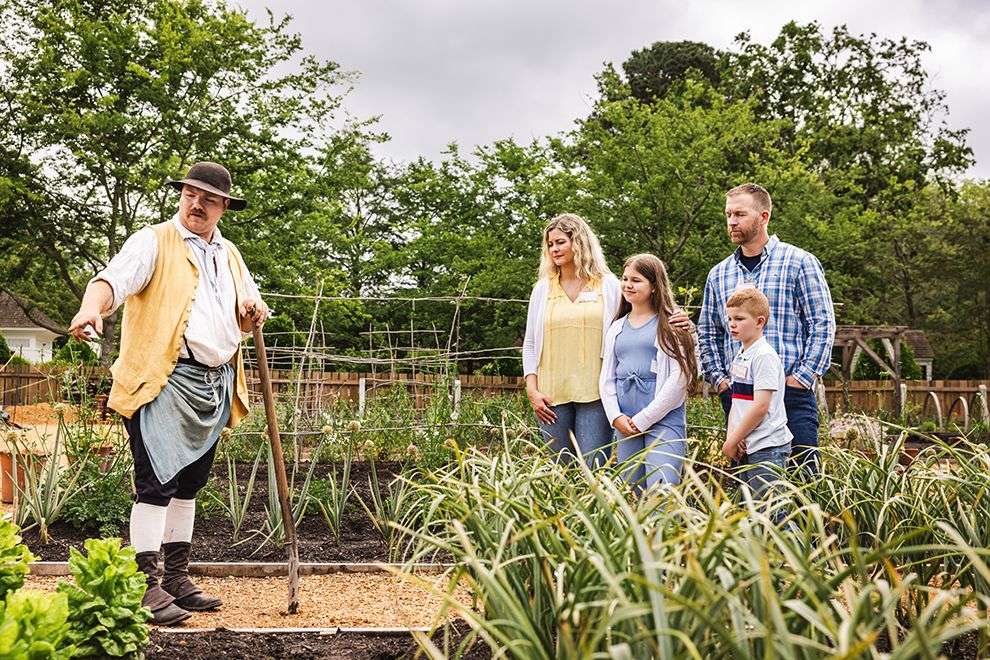
Daphne Reznik, who moved to Williamsburg in 2021, is a blogger and tour guide who provides customized walking tours for the Historic Area. Like many longtime visitors, Colonial Williamsburg holds a special place in her heart as it continues to evolve.
“The three evolutions I’ve enjoyed the most have been seeing the increased access to archaeological research in action and on display; the increase in programming, including behind-the-scenes discussions; and thirdly, the impact of research and technology initiating constant updates to everything from Thomas Jefferson’s wig to paint colors in buildings around town,” says Reznik. “Whether you can visit for a few weeks or a few hours, you should make the trip [to Colonial Williamsburg].”
One of the bigger projects nearing completion is the restoration of The Magazine, which stored the arms and ammunition during the Revolutionary War, to its original 18th-century appearance. Other projects underway or in planning stages include an archaeological investigation of a Revolutionary War military barracks site near the Visitor Center; the restoration of a recently discovered house for two enslaved families, originally built about 1810; and a recreation of the John Custis House and surrounding garden.
A century after Goodwin and Rockefeller set out to preserve a disappearing piece of American history, Colonial Williamsburg’s work is far from finished. As researchers uncover new evidence and historians continue to expand their understanding of the past, the institution’s next century promises new opportunities to preserve and share the stories of the people who shaped our nation. And for the generations of families who will walk its historic streets in the years ahead, there will always be something new to discover.
“The research and the rediscovery are some of the fascinating aspects of Colonial Williamsburg,” says Hurst. “We will never be finished. Colonial Williamsburg will continue to grow and change. Even if you have been here before, you haven’t been here today.”