

Q. Now that school’s out, my son is in full summer mode, and our daily routine has gone out the window. How can I maintain order in the house while still letting him enjoy his summer vacation?
A. Summer can be full of so much joy — fewer demands on our time, more time spent with family and friends, and more flexibility in our schedules. While many parents crave summer, some also feel anxious about it. The transition into summer break can bring a lot of stress for families because we all benefit from the predictability of the school year schedule.
For some children, less structure can even feel a bit disorienting since aspects of their routine that were calming may be missing or changing. Summer break can actually involve quite a bit of mental work for kids as they shift into a season marked by different expectations and activities, and their still-developing brains are less capable of creating their own sense of routine and structure.
However, as predictability dips during the summer, new opportunities for skill development emerge. A shift into a more relaxed routine requires learning how to tolerate boredom, additional self-initiation, and possibly more decision-making about activities or priorities. So, the goal is not to create a packed schedule and account for your child’s every moment; rather, it’s to create enough predictability to help your child feel anchored throughout the day. It’s also worth noting that parents don’t need to be in charge of keeping kids busy and entertained every moment of the summer — having the right dose of down time and boredom is actually wonderful for developing young brains. If you hear “I’m soooo bored!” you can rest assured knowing that it’s an opportunity for your child’s creativity, imagination, and independent problem-solving to grow.
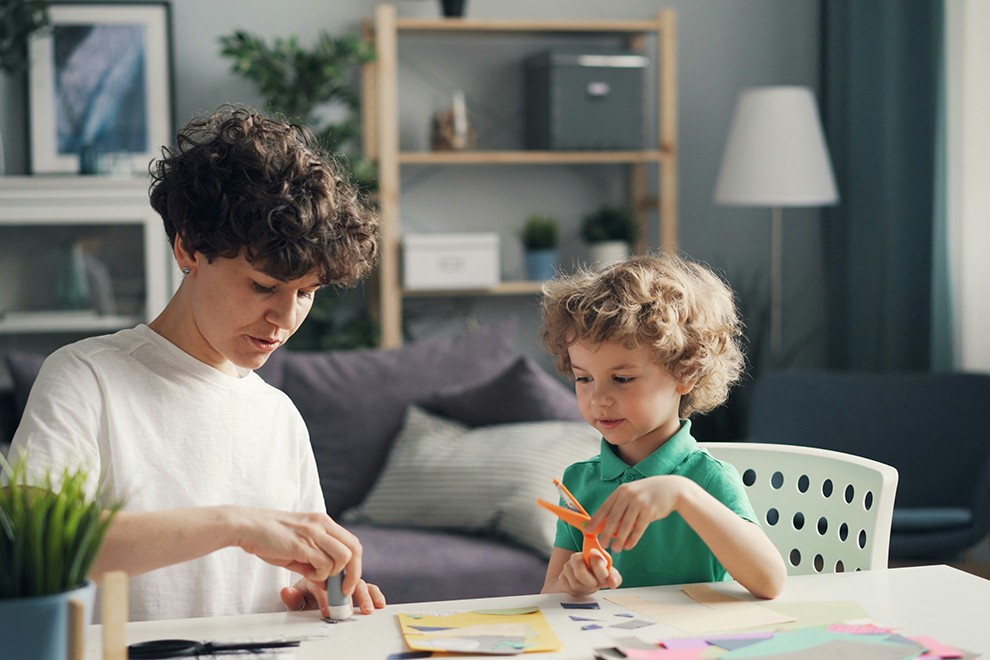
Even though open-ended time is good for children, we do want to consider developing at least a loose sense of structure for each summer day at home. It can be helpful to think about building in a few parts of the summer day schedule that are consistently predictable. The parts of the day that are predictable act as a kind of anchor, providing an opportunity for kids to reset. Consider creating and maintaining a morning routine, mid-day reset opportunity (think down time or rest), and an evening or bedtime routine. You could also plan a few kinds of activities you’d like your children to engage in every day. For example, maybe you decide that every day should include outside play for at least an hour, time spent reading, and a creative activity. Perhaps you have a schedule of childcare or camps which will provide much of the daily structure for the kids. In that case, consider what the pre-camp and post-camp time should include — again not to over schedule it, but to build in gentle structure. Reduce too much open-endedness and have conversations with your children about the general structure of each day or week. Incorporate their feedback as much as you can, while being clear about things you won’t be able to do (since most parents aren’t on summer break too).
In the menu of options for each day, consider including one thing that is a little hard for your child to do. For example, a household chore that is developmentally appropriate or maybe a project they’ve designated as a goal for the summer. It is good to keep those skill-building muscles engaged throughout the summer so that kids can continue to learn how to be active learners. Spending time each day doing something that is mildly challenging builds frustration tolerance, persistence, emotional regulation, and problem-solving skills. Have a conversation with your child about this: “One of the things you do each day should be a little bit hard — it’s actually one of the ways we keep our brains growing! What chores, tasks, or projects might you be interested in challenging yourself with even if it’s just for 15–30 minutes of the day?”
It may also be helpful to look at the role connection and play are having in your daily rhythm. Whether your child is 3 or 13, shared moments of laughter, play, and simple togetherness are the foundation of so many parenting strategies. As you move through the summer, ask yourself: Are we making space to have fun together? Are there moments when we can simply slow down and enjoy each other’s company? Children are often more cooperative when they feel connected, and sometimes one of the most helpful things we can do — for them and for ourselves — is pause, play, and be present.