


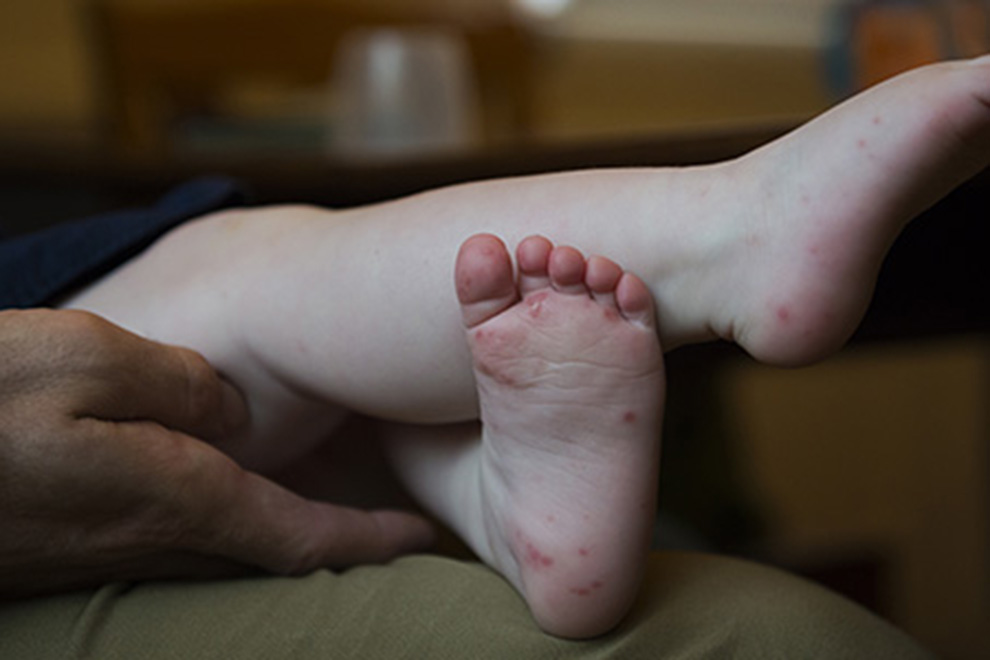
If you’re a parent, you’ve probably heard of Hand, Foot, and Mouth Disease (HFMD). It’s highly contagious and typically seen in kids under the age of 5, so the odds of your child experiencing it at some point are pretty high.
This common virus has become even more prevalent in recent months with the Virginia Department of Health reporting a significant increase in the number of HFMD cases seen in emergency rooms and urgent care centers since fall 2025. There has also been a notable increase in reported HFMD outbreaks, most of which came from schools and daycares.
So, what exactly is this disease? How is it spread? What are the symptoms? How can it be treated? Here’s what parents should know about HFMD.
Hand, Foot, and Mouth Explained
Caused by the coxsackie virus, HFMD is identified most commonly by symptoms like a rash or blisters on the hands and feet and sores in the mouth. The blistery rash may appear in other areas too, such as the diaper region and back of the throat.
The virus is most often spread through saliva, fluid from blisters, stool, or respiratory droplets. Illness is common in young children because of their tendency to put things in their mouths, making places where little ones gather — like daycare centers — prime spots for transferring HFMD. That said, older children and adults can catch it too. Just like colds, the flu, and other illnesses, it can be picked up from door handles, shopping carts, and many other shared items or surfaces.
The best way to prevent this highly contagious disease is by thoroughly washing hands, especially after diaper changes and coming into contact with drool or blisters. Cleaning frequently touched surfaces and shared toys is helpful as well.
Caring for a Child with Hand, Foot, and Mouth
If your child does get HFMD, they’re likely to have mild pain, a sore throat, and fever. They may also experience common cold symptoms, such as runny nose, cough, and general irritability. HFMD usually goes away on its own in about 7–10 days. In the meantime, over-the-counter pain relievers, popsicles, and cold drinks can help relieve pain.
Sores on the back of the throat can make swallowing particularly painful, so your child may not be interested in drinking much, but staying on top of their fluid intake is key. They should be using the bathroom or wetting at least one diaper every eight hours. That’s a good sign that they’re staying hydrated. If this isn’t happening, it’s a good idea to reach out to their pediatrician.
Avoid acidic drinks, such as orange juice and soda, and spicy or salty foods since these can irritate an already sore throat. Bland foods are best for children to eat until symptoms improve — applesauce, broths, oatmeal, smoothies, and yogurt are a few good options.
Returning to School or Daycare
The rash associated with HFMD may stick around for a week or more, but kids don’t need to stay home until it is completely gone. It’s typically safe for them to return to school, daycare, and other activities once they’re feeling better and have been fever-free for 24 hours without the use of fever reducing medications.