

By the time May rolls around in Richmond, we’re all craving fresh air and fresh starts. Spring sports are in full swing, school is racing toward summer, and families are trying to juggle end-of-year concerts, testing, recitals, and the eternal question: What are we doing with the kids this summer? It’s a busy, hopeful time, but it can also be a stressful one.
That’s why May being Mental Health Awareness Month feels especially timely. Mental health isn’t just something that only shows up in moments of crisis. It’s part of everyday life, just like physical health. And just like physical health, it changes over time, across seasons, and throughout different stages of life. Whether you’re a parent of a toddler who melts down at Target, a teen navigating social media pressure, or a grandparent supporting a family member through a tough season, mental health is something that touches every Richmond household.
The good news? There are more conversations, more resources, and more understanding than ever before. While we still have a long way to go, Mental Health Awareness Month is a perfect time to check in with ourselves and each other.
What Does “Mental Health” Really Mean?

Mental health refers to our emotional, psychological, and social well-being. It affects how we think, feel, act, handle stress, relate to others, and make decisions. It’s not just about diagnosing disorders; it’s about how we’re functioning in everyday life. You don’t need a clinical diagnosis to benefit from mental health support. Feeling overwhelmed, anxious, burned out, disconnected, or emotionally exhausted are all signs your mental health may need extra attention. Just like physical health, mental health exists on a spectrum. Some days we feel strong and resilient while others we’re running on fumes. Both are normal parts of being human.
Why Mental Health Awareness Month Matters
Mental Health Awareness Month began in 1949 and has grown into a nationwide effort to reduce stigma, encourage education, and promote access to care. What started as a small public health campaign has become a month-long movement that brings together schools, workplaces, nonprofits, healthcare providers, and families to talk more openly about emotional wellbeing.
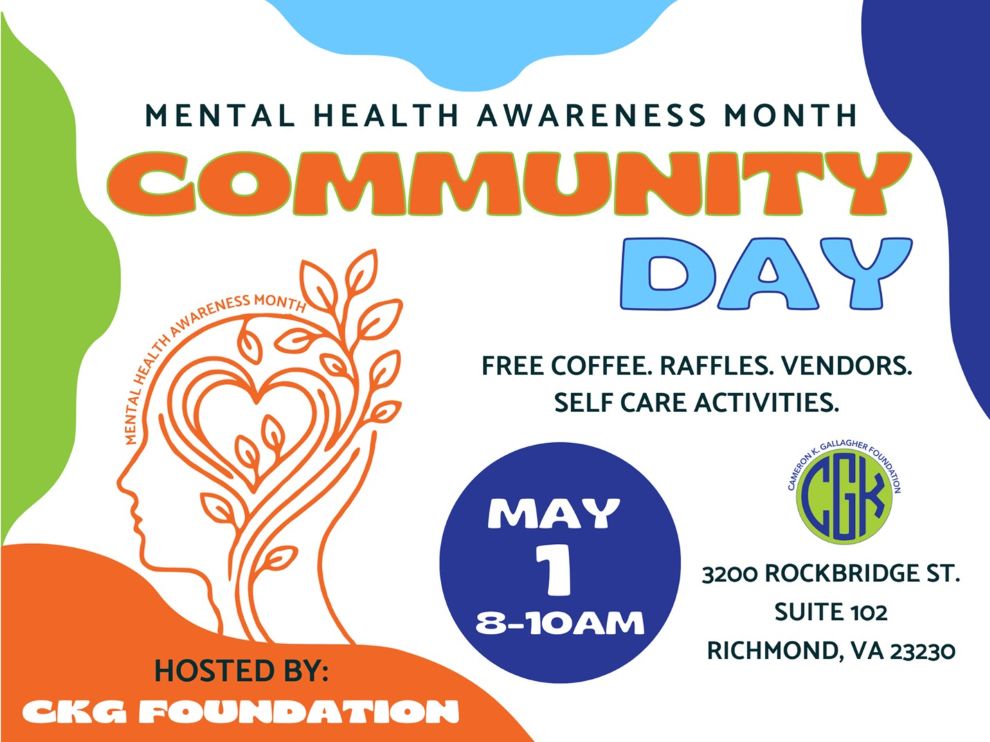
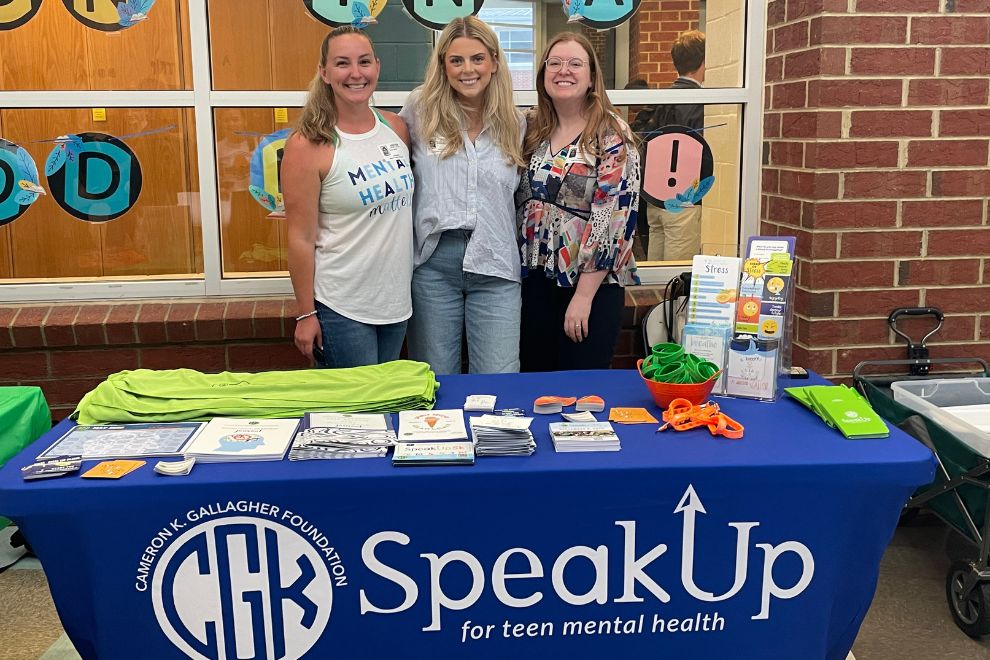
At the Cameron K. Gallagher Foundation, we use May to share stories, host events like our Community Day on May 1st, and remind people they’re not alone. Community-based efforts like these are especially powerful because they make mental health visible and local, not just something discussed online or in national headlines, but something that exists in our neighborhoods, schools, and families. Mental Health Awareness Month also matters because it creates space for learning. Many people still don’t know the difference between stress and anxiety, sadness and depression, or burnout and trauma. Having a designated month encourages families to seek information, attend workshops, follow mental health organizations, and start conversations they might otherwise avoid.
According to the Centers for Disease Control and Prevention, about 1 in 5 adults in the U.S. experiences a mental illness every year. For children and teens, the numbers are similarly sobering at roughly 1 in 6 youth aged 6-17 experiencing a mental health disorder annually. These statistics aren’t meant to scare us. They’re meant to normalize conversation and reduce the stigma. Mental health challenges are common, treatable, and nothing to be ashamed of.
Awareness also leads to earlier support. When families recognize warning signs, understand available resources, and feel less shame around asking for help, people are more likely to seek care before reaching a crisis point. That can mean fewer emergencies, stronger coping skills, and better long-term outcomes for both kids and adults. Ultimately, Mental Health Awareness Month isn’t about checking a box or posting a single social media graphic. It’s about building a culture where emotional health is valued year-round and where mental health conversations feel as normal as talking about nutrition, exercise, or sleep.
The Mental Load of Modern Family Life
Parenting has always been hard, but modern parenting comes with a unique kind of mental load. We’re managing work schedules, school portals, sports apps, group texts, social media, and constant notifications. Add in rising costs, housing stress, academic pressure, and the emotional labor of caring for others, and it’s no wonder so many parents feel depleted.
Mental health struggles don’t always look dramatic or obvious. They often show up in subtle ways, such as:
- Chronic fatigue
- Irritability or short tempers
- Difficulty concentrating
- Trouble sleeping
- Feeling numb or disconnected
- Loss of interest in things you used to enjoy
Since these symptoms blend so easily into daily life, they’re often brushed off as “just being busy” or “part of parenting.” Over time though they can signal burnout, anxiety, or depression, especially when there’s little time for rest or support. The challenge is that many parents don’t feel they’re allowed to be struggling. There’s a cultural expectation to stay positive, be grateful, and push through. Constantly functioning in survival mode takes a real toll on both mental health and family dynamics. Acknowledging the mental load is often the first step toward lightening it through shared responsibilities, realistic expectations, and permission to slow down.
How to Talk About Mental Health with Kids
One of the most impactful things families can do is normalize emotional conversations at home. Mental health doesn’t have to be a big talk. Instead, it can be woven into everyday life like talking about school, friends, or what’s for dinner. Try simple check-ins like:
- “What was the best part of your day?”
- “What was the hardest part?”
- “How are you feeling in your body today?”
These questions open the door without putting kids on the spot. Some days you’ll get thoughtful answers while other days you’ll get a shrug. Both are okay. The goal is consistency, not perfect.
Using a wide range of emotion words also helps kids build emotional literacy, such as the ability to recognize and name what they’re feeling. Go beyond happy and sad to include words like frustrated, nervous, disappointed, excited, jealous, proud, overwhelmed, or lonely. The more language kids have for their feelings, the easier it becomes for them to communicate needs instead of acting them out.
It’s also helpful for adults to model emotional honesty. Saying things like, “I had a stressful day, and I need a few minutes to decompress,” or “I’m feeling overwhelmed, so I’m going to take a walk,” teaches kids that emotions are normal and that coping strategies are part of everyday life. This kind of modeling shows that feelings don’t need to be fixed or hidden. They just need to be understood and managed.
When kids share something difficult, resist the urge to immediately solve the problem. Sometimes the most supportive response is simply listening and validating “That sounds really hard,” or “I’m glad you told me.” Feeling heard is often more powerful than receiving advice. Most importantly, keep the tone calm and non-judgmental. If kids worry about being punished, dismissed, or told they’re overreacting, they’re less likely to open up in the future. Creating a home culture where emotions are welcome builds trust and gives kids lifelong tools for managing their mental health.
Breaking the Stigma One Conversation at a Time
Despite progress, stigma remains one of the biggest barriers to mental health care. People still worry about being judged, labeled, or misunderstood. You might fear being seen as weak, dramatic, or incapable, especially parents who often feel pressure to hold everything together for everyone else. Stigma fades when stories are shared, but silence keeps it alive.
Every time a parent says, “We’re seeing a therapist,” or a teen says, “I’m struggling,” or a grandparent says, “I need support right now,” the culture shifts a little. These everyday admissions that are often said quietly make it easier for someone else to speak up next. Conversations don’t have to be heavy or public to be meaningful. Sometimes stigma is broken in small, private movements like a car ride home from school, a text to a friend, or a late-night talk at the kitchen counter. When families treat mental health like any other health topic, it becomes less scary and more normal.
Mental Health Awareness Month isn’t about perfection, but rather it’s about permission. Permission to feel what you feel. Permission to ask for help. Permission to rest. Permission to admit you don’t have all the answers and maybe most importantly, permission to stop pretending everything is fine when it isn’t.
For kids especially, seeing adults talk openly about emotions sends a powerful message that struggling is part of being human and not something to hide. The more we model honesty, vulnerability, and compassion, the more we create homes and communities where mental health is treated with the same care and respect as physical health.
Mental Health is a Family Affair
Mental health doesn’t exist in isolation. It’s shaped by family systems, environments, routines, and relationships. When one family member struggles, everyone feels it. When families prioritize emotional well-being, everyone benefits.
Supporting mental health often looks less like fixing and more like creating conditions where people feel safe, supported, and understood. It’s in the way families communicate during stressful moments, how conflict is handled, and whether emotions are welcomed or brushed aside.
That might look like:
- Choosing fewer activities and leaving space for downtime
- Taking mental health days without guilt
- Starting therapy together or individually
- Spending more time outdoors and away from screens
- Having more honest conversations about stress, fear, and feelings
It can also mean adjusting expectations about grades, productivity, behavior, or even what a normal family day looks like. Sometimes supporting mental health is letting go of perfection in favor for connection. A messy house, a simple dinner, or a canceled plan might actually be the healthiest choice in that moment.
Mental health-friendly families tend to value flexibility, empathy, and open communication. They check in often, notice changes in mood or behavior, and take emotional cues seriously even when they’re inconvenient or uncomfortable. There’s no single right way to support mental health. The best approach is the one that fits your family’s values, needs, and stage of life. What works for a household with toddlers will look different from what works for teens or empty nesters. The goal isn’t to eliminate stress but to build resilience, trust, and habits that help everyone navigate life’s inevitable ups and downs together.
A Gentle May Challenge for Richmond Families
If you’re looking for a simple way to honor Mental Health Awareness Month, try this low-pressure family challenge:
One small mental health habit each week in May:
Week 1: Family check-in night
Share highs, lows, and something you’re grateful for.
Week 2: Screen-free evening
Replace devices with a board game, walk, or activity.
Week 3: Do something kind together
Write thank you notes, donate items, or help a neighbor.
Week 4: Rest on purpose
Plan a day with no major commitments.
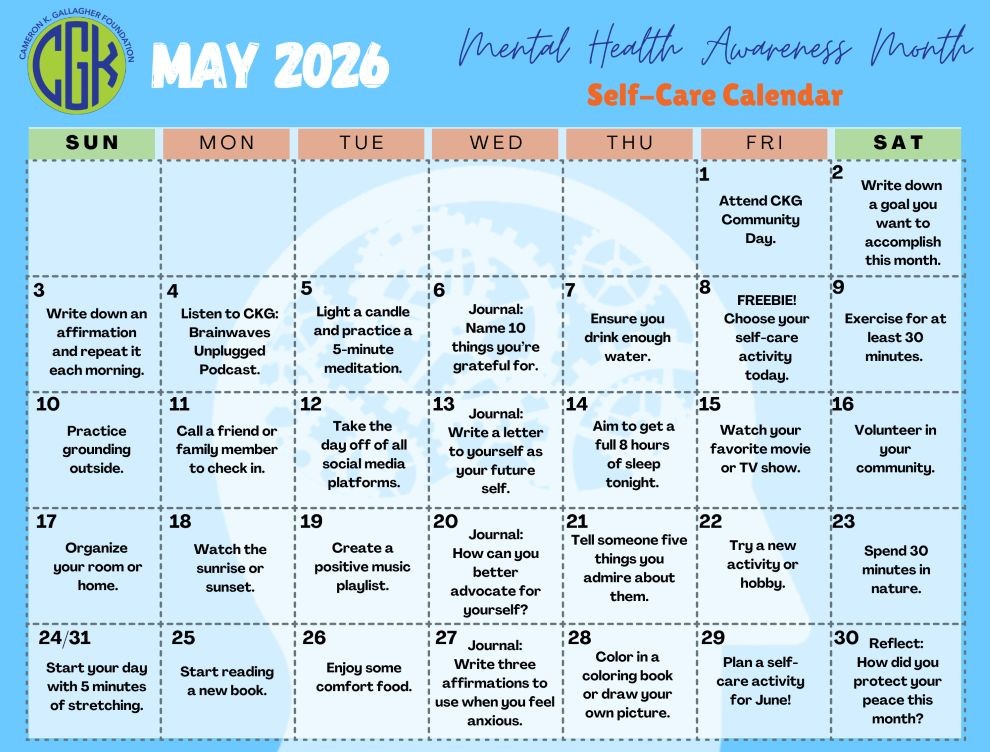
These aren’t life changing interventions, but they create space for connection, reflection, and emotional awareness. If you’re feeling ambitious, check out our self-care challenge for May that includes one self-care activity a day for the entire month:
The Bottom Line
Mental Health Awareness Month isn’t about adding another thing to your to-do list. It’s about pausing long enough to notice how everyone in your household is actually doing. It’s about recognizing that mental health is part of health. That stress is real. That support matters. And that no family is immune to emotional challenges.
In a city like Richmond that’s full of creativity, community, and care, we have a powerful opportunity to keep these conversations going long after May ends. Mentally healthy families don’t look perfect. They look honest, supported, and human.
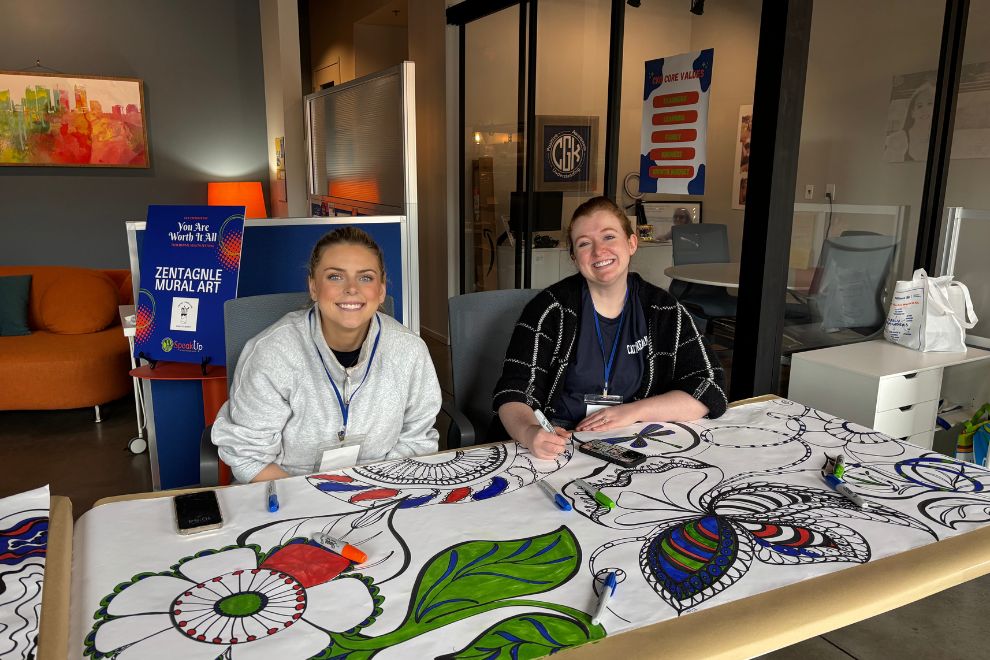
Kick off Mental Health Awareness Month at the Cameron K. Gallagher Foundation on May 1st from 8-10am in Scotts Addition for a Community Day! This is a free event that will include self-care activities, raffles, free coffee truck, silent auction, vendors, and more.