A simple white index card; a personal message, but that message is powerful.
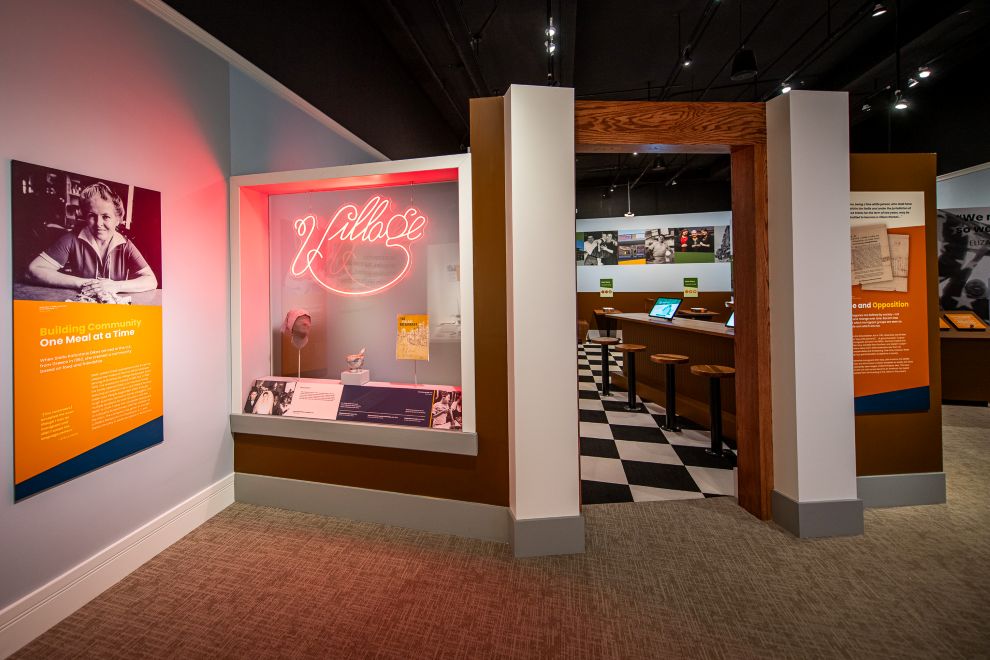
It may resemble a restaurant setting but the final section of the We The People: The World in our Commonwealth exhibit at the Virginia Museum of History and Culture is a place where people can reflect on the exhibition and jot down their own stories of immigration and self-discovery.
Those reflections are posted on a board for all to see.
One card reads: “My mom came to the U.S. to become a scientist – Lily.” Below that on the same card, “I discovered the genes that help us hear high frequency versus low frequency sounds! – Lily’s mom.”
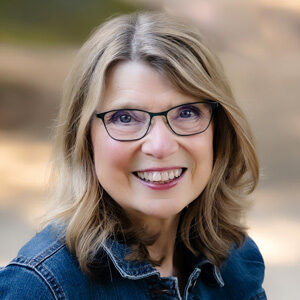
“This is one of my favorite cards,” says Julie Kemper who works with Noah Tinsley as curators for the We The People exhibit, which runs through Sept. 7.
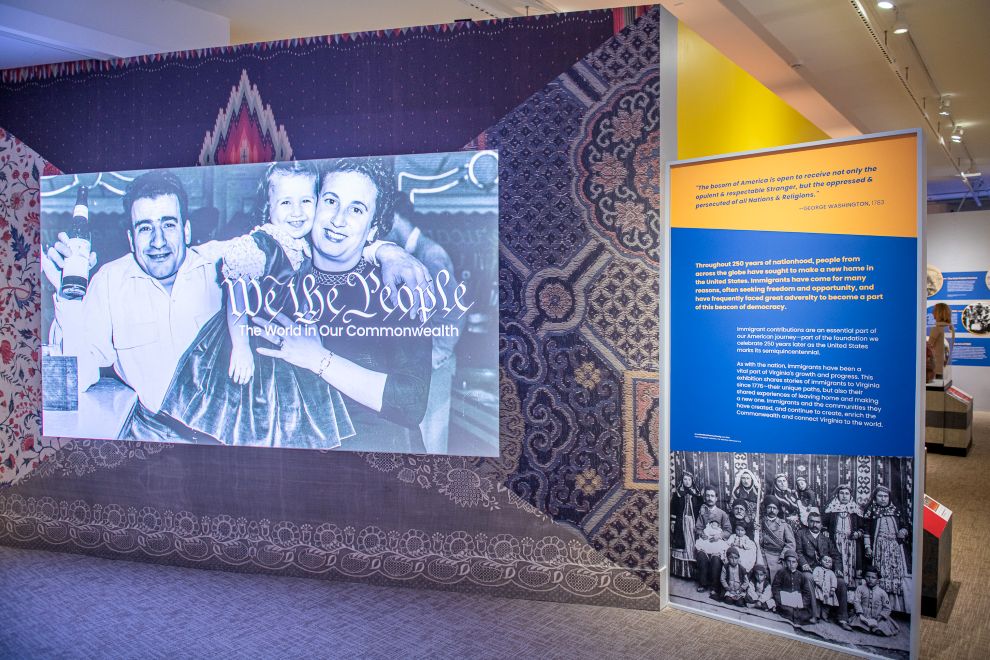
The exhibit, part of the Museum’s multi-year commemoration of America’s 250, looks at immigration through the more than 100 personal stories of immigrants from 68 countries who came to the U.S. and Virginia. It is one of the museum’s two major exhibitions for the semiquincentennial.
“We The People is intended to tell the story of individuals that have come to Virginia since the American Revolution, from 1776 to current day,” says Kemper. “It looks at how people arriving in Virginia have influenced and changed the Commonwealth.”
Those looking for a chronological history of immigration in Virginia, may have to look elsewhere as this exhibit is focused on people. “We always want to make sure it is an individual story, not a generational one,” Kemper says.
Looking at current times, there are 1.16 million people who were born in other countries living in Virginia today, Tinsley points out. Data for the late 1700s and early 1800s is not available.
“We have data from 1850 on when the U. S. Census Bureau started asking where people were born,” he says. “For Virginia, immigration to the state [at that time] was relatively low compared to places like New York and California.”
Higher percentages of immigrants didn’t start appearing until the 20th century thanks to the Immigration Act Nationality Act of 1965 which removed America’s policy of limiting immigration based on national origin.
“That was a big change,” says Tinsley. “It opened up immigration for people with family already in the U.S.”
The change in numbers of immigrants in Virginia also “has a lot to do with what the state offered people moving to the commonwealth regarding work and educational opportunities,” Kemper adds.
Gathering Personal Stories
The individual immigrant stories in the exhibit contain “similarities regardless of when or where they came from,” says Kemper. “We have paired stories that may be decades or centuries apart.”
The stories in the exhibit were chosen after researching oral histories held by universities, museums and libraries such as the Library of Virginia and a statewide listening tour conducted by the VMHC curators.
“We wanted to cast a wide net,” says Tinsley who has been working on this project since October 2023.
After conducting initial research, Tinsley and Kemper talked to many of Virginia’s immigrants, “second generation folks and organizations and places that worked with immigrants,” Tinsley says.
The VMHC built the exhibit from scratch because there wasn’t “anything comprehensive about Virginia immigrants,” says Kemper. “Much of our collection focused on a smaller subsection of Virginians for decades. In the last 20 years, there has been an effort to tell the story of every Virginian and this is an opportunity to do that. We feel like this is groundbreaking.”
Understanding and Relevance
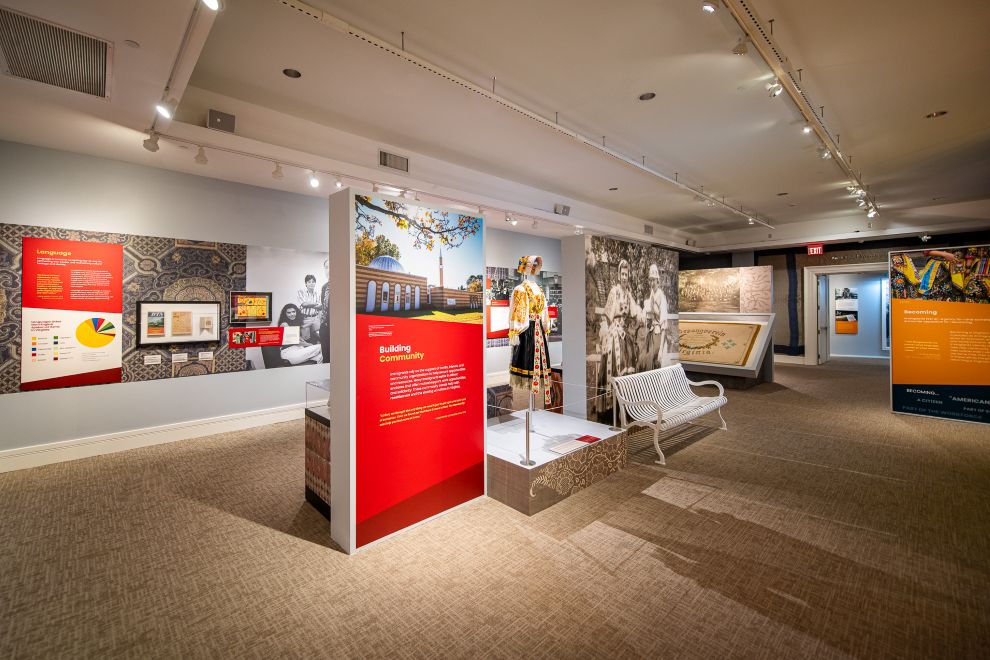
Understanding the refugee process is complicated, she adds. “We want to show how difficult and complicated the process is to come to the U.S. and have all the proper documentation to become a citizen.”
One of the aspects of immigration that Kemper has learned in the process of building the exhibit is that most immigrants that arrived in Virginia already knew someone in the commonwealth.
“They have a reason they chose the U.S. and Virginia,” she says, noting there are often several reasons for someone to leave their homeland and come to the U.S.
Immigration is a relevant topic in today’s world. “It’s a good way for people to understand the population in Virginia and for people to humanize this topic and emphasize the stories of people,” Tinsley says. “I hope people can see themselves in these stories we tell so they understand that we have more in common than not.”
When Kemper and Tinsley travelled around Virginia on their listening tour, they repeatedly heard people say that they wanted to learn about the individual stories and how immigrant communities have impacted Virginia in a positive way.
“But, they didn’t want us to back away from the difficult parts of the story,” Kemper says. “They told us that this is more important than ever.”
In talking to people visiting the gallery at VMHC and on tours, Kemper has been struck by how many people are personally moved by the exhibition.
“Whether they are a recent immigrant or not, it gives me the shivers when I talk to someone and they say ‘this is my story, this is my experience too,’” she says.
We The People: The World in Our Commonwealth is on display at Virginia Museum of History & Culture through September 7th. Tickets can be purchased at the Museum or on their website. Join the RFM Team the first Friday of each month for First Fridays, where Museum admission is free from 5:00 PM – 8:00 PM. First Fridays includes live music, family-focused activities, food trucks, and specials in the Commonwealth Cafe.