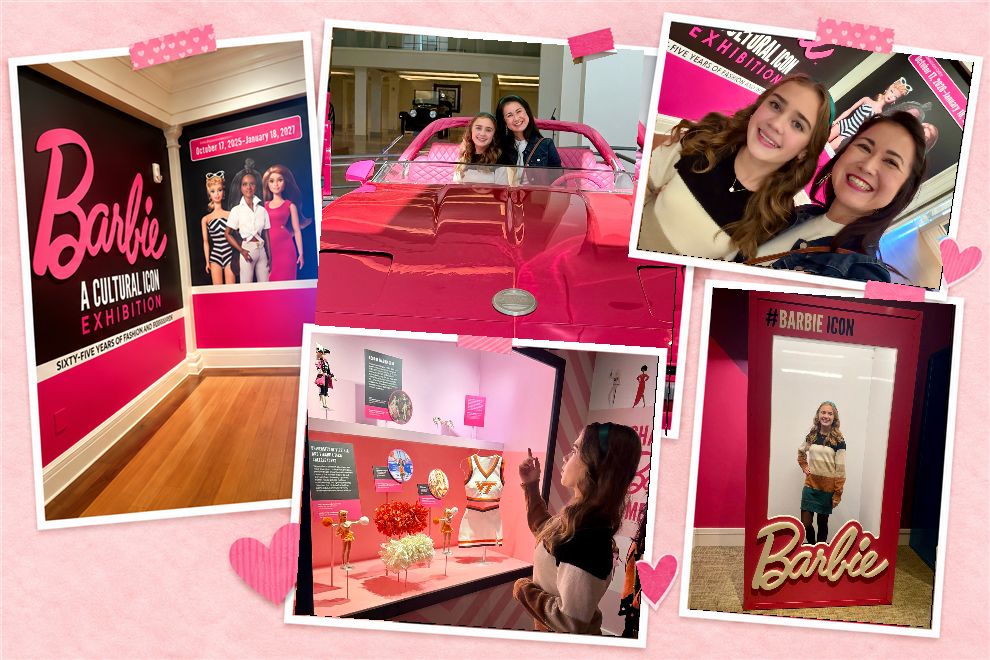


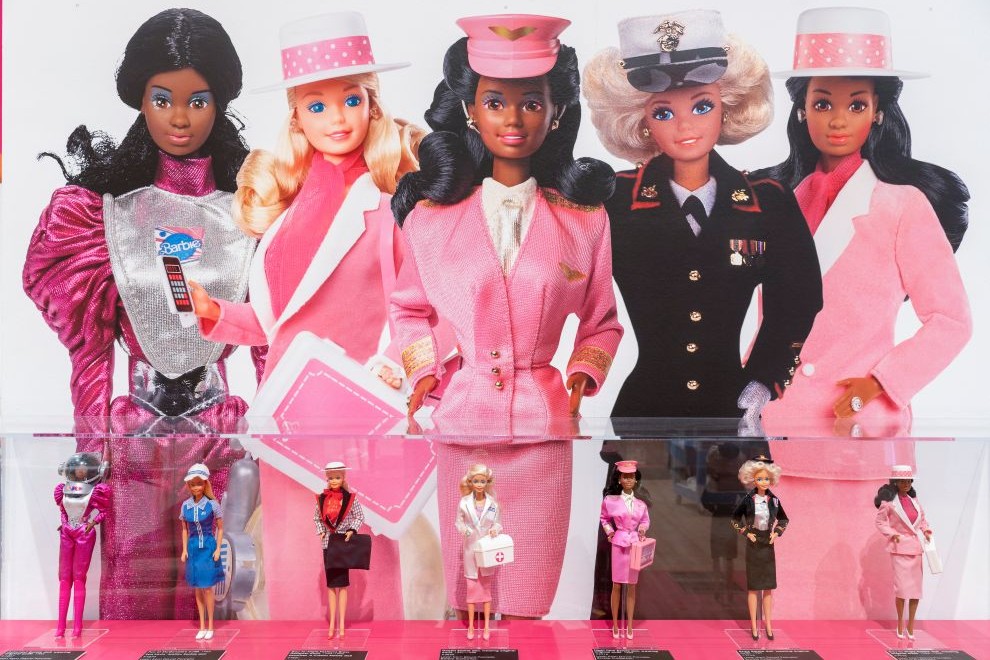
There are two aspects of the new Barbie: A Cultural Icon exhibit at the Virginia Museum of History & Culture that curator Elizabeth Klaczynski appreciates: the doll’s universal appeal and the color pink — lots of it.
Ever since Barbie hit store shelves in 1959, she has been a favorite toy, more than just a doll. She’s served as a companion and inspiration for little girls around the world, including yours truly.
“A lot of people have a personal relationship with Barbie. Most people know who she is,” says Klaczynski, noting the doll creates a real sense of nostalgia. “Generations will come to see Barbie and reflect on their memories.”
As far as the pink aspect goes, “it’s super pink, super bright, and lots of fun,” she says.
More than a Toy, Barbie Reflects Changing Times and Possibilities for Girls and Women.
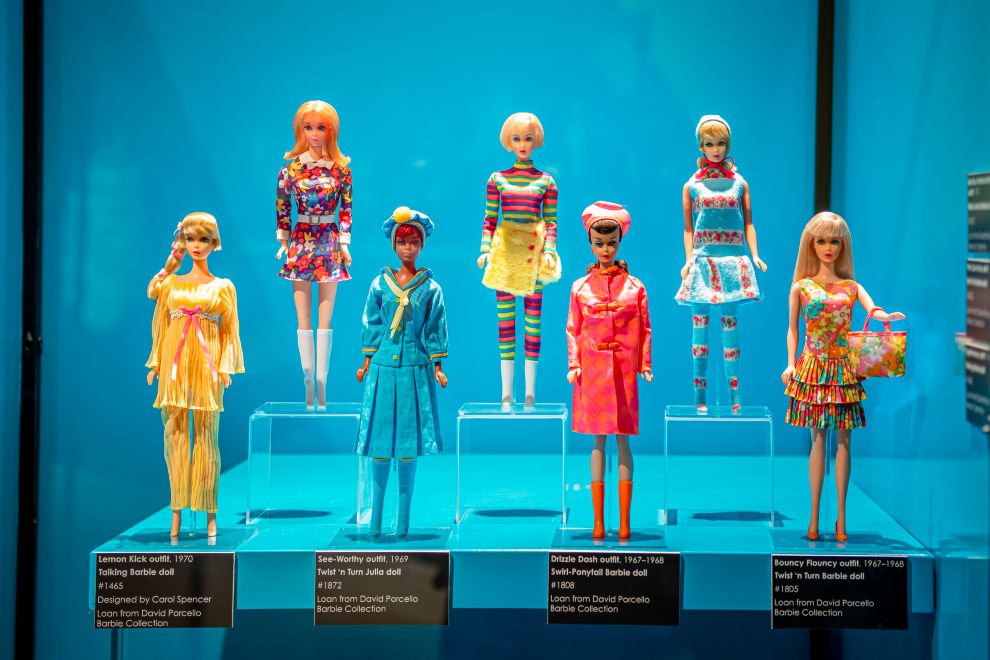
The exhibit, which runs through January 18, 2027, spans Barbie’s debut in 1959 through today and traces how Barbie became culturally defining — reflecting changing fashion, shifting expectations and evolving ideas about what girls and women can be.
“It has a historical element to it,” Klaczynski says of the exhibit. “It takes Barbie decade by decade. As American society is changing, Barbie is changing.”
Over the years, Barbie has become more diverse, reflecting transforming times and attitudes —new looks, new clothes, and new occupations.
“Mattel created a doll that any girl could see herself being. She could do anything she wanted to do. Barbie was a way for little girls to see themselves as adults,” Klaczynski says.
Klaczynski remembers playing with her Barbie doll when she was young. “It was the way you worked out your world as a kid, and there is an element of that in this exhibit,” she says.
From George Washington to Gabby Douglas, Six Barbies Celebrate Virginia connections.
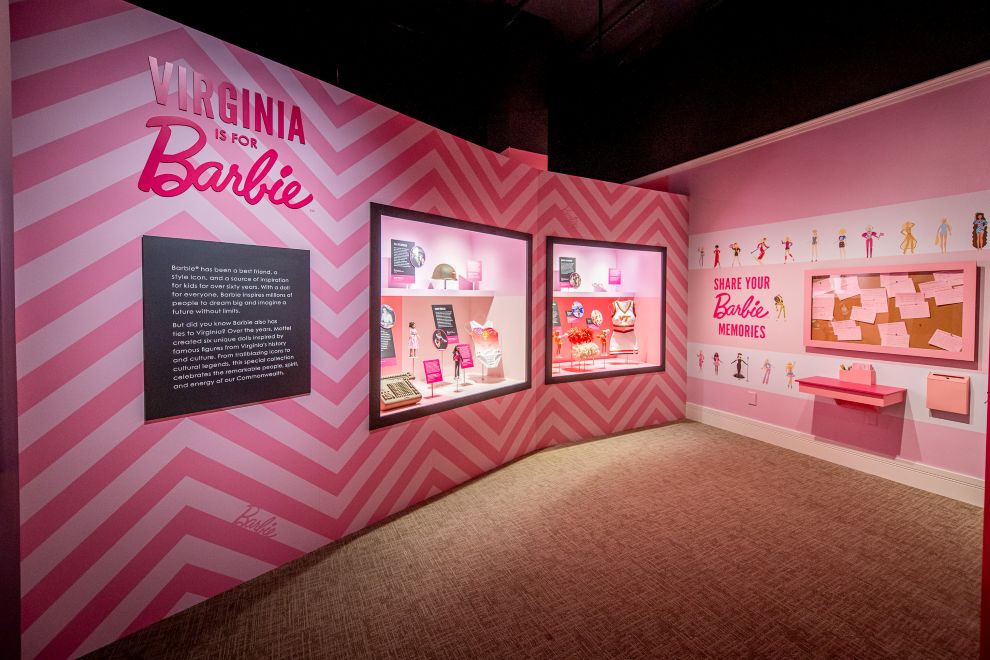
To make the exhibition uniquely Virginian, the VMHC is exhibiting a selection of Barbies related to the Commonwealth’s history.
Each of the six Virginian Barbies — George Washington, Ella Fitzgerald, Katherine Johnson, Gabby Douglas, a U.Va. Cheerleader, and a Virginia Tech Cheerleader — will be displayed with an object associated with the real historic figure or cultural icon.
For example, the Gabby Douglas Barbie is displayed with a leotard signed by the USA women’s gymnastics team from the Rio 2016 Olympics. The George Washington doll is accompanied by Washington’s formal silver and copper shoe buckles.
“Mattel created the dolls with Virginia connections,” Klaczynski says. “My personal favorite is the George Washington Barbie. It’s a lot of fun.”
The exhibit contains more than 250 vintage dolls, including early and iconic editions, along with fashion displays, behind-the-scenes content and selfie opportunities where visitors can immerse themselves in the cultural moments that surrounded Barbie throughout history. Look for the original 1959 Barbie to be exhibited alongside her earliest looks.
Also on display — a recreation of the classic Barbie Dreamhouse, an oversized “Barbie Box,” and a full-size 1984 Corvette in signature mirror-pink styling. Each offers visitors the chance to get inside and have their photo taken while living out Barbie and Ken’s most iconic experiences.
For little girls everywhere and for this writer who still has her childhood Barbies, “Barbie has always been more than a doll — she’s a snapshot of what people wore, what they imagined and what they believed was possible,” Klaczynski says.
Barbie: A Cultural Icon is on display at Virginia Museum of History & Culture daily through January 18, 2027. Tickets can be purchased at the Museum or online.