
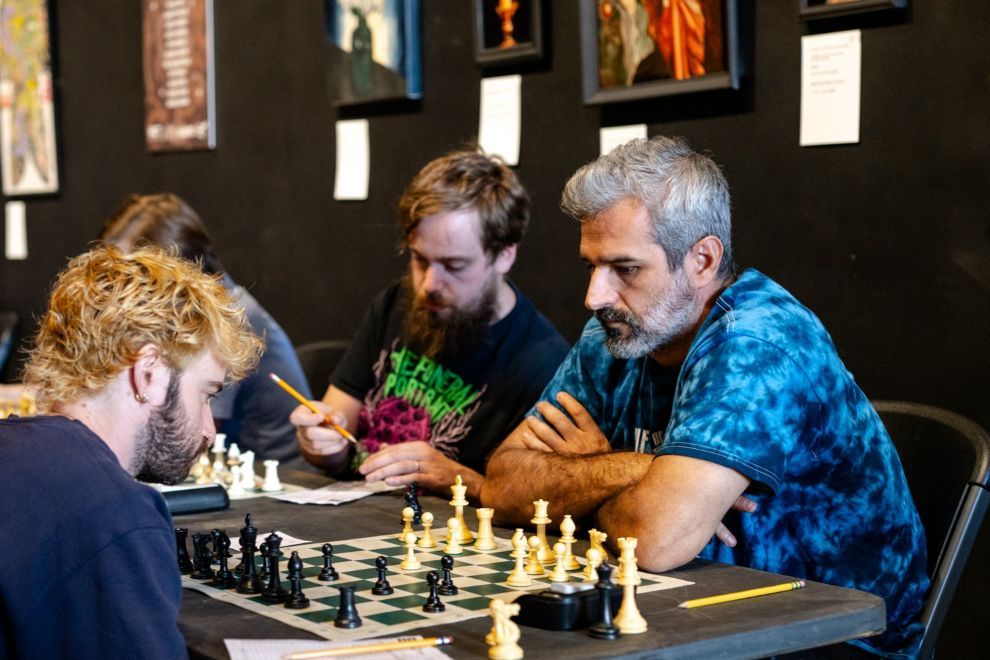
If your mental image of a chess club involves hushed libraries, stiff posture, and intimidating silence, Leo Salinas wants you to think again.
In April 2026, Salinas left behind a career as an analytics manager at major financial institutions like Capital One and SunTrust (now Truist) to open The Knight School Richmond. After already bringing after-school chess programs to 10 public and private schools across the Richmond area, he is now opening the doors to a permanent, dedicated chess arena on West Broad Street near Innsbrook.
And when families walk inside, they won’t find a quiet study hall. They’ll find groovy tunes, fast-paced clock-slapping games, and kids cheering each other on.
A Pandemic Pastime Turned Passion
Salinas’s journey from corporate data to youth chess coach started at his own kitchen table. Though he learned the game from his dad as a child—and still owns his original wooden chess set—it wasn’t until the COVID-19 pandemic that the game truly hooked him.
“I taught my son how to play, and eventually he got good enough to beat me,” Salinas says. “That’s when I decided to level up and study the game and began beating him back. I’ve been on a chess learning journey ever since.”
What drew him in—and eventually convinced him to trade spreadsheets for chessboards—is the endless depth of the game. “I love the fact that there is always room to grow and get better at chess,” he explains. “You can dedicate years and years to the game.”
Sportsmanship First, Fun Second, Mastery Third
At The Knight School Richmond, the philosophy flips traditional chess instruction on its head. “We are not your grandpa’s old boring chess club,” Salinas says. “We prioritize sportsmanship first, fun second, and getting really good at chess third. We have created an environment in which kids fall in love with chess and stick with it.”
While the school-based clubs are hosted in borrowed classrooms and libraries, the new Innsbrook arena was built from the ground up with young players in mind—from the posters on the walls down to the dimensions and spacing of the tables and chairs. One of the centerpiece features is an interactive “wall of puzzles,” where students can test their skills on touchscreen kiosks sorted by tactical motif and difficulty level, competing in friendly leaderboard challenges against their peers.
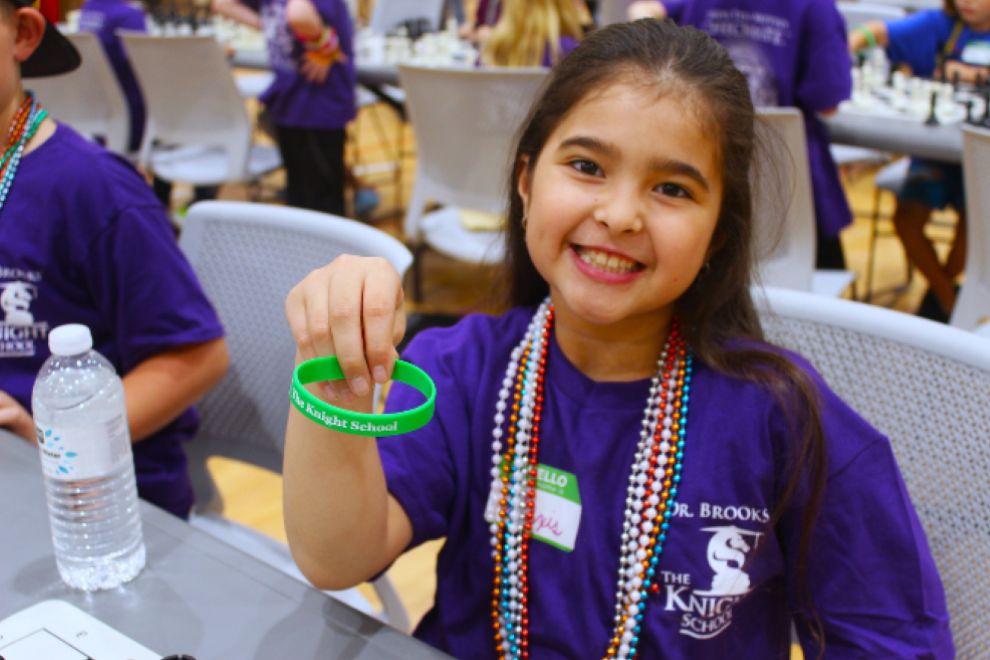
Motivation is also built into every match through Tactix-Bands—colored wristbands students earn by successfully executing specific tricks and tactics in live games against classmates —or a coach. Collecting all 26 bands becomes a badge of honor—and earns them a rare black shirt—keeping kids eager to practice.
From Puppet Shows to City-Wide Tournaments
Whether a child has never touched a pawn or is ready for advanced tournament play, the curriculum is designed to meet them where they are:
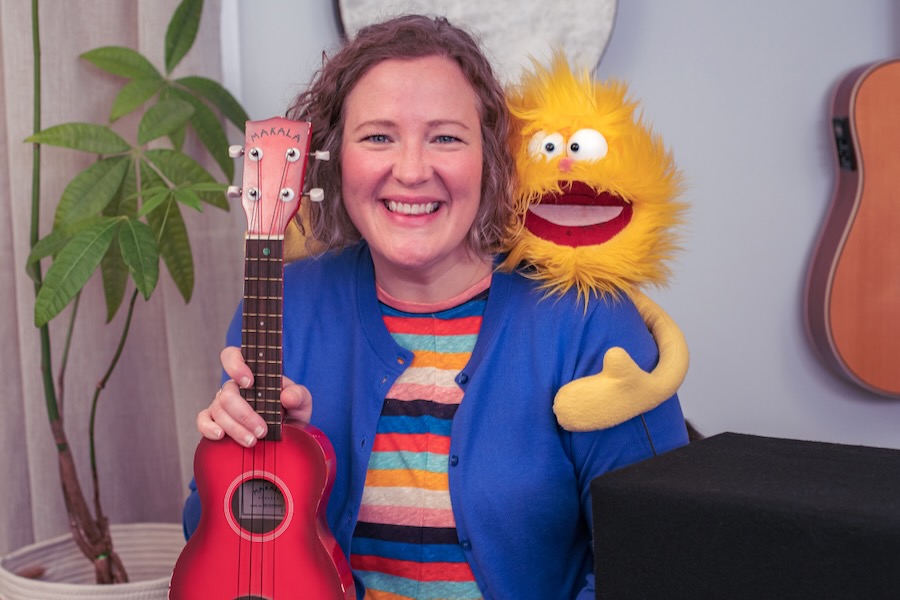
- Little Geniuses (Preschool–Kindergarten): Young learners are introduced to the board through catchy chess songs, puppet shows, movement, and lively mini-tournaments.
- Beginner to Varsity: Elementary and older students start from the absolute basics, with the option to advance into Varsity classes—and many enthusiastic students choose to attend both.
- Gear Included: Every enrolled student receives a custom Knight School chess set complete with triple-weighted pieces and a carrying tote—and if a piece ever goes missing, the school replaces it for free.
Beyond weekly classes, students can test their skills in online Saturday tournaments against Knight School peers nationwide, as well as in-person city-wide tournaments held each December and May. The arena will host its very first city-wide tournament on December 12.
Life Lessons Beyond the 64 Squares
For Richmond parents looking for an engaging alternative to tablets and endless scroll feeds, Salinas sees chess as an unmatched tool for building everyday life skills.
“In a day of screens and scroll feeds, chess teaches you to focus and concentrate on a task,” he says. “The cause-and-effect lessons that become second nature in chess translate into a child who can stop and ask, ‘If I do this act, what consequences come of it?’ It also instills resilience, as you have to move past a loss and try again. We teach kids to lose well, and to win with grace.”