
Joy Circle, a free program for families living with memory loss, is growing across RVA, and it’s looking for more congregations to host it.
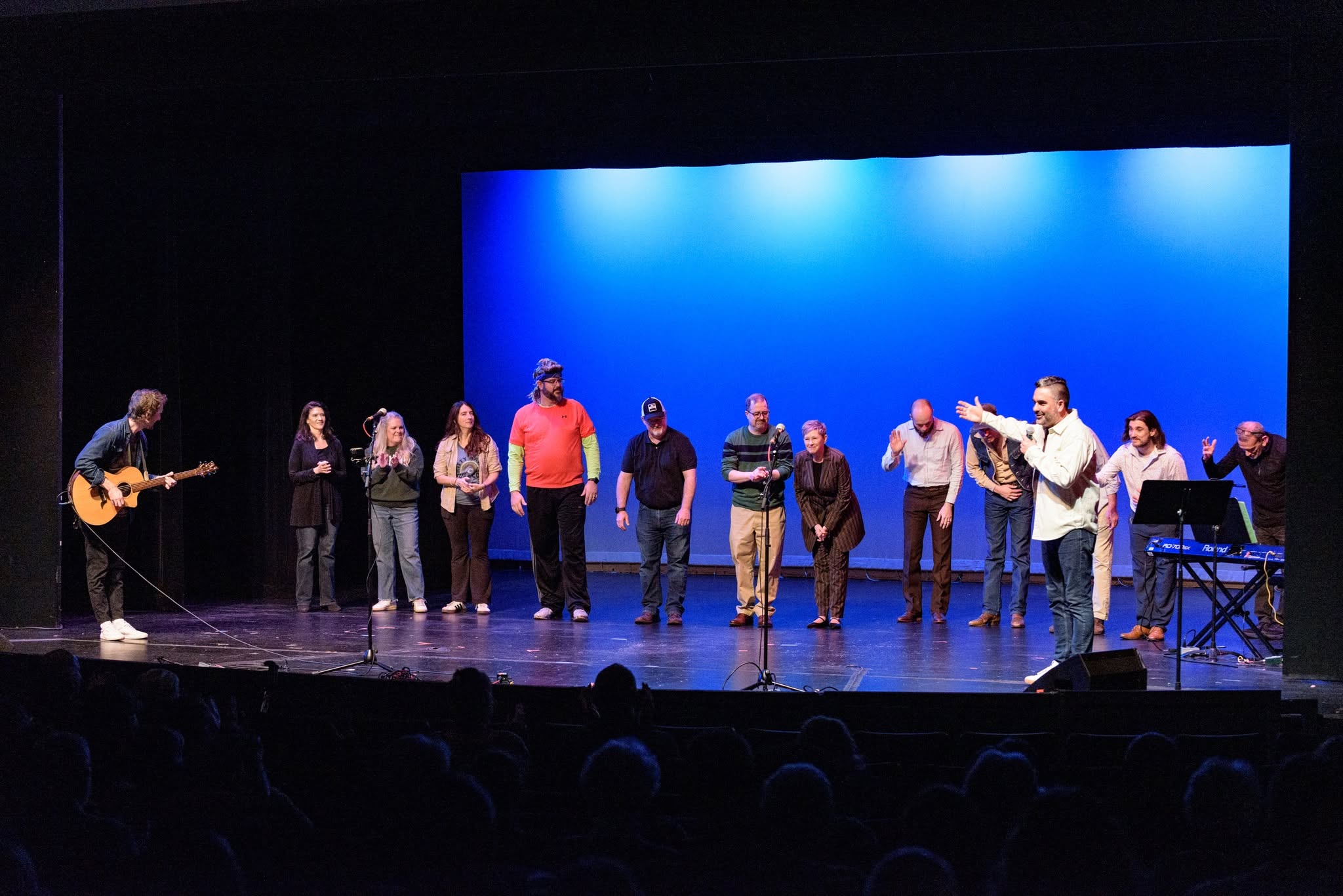
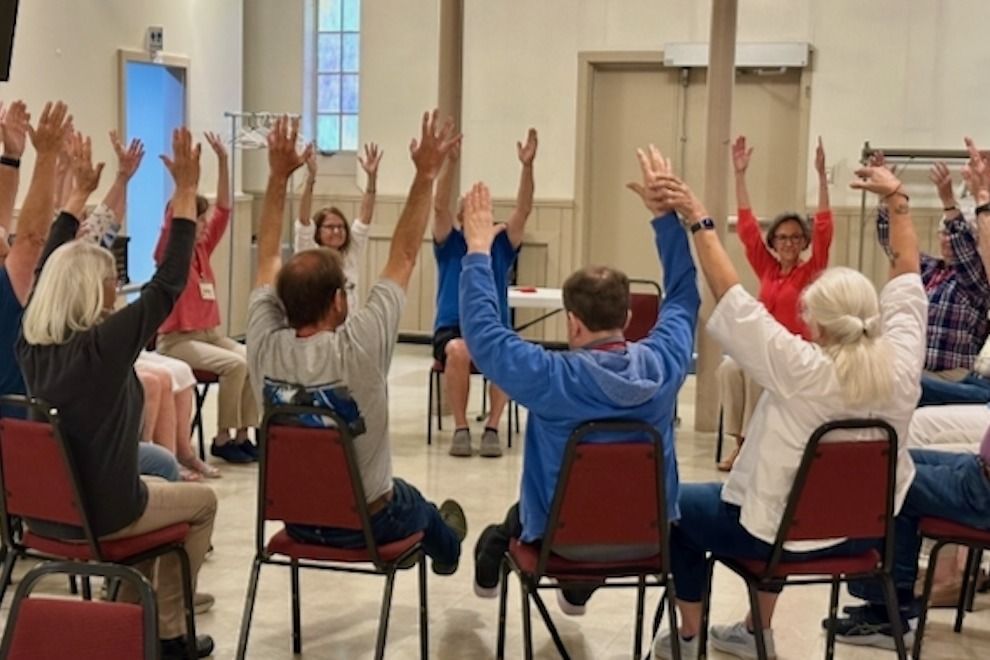
On Tuesday afternoons, the parish hall at St. Matthew’s Episcopal Church on Forest Avenue fills with music, laughter, and the occasional runaway balloon. Around a circle of chairs, adults living with dementia sing familiar songs, play games, and trade stories with volunteers. Down the hall, the people who care for them every day get two hours of something just as rare: a room full of people who understand.
This is Joy Circle, a free, volunteer-led program that local nonprofit Circle Center Adult Day Services offers in partnership with area churches. Since Circle Center and St. Matthew’s launched the first Joy Circle in March, the program has grown to five locations in Richmond, Chesterfield, and Midlothian, with the newest opening November 12th at First English Lutheran Church on Monument Avenue in the Fan District. Together, Joy Circles collectively serve 50 families every week.
A Need in Every Pew
Nearly every congregation has members caring for a spouse or parent with memory loss. Many of them keep their struggles with caregiving to themselves, creating an isolating and exhausting situation. What they need is a break.
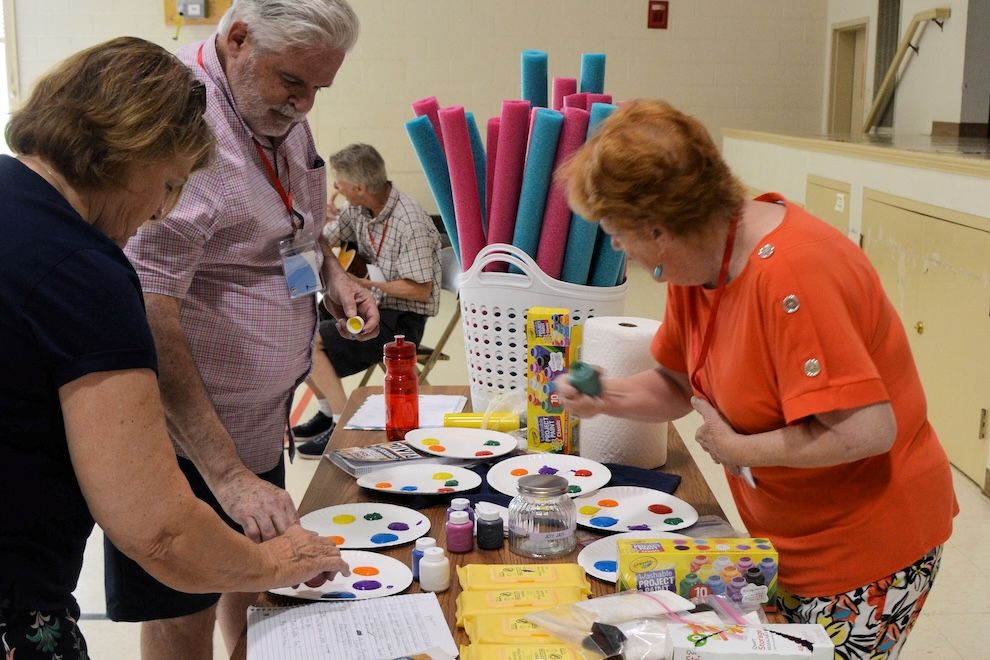
Joy Circle meets two needs at once. Participants, called Friends, spend two hours with trained volunteer Buddies enjoying music, gentle movement, brain games, conversation, and simple projects. At the same time, their care partners can attend an optional support group with others on the same journey.
Sue Rickman, who manages the St. Matthew’s program after 35 years directing a preschool, says it took her volunteers a few weeks to see the full picture. “The volunteers in this room are serving both the program participants and the care partners that are down in the support group or out getting other things done or resting,” she says. Both groups, it turns out, are being served.
Why It Works for Churches
The Rev. Steve Schlossberg, rector of St. Matthew’s, admits he wasn’t sold at first. “When it was first proposed to me, it did not grab me,” he says. A parishioner championed the idea, a few others joined her, and he was, in his words, “just barely wise enough not to get in their way.”
The result surprised everyone. “It landed immediately. It took root immediately. It began to thrive immediately,” he says. Only a small share of the parish volunteers, but he says Joy Circle has quickly become “a part of how we know ourselves as a parish.”
The startup costs are modest. “We needed some foam pool noodles and some construction paper,” Steve says. “The cost was practically zero. I mean, in dollars.” What a church does need is a room on a weekday afternoon, a few tables and chairs, and a group of willing volunteers.
Circle Center handles much of the rest. Drawing on 50 years of dementia care experience, it provides volunteer training, enrollment materials and ongoing support from its staff, so a congregation doesn’t need dementia expertise to begin. Joy Circle is a social program, not a medical one.
Asked what a church needs most to get started, Sue doesn’t hesitate: someone well connected to the congregation who is flexible and creative, surrounded by people who can handle logistics like scheduling and paperwork. “You need to be able to go with the flow,” she says. “You need to improvise.”
Coming Full Circle
The church connection runs deep. Circle Center itself was founded in 1976 by five churches of different denominations around Stuart Circle. Fifty years later, Joy Circle’s newest site at First English Lutheran is a ministry of the Stuart Circle Parish Council, with volunteers drawn from several neighboring congregations. These churches prove that none has to go it alone; they can share volunteers and host together.
The need is growing. Joy Circle sites are free to families, and space fills quickly. St. Matthew’s already has a waiting list. “We have lots of volunteers. They love it,” Sue says. “We have lots of people on our waiting list who’d like to get in.”
That’s why Circle Center is inviting more congregations, of any denomination, to consider hosting a Joy Circle.
How to Learn More
If your church, or a group of churches, is interested in starting a Joy Circle, visit joycirclerva.org to learn more and get in touch. Families who want to find a location near them can find details there as well.
As for what happens on those Tuesday afternoons, Sue sums it up in a single word. “Joy is the one word I would use to describe Tuesday afternoon’s at St. Matt’s.”