

The first time Jerold Solomon learned about Gabriel’s Rebellion from Ron Klipp, he was baffled. Even though he attended Virginia public schools, he never heard about Gabriel or Gabriel’s Rebellion in class.
“This completely monumental event happened, and most people don’t know about it,” says Solomon, who makes up one-third of the creative team for the new musical Gabriel, along with Klipp, orchestrator of local musical theatre productions, and Solomon’s cousin, Foster Solomon.
“There was a wealth of knowledge that I felt at the time had been hidden from me. It made the story so much more relevant to me. We are sure Gabriel’s Rebellion isn’t the only story not told,” Solomon adds.
Born in 1776, the year the Declaration of Independence was signed, Gabriel, an enslaved blacksmith haunted by the empty promises of liberty for slaves, died in 1800 by hanging, sacrificing his own life for freedom from enslavement for the more than 300,000 enslaved Virginians.
After the two talked about Gabriel in 2018, Solomon joined forces with Klipp, who had started writing a musical about Gabriel, and his cousin, and the three began revamping the show and rewriting much of the music.
“We work really well together,” Solomon says, adding that the revised musical was developed and produced at Firehouse Theatre in 2022.
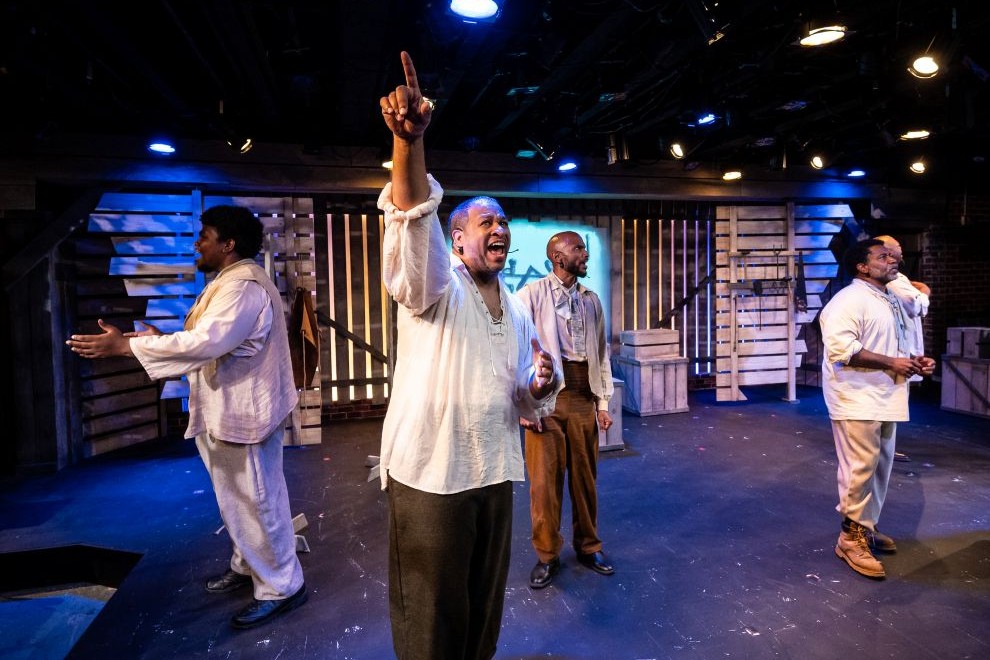
The musical won the Best New Work Award from the Richmond Theatre Community Circle in 2023, but the writing team felt it still needed more work. They spent three years reworking the show and writing more songs before premiering the newly revised script and score at historic Hanover Tavern in association with local production company Atlas Partnership, on stage through November 9.
“Now, we have a really tight, fantastic show,” says Solomon of the current production.
Desirée Roots, program director for Atlas, had talked to Solomon about Gabriel before she joined Atlas. “I knew how passionate Jerold was about it and how excited he was when Phil (Whiteway) and Bruce (Miller, from Atlas) told him they would help him produce the show, which is my first project at Atlas. It has come full circle,” she says.
Questioning History
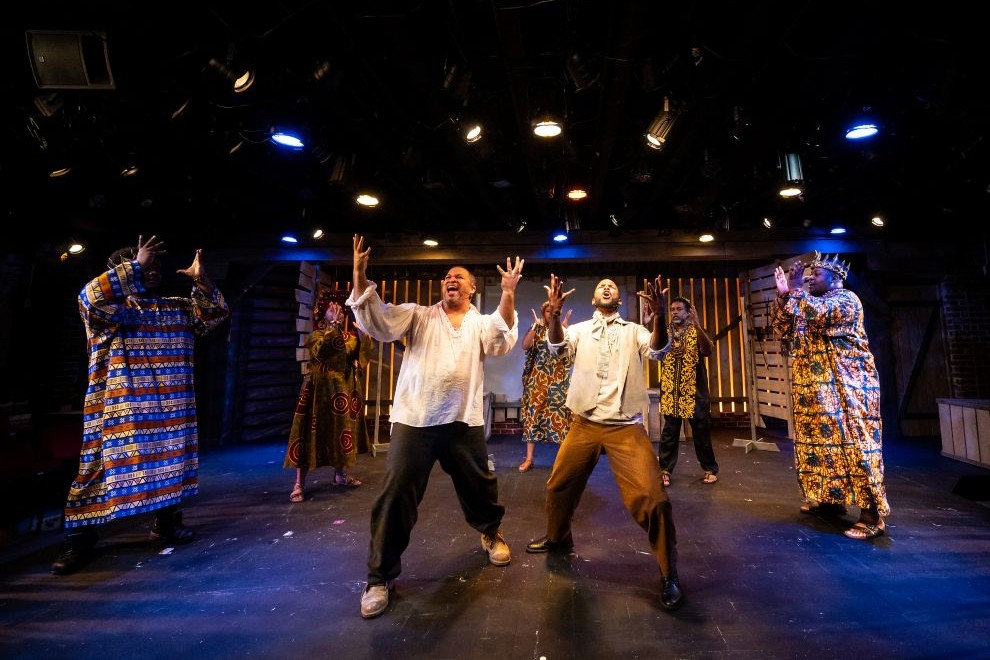
The writing team decided to start the production by asking questions — What happened? Why aren’t these stories shared? “One of the goals is to let people know the truth about this country,” Solomon says. “This story is trying to tell that.”
The mega Broadway hit Hamilton changed how people perceived history.
“It changed the rules about how we tell stories about history,” Solomon says. “Because Hamilton exists, we are able to take a similar license to history, to find out the actual facts. We didn’t want this to be a museum piece. We are telling the story of a man and people in his circle who get to the point that rebellion is the only option.”
The writing team didn’t make Gabriel an unflawed man. “He’s just trying to do the best he can. In our show, he’s reluctant to take on a leadership mantle,” says Solomon. “Things go wrong and he has to adapt. We really try to humanize this person. We did that with a lot of characters in the play.”
To make the play relevant, the team starts the show in present day with a modern day protest group asking the audience, “What do you know about our history? Here’s one thing you haven’t been told, here’s Gabriel.”
“It’s representative of today,” says Roots. “The actors get in character, and when they do, they change clothes. At the end of the show, they get out of their costumes and get back in today’s clothes. To me, that is fascinating, to watch it evolve as they are telling the story. It’s very unique and very well put together.”
The show uses phrases and “issues that are relevant to today,” Solomon says, adding these stories are still alive. “There tends to be a movement to beautify our nation’s history — only tell the good while ignoring the bad. But without both, we don’t know where we came from and where we are.”
Walking in Gabriel’s Shoes
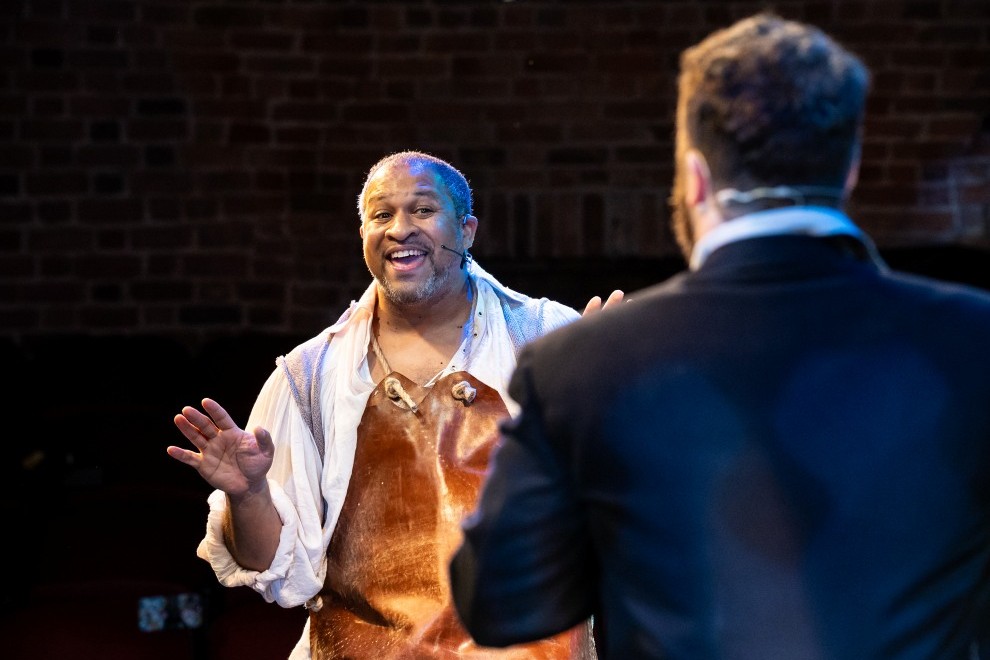
In addition to being part of the creative team, Solomon also portrays Gabriel in the play. “As an actor, it’s the most emotional role I have played,” says Solomon, who has been in four national Broadway tours and has appeared on Broadway in the revival of South Pacific. “There are emotional highs and emotional lows. It’s amazing the journey I get to go on every night.”
Historically, Gabriel’s plans for a rebellion included the cities of Richmond, Petersburg, and Norfolk, where he was eventually captured. “Some of the men were enslaved at Hanover Tavern,” Roots says, noting that after the show closes at Hanover Tavern, it will transfer to Chesterfield’s Perkinson Center for the Arts and Education in January 2026. “We are trying to get a theatre partner in Norfolk. We are following the route that Gabriel took before he was captured and brought back to Richmond.”
The show’s runs are being coordinated with performances for students attending Greater Richmond, Tri-Cities, and Greater Hampton Roads public schools.
People who have seen the show describe it as “Broadway caliber” and that makes the creative team very proud.
“We are most proud of the fact that we hold equal ownership of this magical thing that wouldn’t exist without the three of us,” Solomon says. “We are excited about where we are now. We hope the story doesn’t end at the Perkinson Center. This isn’t just a Virginia story, it’s an American story. It’s a show that everyone should know about. If our show can facilitate that, all the better.”
Gabriel runs two hours and 30 minutes with one intermission. It is appropriate for children 12 and older. It contains period appropriate language and themes. Tickets can be purchased at ATLAS Partnership‘s website.