

One in seven people experience a substance use disorder (SUD), and nearly 50 percent of the population in the United States is related to or knows someone with SUD. Loving someone with SUD can be painful, stressful, or traumatizing. By the time a family decides to seek help, they might be experiencing greater crisis than their loved one. One important way to get help is to learn about SUD.
Brain Development and Substance Use Disorder
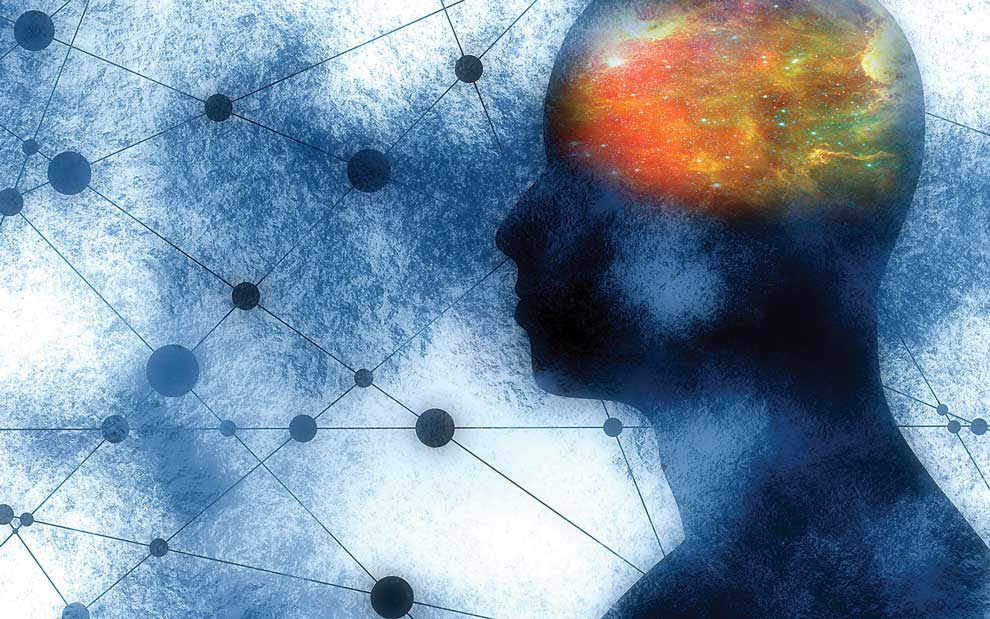
The process of becoming addicted to a substance is gradual. The mechanism for addiction lays within our reward pathway. When we do things that ensure our survival, our brain reinforces this behavior by giving us a sweet treat – dopamine, known as the happy hormone.
In the brains of individuals with SUD, use of substances becomes encoded in the survival messaging. This means that the brain believes substance use is needed in order to survive. The brain will prioritize substance use over the need for food, water, social connection, or shelter. When the survival brain confuses its priorities, people can end up in all kinds of dangerous scenarios. Unfortunately, common examples include child endangerment, being unsheltered, and living with emotional and/or physical abuse.
Imagine the human brain like a two-story house: the first floor lays the groundwork for future construction. It has the foundation, the circuit breaker, a kitchen, a half bath, and a living space. If we never finished building the second story, we could live here with ease. However, the upstairs has a spacious bedroom, a walk-in closet, a soaking tub, and an office space, none of which makes our house any more or less livable, but certainly more enjoyable.
In our brain, our first floor is what’s called our survival brain. It’s responsible for the regulation of our internal body temperature, circulation, waking and sleeping cycles, digestion, the execution of our fight-flight-freeze response, and so much more. It’s completely autonomous and constantly making decisions without our consent. The first floor does almost all of the work until about age six, when we begin to develop our second story.
Our second story develops less rapidly, maturing in our mid-twenties. It’s responsible for analysis, critical thinking, perspective taking, impulse control, future orientation, and all of our executive functioning skills. Regardless of how upgraded and developed our upstairs brain might be, access to it becomes obstructed when our downstairs brain is highjacked by either substances or the stress that substance use causes. On a brain scan, this looks like an enlargement of what’s called our amygdala (a major processing center for emotions), and atrophy of the hippocampus (its largest job is to hold short-term memories and transfer them to long-term storage in our brains).
Substance Use Disorder Treatment
Treatment for SUD traditionally focuses on the person ingesting substances and neglects neurobiological needs. Additionally, the standard treatment consists of top-down approaches, where the upstairs brain is relied on to override the triggers in the downstairs brain. This type of approach disregards the two most important things about our brains: 1) we process information from the bottom to the top (the downstairs brain has more control over the upstairs brain than the other way around); and 2) the upstairs brain of an individual with a SUD has been obstructed.
Using a bottom-up approach rather than a top-down approach in SUD treatment would focus less on psychoeducation and cognitive restructuring, and more on exploring emotions rather than avoiding them. For example, a top-down approach might educate on what a SUD is, identify triggers to use drugs, and create a plan for how to manage triggers. While there are benefits to this approach, relying on this as the main form of treatment allows individuals to intellectualize their feelings and remain disconnected from them. Without having the experience of being with their feelings, individuals are at a higher risk of relapse when they transition back to their normal lives.
A bottom-up approach would invite an individual to sit with the experience of being in treatment. This is a loaded invitation, as many people feel physical discomfort in early abstinence, have displaced anger onto their family for putting them into treatment, and are riddled with shame for poor behaviors they engaged in while using substances. Additionally, many people who are using substances are also overwhelmed by the emotionally painful experiences that caused them to begin using excessively in the first place.
Families and Living with Substance Use Disorder
Let’s explore what this looks like from the family’s side.
By the time a loved one enters treatment, the family has likely been governed by the rules of addiction for an unbearable amount of time: don’t talk; don’t trust; and don’t feel. This dynamic causes a cascade of physiological, emotional, and social challenges.
Families have become desensitized to the rules and the havoc. This is because these rules didn’t happen overnight – they slowly crept in to control the family. As the rules of addiction become engrained in the family’s functioning, the downstairs brain becomes increasingly active. Prepared to engage in a fight-or-flight response, the downstairs brain shuts down activity in the upstairs brain to conserve energy and prepare for self defense at a moment’s notice.
Many family members living with active addiction complain of poor sleep, hyper vigilance, anxiety, short-term memory loss, muscle tension, and impaired concentration. They often feel compelled to be available to their phones, unable to ignore a text or call. They’re afraid to address behavioral issues, lest their loved one becomes angry or aggressive. They’re scared to set boundaries, as they’re used to their loved one turning it around on them, playing the victim and blaming the family rather than the substance use. Even more, families can become so disconnected from themselves by the prolonged activation of their fight-or-flight system that they’ve moved into a freeze response to compensate. In freeze, family members can become numb. They don’t even know what they feel, think, or need.
There are a number of ways families can begin to access their upstairs brain and give genuine rest to their downstairs brain. Talk with someone outside of the family, journal or find other ways to be creative, research SUD independently, exercise regularly, and find meaningful ways to connect to joy.
For people with SUD and their families, there is hope. When the staircase to our upstairs brain is uninhibited, solutions come to us naturally, we think more clearly about our problems, and we restore a sense of hopefulness and control over our lives.