

Contrary to what most people around the world believe, Diwali is not just a Hindu festival. It’s also not just a festival of lights and sweets. It’s a holiday grandly celebrated by the Indian diaspora around the world, because it is rooted in multiple religions and subcultures and carries deep meaning that’s been passed down through generations. It takes place each year around mid-October to mid-November and ranges from being celebrated for one to five days, with different rituals occurring each day.
For me, growing up in Kuwait, it was a time when my mom hosted her annual Diwali Open House with a table full of savory dry snacks, chaat, and desserts. Everyone we knew, even acquaintances, came over, and the kids would light sparklers in their new clothes purchased specifically for the holiday. The house would be enveloped in a lovely haze, not just from the oil frying but also from the heat of the sparklers.
Decades later, I want to give my kids the same feeling celebrating Diwali in our home in Glen Allen. Not of the food or the decor, but the feeling of everyone we knew coming together to celebrate the life we are living together.
That emphasis on coming together is why it was such an important move toward inclusion when Diwali was first declared as a school holiday in Henrico County in 2019. It was a step in the right direction for the growing movement to honor Diwali in communities across Richmond, especially in areas with a large Hindu, Sikh, and Jain population.
Understanding the Diversity of Diwali
While the festival, also called Deepavali (meaning rows of lights), generally symbolizes the triumph of good over evil, its meaning and customs vary across each community. This is often based on the origin of the festival per their religion or their home culture.
Indians originating from the North of India celebrate for five days, while those from South India may celebrate it for two days. The five-day celebration includes Dhanteras (the official start of Diwali), Choti (Small) Diwali, Badi (Big) Diwali, New Year (Hindu calendar), and Bhaidooj (celebrating the sibling relationship). Two-day celebrations may include early morning prayers and oil baths along with prayers to Lord Krishna. North Indians revere Lord Ram and pray to Goddess Lakshmi for health, knowledge, wealth, and prosperity.
For Jains, Diwali is especially important because it marks the moksha of Lord Mahavira, representing liberation of the soul. The day is observed through meditation and listening to religious teachings. Ruchi Gupta, founder of The Rith Initiative, a local nonprofit dedicated to sharing and preserving Indian culture, fondly remembers how her family would decorate the entire house with red and white mandanas (artwork similar to rangoli) where they would place diyas (small oil lamps) before sunset.
Every Diwali, she and her father would draw a house on a sheet of paper with a set of scales on one side and a skateboard on the other. They would then stick the drawing to a wall using a paan leaf, creating a temporary altar for Lord Mahavira. Gupta would lovingly color the sheet, which symbolized knowledge and equality between girls and boys. Today, their family rejoices on Diwali day with an early morning visit to the Jain temple with offerings of the sweet dessert laddoos.
Among some Buddhist communities in Nepal, particularly Newar Buddhists, the festival period is observed as part of Tihar, a celebration with longstanding cultural and religious traditions.
The Sikh community also celebrates during the Diwali period, but for a different reason. Sikhs observe Bandi Chhor Divas, which commemorates Guru Hargobind Sahib’s release from imprisonment along with 52 other prisoners. Sikhs may visit gurdwaras, pray, light lamps, share food, and gather with their communities.
No matter the religion, it is a special time to pray for health, prosperity, and peace for all.
Evolution of the Celebration
While the thread of lighting diyas, decorating the home, cooking regional foods, and gathering as a community ties all these celebrations together, this festival has evolved based on each home’s subculture.
Living away from our extended families has changed the way my family and I celebrate Diwali, but it has also given us an opportunity to create new meaning within our traditions. In my early days in the United States, I always tried to get all our friends together, but with young kids, it got hard. So, we kept the celebrations intimate and started making our own diyas, cooking Diwali snacks, and making crafts together. Each year I would find a new Diwali craft to work on, which I would also share with my kids’ class in school during the holiday season. It wasn’t the Diwali I remembered from home, but it slowly became our Diwali.
Without family nearby, friends and neighbors often become part of our celebrations, welcoming us into their homes, creating a sense of belonging. These adaptations remind us that traditions do not have to remain unchanged to be meaningful. They can evolve with us while continuing to connect us to our heritage.
Jasmine Sandhu, who lives in the West End with her family, shares how her multicultural Sikh-Hindu home celebrates Diwali for three days, leaning into the lessons imparted in Indian scripture. She wants to pass onto her daughter the values in the stories that impact our lives and relationships. Each year she buys hundreds of LED lights to make her home glow. Her family shares chocolates or sweets with their neighbors, who are also invited every year to the evening festivities.
Diwali often looks different to each family. Each home may have different rituals where one may mark the festival by making their own diyas, buying new clothes, lighting sparklers and firecrackers, doing crafts, or creating a rangoli decoration for their door, while others incorporate religious prayers or cultural performances that showcase the origin stories through plays or puppet shows.
With time, gift giving has become a part of the culture too. Sometimes, instead of hosting grand events, friends and acquaintances exchange sweets and gifts with those who bring love and light into their lives. It often becomes a season of giving and sharing joy.
The Indian-American community has preserved its cultural identity while also adapting Diwali to new environments and making the festival a shared celebration of culture, family, and community.
Embracing the Deeper Meaning of Diwali
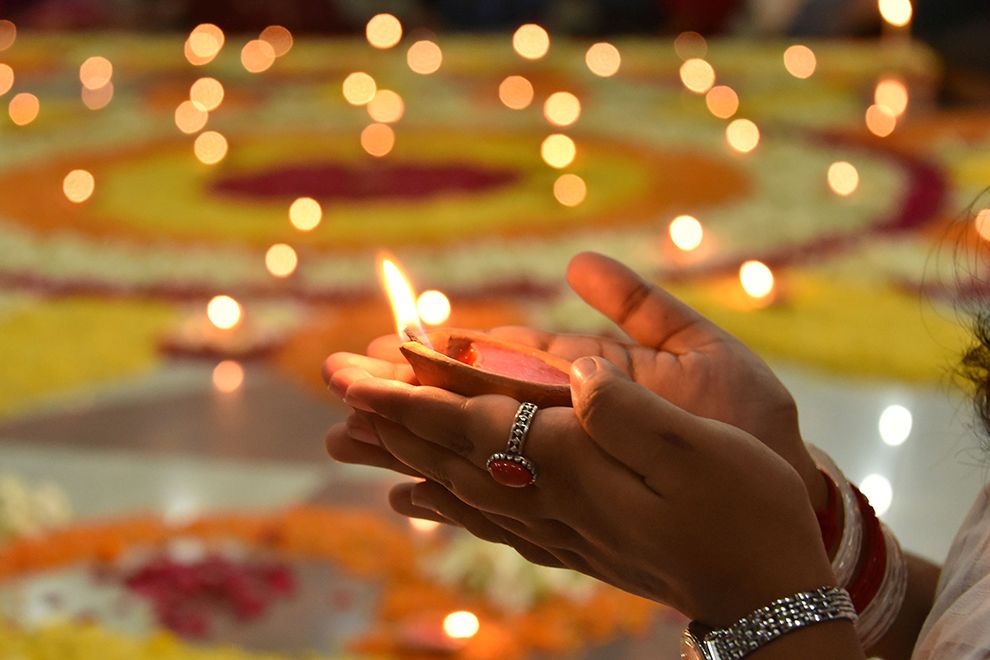
While rituals may look different from one family to another, the values at the heart of Diwali are universal: finding light within ourselves, holding onto hope, and coming together as a community. These are values that can belong to not only one culture or faith, but to everyone. This is why it’s often said that Diwali belongs to all.
In Richmond, Diwali offers an opportunity for every family to pause, reflect, celebrate, and find their own way to bring more light, hope, and connection into their lives.
When my kids were younger, I often heard other parents reminisce about Diwali in India. However, I’ve rarely felt an absence of Diwali because I have always had the privilege of celebrating with different faiths, found new ways to lean into the meaning of the festival, and learned early from my parents that Diwali is more about togetherness than rituals or grand celebrations. It’s in the smile of a neighbor, a special snack you look forward to, or the phrase “Wishing you a happy and prosperous Diwali!”
Perhaps that is what Diwali can offer Richmond — a chance for us to find a way to bring a little more hope, peace, and connection into our homes and our community.
You don’t have to be Indian to participate in the spirit of Diwali. Invite a neighbor to share a meal, learn how to make a traditional sweet, attend a local Diwali celebration, or simply light a candle and reflect on what light, hope, kindness, and community mean to you.
Diwali is not just a festival we observe, but a time we share with one another.
How to Wish
Diwali greetings can be as simple as “Happy Diwali!” or “Shubh Deepavali!” You can also wish someone “May your Diwali be filled with light, joy, and prosperity.” A warm greeting is a wonderful way to acknowledge the festival and share its spirit with others. Diwali goes beyond religion and is one of the most multicultural celebrations in the world.
What to Wear
Diwali is a time to dress up and celebrate. Traditional Indian clothing such as a sari, salwar kameez, kurta, lehenga, or sherwani can make the occasion special, but there is no requirement to wear them. Traditionally, people buy new clothes to commemorate the celebration. It used to be one of the only times people would purchase new clothing. The most important thing is to wear something that makes you feel festive and comfortable.
What to Eat
One of the most delicious ways to experience the diversity of Diwali is through its food. A Bengali family might prepare narkel naru, sandesh, or payesh, while a Gujarati home may be filled with fafda, jalebi, chakli, chevdo, and mohanthal. In Maharashtra, families traditionally prepare an assortment known as Diwali Faral, including chakli, karanji, shankarpali, chivda, and ladoos. Across South India, murukku, adhirasam, mysore pak, and payasam may find a place on the festive table.
These are usually made only during the festive season since they are quite time intensive to prepare. There is no single ‘Diwali meal’ — each region celebrates its own flavors and ingredients. Sharing these foods with friends and neighbors is one of the simplest ways to experience the many traditions that make Diwali so wonderfully diverse.
How to Learn
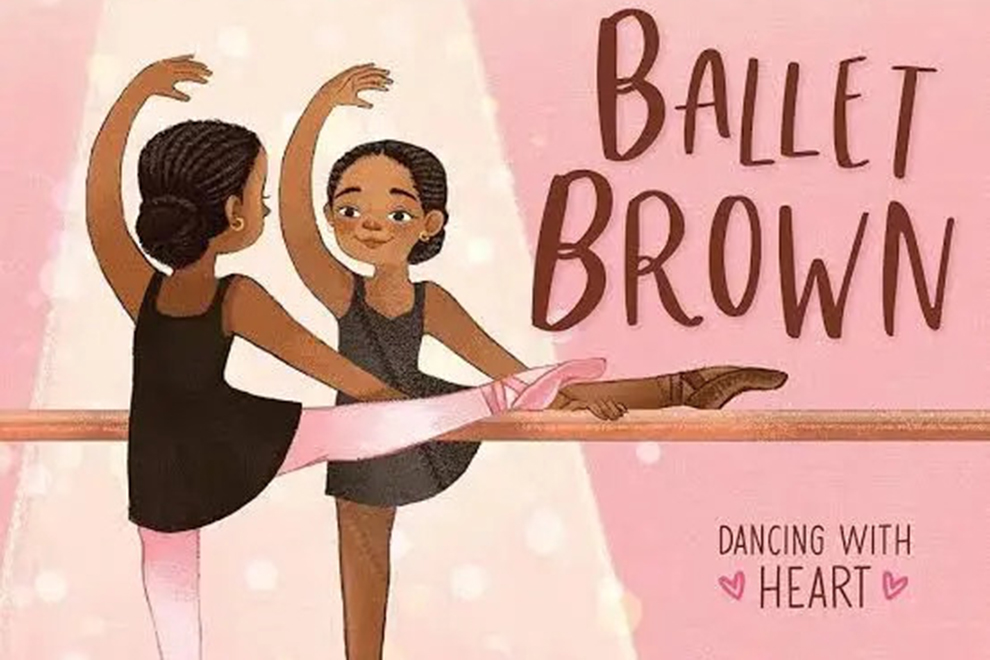
Diwali and its meaning within Indian culture can be explored through books. Families can read children’s stories about Lord Rama and Sita, Sri Krishna, Goddess Lakshmi, Lord Mahavira, or the history of Diwali, depending on the tradition they wish to explore. Reading together can help children understand that Diwali has many different meanings across India and the Indian diaspora.
How to Celebrate
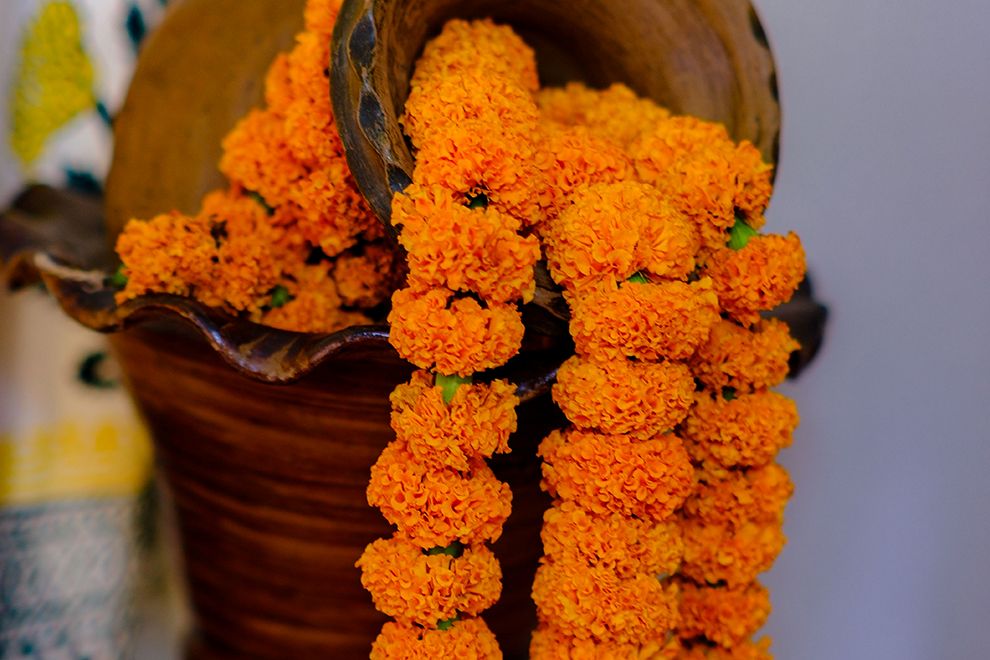
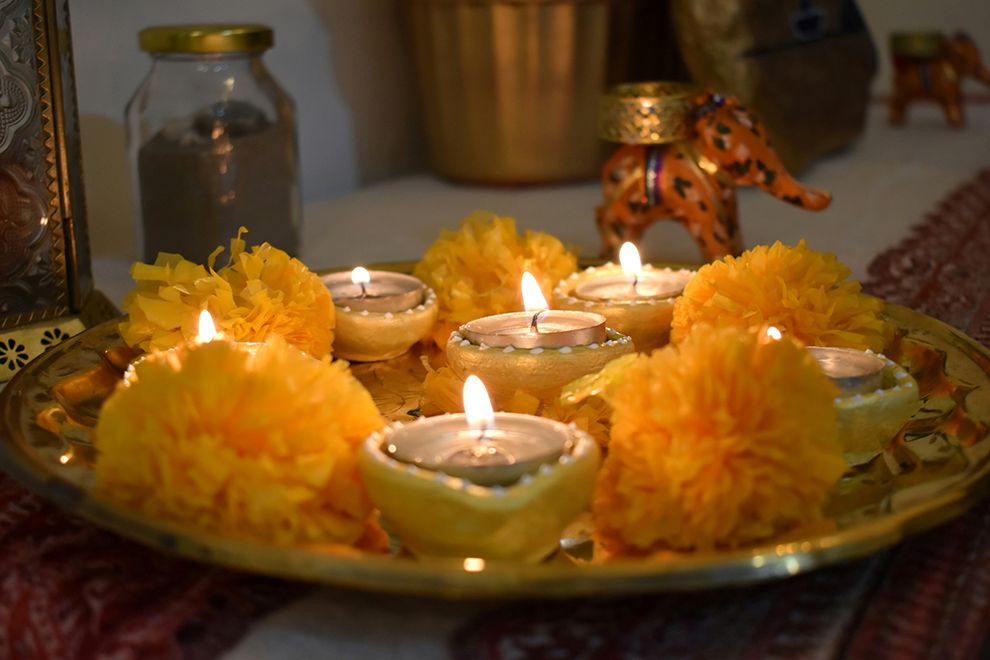
Families can bring this celebration home by decorating their homes with marigolds or Diwali decor. You can create a rangoli using sidewalk chalk, flowers, colored powder, or stencils. You can also light diyas or candles, make a small offering or prayer according to your tradition, and spend time together. Children can make paper lanterns, decorate diyas, or make finger puppets.
How to Share Diwali
When families take time to learn and talk about festivals from different communities, it does more than just pass down cultural awareness. It builds empathy, sparks curiosity about the wider world, and creates shared moments of connection that enrich parents and children alike.