


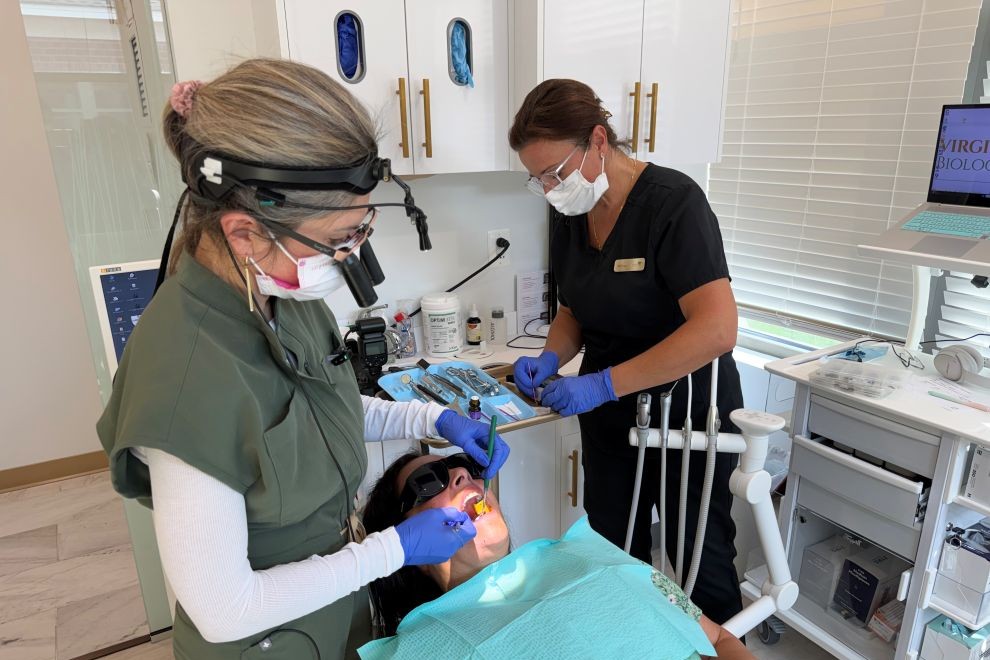
When a parent brings their child in for a routine cleaning, most expect me to look at teeth. What I’m actually looking at is a small window into that child’s whole health — and often, a preview of habits and patterns that will follow them into adulthood.
Because here is what dentistry has come to understand in the last decade: the mouth is not a sealed compartment. It’s part of the immune system, part of the airway, part of the microbiome, and part of the vascular network that feeds every organ. What happens there rarely stays there. And a growing body of research is quietly connecting what we see in the mouth to conditions we used to treat as entirely separate — heart disease, diabetes, pregnancy, even cognitive health.
Here’s what that means for your family:
The Mouth as an Early Warning System
Blood vessels in the gums sit incredibly close to the surface. When the gums are chronically inflamed — the way they are with gingivitis or periodontitis — the bacteria and inflammatory chemicals involved don’t stay put. They travel.
Large population studies have consistently linked untreated gum disease with a meaningfully higher risk of cardiovascular disease and stroke. The relationship with type 2 diabetes runs in both directions: poorly controlled blood sugar makes gum disease worse, and gum disease makes blood sugar harder to control. And a growing body of research is now examining the role certain oral bacteria — particularly those tied to periodontal disease — may play in cognitive decline and Alzheimer’s, an area of increasingly serious scientific attention.
Pregnancy: The Connection Most People Don’t Hear About
If there’s one moment in a family’s life when the mouth-body connection deserves urgent attention, it’s pregnancy. Hormonal shifts change how gum tissue responds to bacteria, and a meaningful percentage of pregnant women develop what’s called pregnancy gingivitis.
That matters first for the mom’s own comfort and long-term gum health. It may matter for the pregnancy too: some studies have associated periodontal disease during pregnancy with outcomes like preterm birth, though the causal picture is still being worked out. The practical takeaway, though, is simple. Pregnancy is not the time to postpone dental care. Cleanings and other non-emergency treatment are considered safe throughout, and most professional bodies now recommend keeping them on the calendar. Routine X-rays are the exception — those are typically postponed until after delivery unless there’s an urgent issue that requires them.
If you’re pregnant or planning to be, a comprehensive dental visit belongs on the same list as prenatal vitamins.
“Pregnancy is not the time to postpone dental care — it’s exactly when the mouth needs the closest attention.”
What I Look for in Kids (That Isn’t Just Cavities)
Children’s mouths tell a story that goes far beyond cavities — though of course, the balance of oral bacteria that drives cavity formation is part of that story too. As a mom myself, I know how easy it is to assume that if there aren’t any cavities, everything is fine. Often it is. But here are a few of the other things I’m quietly watching for at every pediatric visit:
Mouth breathing. A child who breathes through the mouth instead of the nose — especially at night — is often signaling something about airway development, allergies, or tongue posture. Chronic mouth breathing can shape the developing face, disrupt sleep quality, and take a subtle but real toll on focus, mood, and daytime energy.
A narrow or high-arched palate. The upper palate is also the floor of the nasal cavity. When it’s narrow, breathing is narrower too. Catching this early — while the bones are still growing — opens options that simply don’t exist later.
Grinding and clenching. Occasional grinding in young children is normal. Persistent grinding, jaw pain, or morning headaches often point to disrupted sleep or airway restriction, not “stress.”
The tongue. A restricted tongue (a tongue-tie) can affect nursing in infants, speech in toddlers, and jaw development in older children. It’s often missed.
None of these are emergencies. All of them are worth naming out loud so parents can watch, ask questions, and act early if needed.
The Oral Microbiome — Your Family’s Other Gut
We talk a lot about gut health. The mouth has its own microbiome, and it’s the second most diverse community of microbes in the human body. It’s also the front door to the gut. A healthy oral microbiome supports digestion, immunity, and even blood pressure regulation. An imbalanced one — driven by frequent snacking, sugary drinks, aggressive mouthwashes, or chronic dry mouth — feeds inflammation, cavities, and gum disease.
Small habits protect it. No snacking in between meals. Protein and healthy fats over the carbohydrates and sugar that feed bad bacteria. Water instead of juice. Nasal breathing whenever possible. Less aggressive rinsing, and fewer antibacterial mouthwashes for daily use unless a dentist specifically recommends one for a defined period.
What Families Can Actually Do
You don’t need to overhaul anything to take the mouth-body connection seriously. A few things carry most of the weight:
• Treat gum bleeding as a signal, not a normal event. Gums that bleed when brushing or flossing are inflamed. That’s information.
• Prioritize sleep and breathing, not just brushing. If your child snores, sleeps with their mouth open, grinds their teeth at night, or wakes tired, mention it at your next dental visit.
• Keep pregnancy cleanings on the calendar. Ask your dentist to check gum health specifically, not just for cavities.
• Rethink constant snacking and sipping. It isn’t just about sugar — it’s about giving the mouth long enough stretches of neutral pH to recover between meals.
• Ask your dentist how your mouth relates to the rest of you. A good one will have an answer.
“Gums that bleed when brushing or flossing are inflamed. That’s information.”
A Quieter Kind of Dentistry
The families I see at Virginia Biological Dentistry in Glen Allen come in for many different reasons: a child’s first visit, a cleaning, a second opinion, a plan to replace older leaky fillings. What ties them together is a wish to understand how their dental care fits into the rest of their health, not sits apart from it.
That’s the shift the science is asking all of us to make. The mouth was never really separate. It’s simply the part of the body we can see most easily — and the part that, when we pay attention, tells us the most about what’s happening everywhere else.