

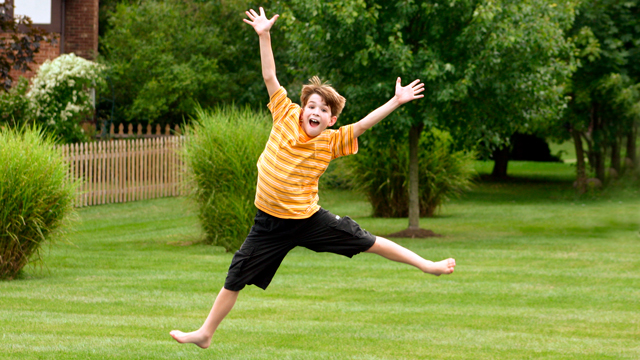
Negative behaviors in children are often a plea for attention. We’ve all seen it: tantrums, bully-level jokes, and overly dramatic reactions. But what about the child who constantly seeks attention through what is perceived as positive behavior? It’s the over-achiever who asks for the teacher’s attention even though she clearly masters the assignment. It’s the child who tries to one-up her peers. And, what about the child who always has something to add to the teacher’s remarks? Though these behaviors are often socially acceptable, they should not be overlooked.
Although their show-off behaviors make kids look overly confident, it’s often quite the opposite. These annoying behaviors can actually point toward a lack of self-validation, self-efficacy, and interpersonal connection. Let’s look at each one more closely.
Children are constantly learning. Even during play, children are hard at work. Their daily journey is one of discovery. Like little scientists, they are figuring out how the world works, and every new situation is an opportunity for mastering or failing. In this process, kids often measure their success by the response received from adults. Over time, through repeated validation from others, children eventually learn the skill
of self-validation.
Similar to self-validation is self-efficacy, or the belief in one’s ability to succeed. A sense of self-efficacy lets children see difficult tasks as achievable challenges. Kids draw from positive experiences in the past when attempting something new, and sometimes, more challenging. A child with a healthy sense of self-efficacy has an internal sense of security.
Lastly, healthy behaviors are closely linked to the ability to form healthy relationships. Human connection is a child’s first need; without it, she can’t survive. For healthy emotional development, a child needs to be loved and accepted for who she is. Acceptance from others teaches her to accept herself. With self-acceptance, she can then accept others for who they are.
So, could a child’s almost obnoxious call for attention regarding her awesomeness possibly indicate something has gone wrong in these areas? Certainly.
The child who constantly flaunts her achievements can appear full of herself. Inside however, she may not feel good about herself at all. Her extreme need for approval is a sign of her struggle with self-validation. The adult’s oohs and aahs temporarily reduce the child’s internal stress, but approval from others won’t fill her deeper needs. Her constant efforts to impress others can actually keep her from learning to self-validate.
You can teach your show-off child the skill of self-validation. Increase her self-awareness by telling her what you see. Explain that her effort for validation makes you wonder how she sees herself. Hold off on using validation as a temporary band-aid. Instead, respond with reflective questions that encourage self-evaluation. Try reflecting some feelings: You look so proud of yourself! Or, you might point her toward self-reflection: You want me to tell you that you did a good job, but I have a feeling you know you did great.
Another driver for over-the-top behaviors is perfectionism. Our culture measures success by achievement instead of character. Well-intended parents can get caught up in their anxiety, pushing their child too hard. When the push for achievement surpasses the acknowledgment of effort, children can develop a crippling need to constantly out-do themselves. Unrealistic expectations keep kids from recognizing the small successes. Instead of positive recognition, she internalizes disapproval. And even though praise provides temporary relief, her perfectionism keeps her from recognizing the positive, leaving her never feeling good enough.
To help a child out of perfectionism, praise effort instead of praising results. Bring attention to the importance of process over outcome. Help her understand that even though practice makes perfect, we spend the majority of our time practicing. Help her free herself from impossible standards, and accept herself where she is at the moment.
Lastly, let’s look at the need for connection and relationship. The child who consistently and unnecessarily asks for more attention than her peers leaves the adult (parent, teacher, or coach) with less time for other children. She may be unaware of her effect on others. She has an inaccurate sense of how her actions are perceived. Though she thinks others are impressed with her, this behavior fosters jealousy and resentment from peers. Instead of drawing people closer, she actually pushes them away.
You can help her develop empathy by privately discussing how her behavior affects others, both positively and negatively. Allow her to explore her feelings and others’ feelings without blaming. Help her balance her drive to succeed with consideration for others. In a group, every part affects the whole. A sense of belonging can increase her empathy for others.
Children who lack in any of the areas above are at risk for developing unhealthy relationships. We may be neglecting their needs due to the nature of their more socially acceptable attention-seeking (or showing off), but through respectful and non-blaming conversation, we can help our children learn to use positive behaviors for positive outcomes, and learn to be happier.
And last, but certainly not least, children learn by example. We unconsciously follow our loved one’s footsteps. As a parent, you can’t give your child what you have not received. If your child struggles in any of these areas, allow yourself some space for self-reflection. The absolute best thing you can do for your child is to cultivate your own personal, emotional growth and model the kinds of behaviors you want to see. (In other words, allow for the concept that perhaps Mom and Dad are the biggest show-offs of all!)