

In an era of digital fatigue, there has been a rise in analog activities — hobbies and activities once considered cool only by older generations. People of all ages are now looking for new ways to connect through book clubs, cross-stitch meetups, crochet circles, and, in recent years, mahjong.
First, let’s clear up the difference between “mahjong” and “Mah Jongg.” Mahjong is the traditional spelling of this game and is still used when referring to Chinese or Japanese play. When referring to the American variation, you’ll more often see Mah Jongg, as that’s the way the National Mah Jongg League spells it. However, most people just refer to the game as mahjong to avoid confusion, be inclusive, and honor its roots.
If you were to ask someone at random about mahjong, they would most likely say it’s a fast-paced Chinese tile game that has been around for ages. But if you ask a serious mahjong player, they’d likely invite you to play a round and tell you all about the magic of modern mahjong.
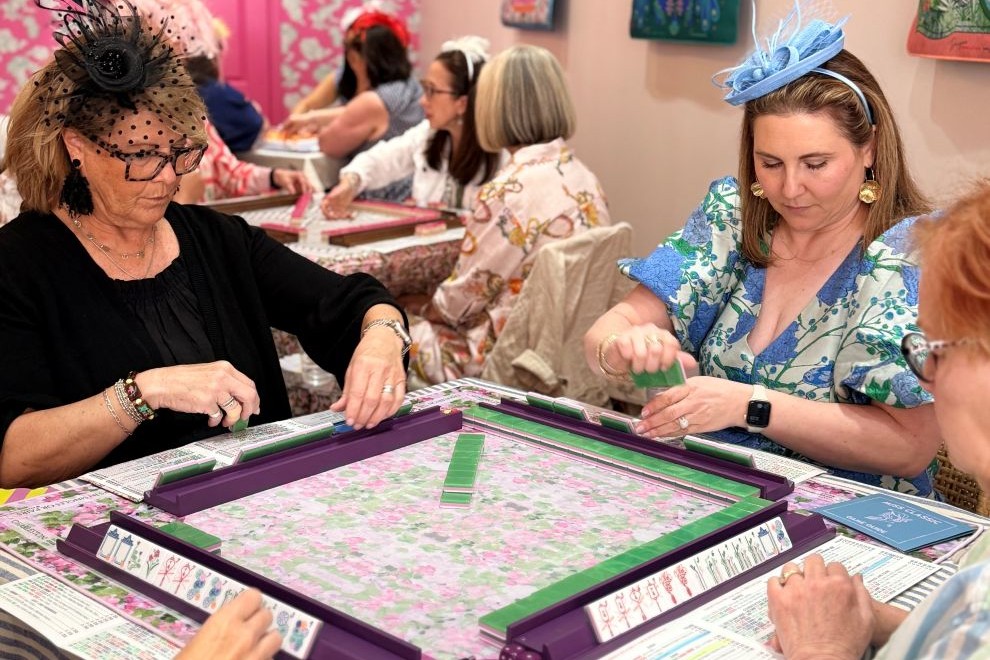
Mahjong is gaining traction as a trendy, addictive, and rewarding activity for many folks, especially younger generations. Despite the preconception that the game is just for older folks, the Richmond community is tearing down that stereotype as the game’s popularity grows.
The History of Mahjong
Although mahjong is often attributed to ancient Chinese culture, the game wasn’t actually developed until the mid to late 1800s. Even so, several theories about the modern origin of mahjong are not historically verified. Some attribute its creation to Chen Yu-Men, who was an imperial servant. Others don’t attribute the creation of mahjong to a single person but rather to many people in a single region who developed a variation of other Chinese draw-and-discard card games. No matter which origin story proves true, mahjong has since evolved into a popular game in its own right.
By the turn of the 20th century, mahjong was gaining interest across China, especially amongst the upper class. There was also an increased interest from American and European expats living in Chinese cities such as Shanghai and Beijing.
In the 1920s, mahjong was brought over to America by civil engineer Joseph Park Babcock. Babcock was an American who worked for the Standard Oil Company and was sent to China on business. While living there, he and his wife learned to play the traditional Chinese game, which gave Babcock the idea of creating a simplified version to introduce to America upon his return.
Around this same time, Japanese soldier Saburo Hirayama is credited with bringing Chinese mahjong to Japan. Over the years, mahjong in Japan evolved into its own variation, known as Riichi, which refined the rules and scoring.
Throughout the 20th century, mahjong came in and out of the American zeitgeist. The game was especially popular among women, as it was a great way to socialize outside their usual responsibilities and gain newfound independence. In 1937, the National Mah Jongg League was formed by a group of Jewish women in New York, establishing standardized rules for American Mah Jongg. Years later, in 1999, a second organization, the American Mah Jongg Association, was formed.
Mahjong remained popular among Asian American and Jewish American communities, and in recent years, the game has transcended cultural barriers. Now, individuals from every cultural background and age group are taking their seats at the mahjong table.
The Richmond Mahjong Scene
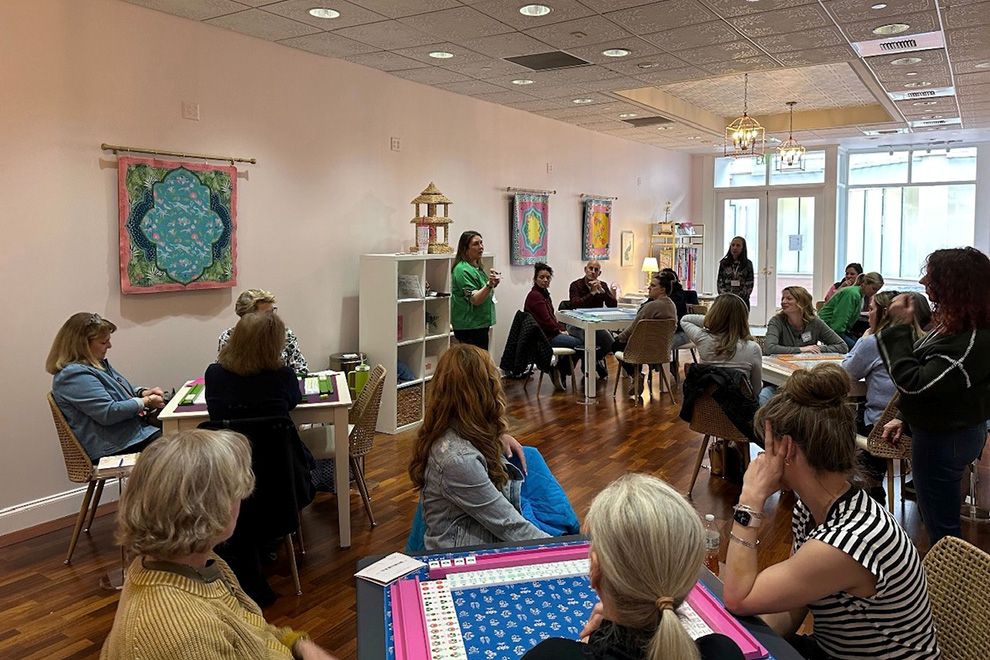
For those sharing their love of the game with the community, they’re not surprised to see interest in the game taking off. Two popular mahjong groups are leading the game’s expansion across the Richmond area: Let’s Mahj RVA, a brick-and-mortar studio located in Stony Point Fashion Park, and RichMahj, a company offering in-person lessons and gameplay.Photo Courtesy of Let’s Mahjong RVA
“The growth has been wild to say the least! Mahjong used to feel like a ‘someone else’s mom’ game to a lot of people,” says Emilie Rabke, owner of Let’s Mahj RVA. “Now I’m teaching women in their 20s, 30s, 40s, and well beyond. I’m seeing young adults, busy parents, retirees, and grandparents all drawn to the same table. We even teach kids!”
Across the Richmond area, you can find open mahjong play at various breweries, local businesses, and cultural hubs. Many local businesses, especially women-owned businesses, are partnering with local mahjong companies for lessons and open play events. If you’re a beginner, you can find lessons for every level of play, age group, and style of the game.
“I think people are craving depth again. They want something tactile, something shared, something that requires focus and strategy but still feels social and fun,” says Rabke. “Mahjong is timeless in that way. It’s competitive but welcoming, structured yet connective, and it brings people together in a way that feels real. That’s why it’s taking off again.”
Blue Bee Cider, Dinner Party, Crème de la Crème, Full Circle RVA, and Benchtop Brewing are just a few of the notable businesses that have gotten in on the mahjong frenzy. Their events range from total beginner lessons (101) to intermediate lessons (201) to open play and leagues. While these local events come with a ticket price, players gain access to everything they need to set up their game, like tiles, mats, and rules. Tickets also typically come with light snacks, drinks, and a night full of mahjong magic with fellow lovers of the game.
Rabke has been playing the game herself for over 30 years. Her mom, who also played mahjong, asked Rabke to learn the rules of the game so she could jump in if one of her friends couldn’t make it to game night. “I learned the rules and the tiles, but what stuck with me was the feeling of being welcomed into a circle of women. Different ages, different stages of life, all around a table laughing, competing, and showing up for one another,” Rabke shares. “Years later, mahjong came back into my life during a season when I really needed an outlet. I’m a caregiver to a young adult daughter with a disability, and mahjong became a place where I could sit down, breathe, and just be myself again.”
Sara Sloman, owner of RichMahj, learned how to play just a few years ago. One of her friends was having a mahjong weekend that Sara joined in on, not knowing it would change the course of her life. Once she started playing and picked up the rules of the game, she realized it was something she could bring to Richmond. Then, her business RichMahj was born. “About two and a half years ago, I took a mahjong class with some girlfriends, and it just clicked,” Sloman says. “We had a room of 20 people, everyone had a great time, and I remember thinking, ‘This is something I could do.’ A few months later, I had a name, a logo, and a plan.”
Some players start young, influenced by family or friends, while others pick up the game as adults and quickly become regulars. Local mahjong player Kelly del Campo Merricks explored the game because of its rise in popularity and found herself enamored with it. “I started playing as a way to meet new people and because of the hype surrounding mahjong. It seemed like a great social activity while also being challenging,” Merricks shared. “I’m really enjoying learning tricks to improve my game, but my favorite part is that it’s a commitment of at least four people getting together.”
The Basics of Mahjong
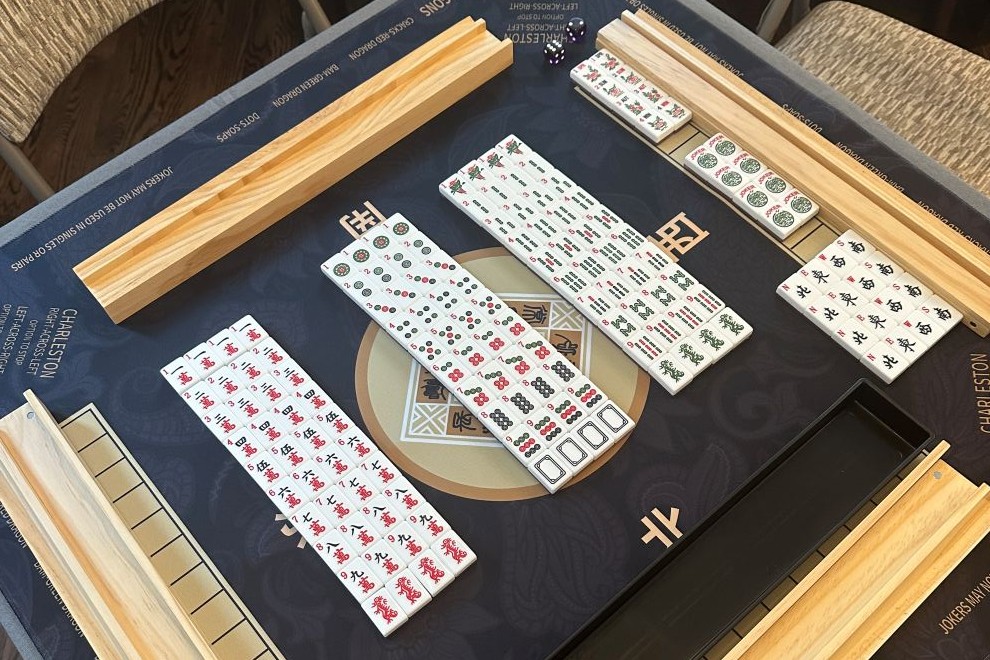
While mahjong originated in China, the gameplay, rules, and tiles have evolved over the years, depending on where it’s played. There are three main variations of the game: Chinese, Japanese, and American. The rules of the various mahjong styles look complicated on paper, but once you get the hang of things, you’ll start to flow through the game like a pro.
“Every class, until about halfway through, people look at me like I’m a little bit crazy. They’re like, ‘These cannot be the rules. You’re making this up as we go along to mess with us,'” Sloman laughs. “And by the end of class, people are definitely more comfortable.”
Mahjong Tiles
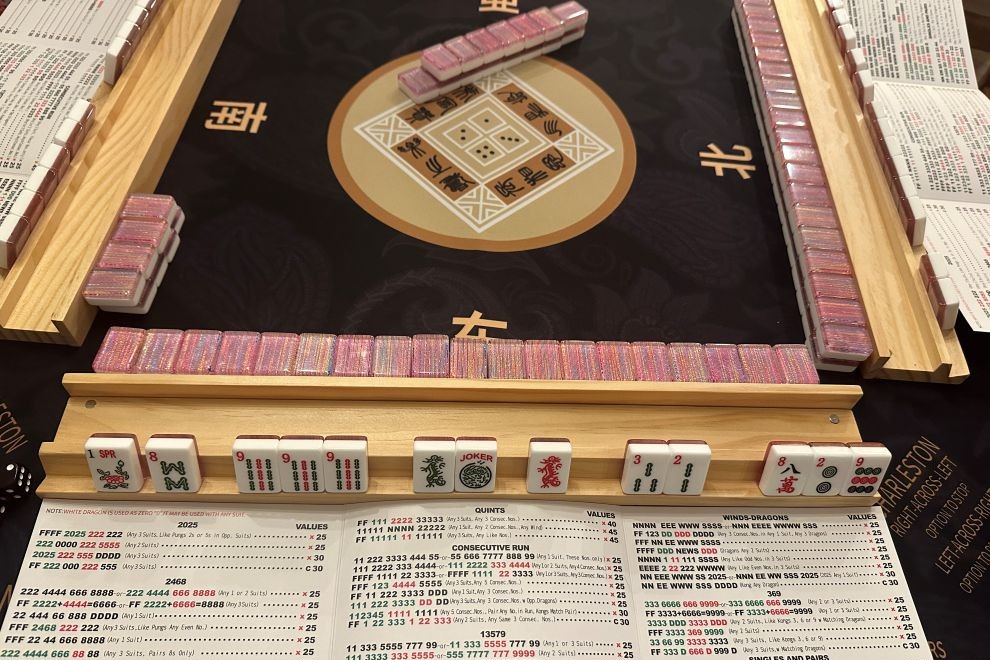
Traditionally, mahjong tiles were crafted from bone, ivory, or bamboo, but many modern sets are made of plastic. There are three suits of tiles, known as crack, dot, and bam, representing characters, circles, and bamboo respectively. Each suit includes tiles numbered one to nine, and each tile appears four times in the set. Beyond the suits, the game also includes honor tiles representing four winds (East, West, North, South) and three dragons (red, green, and white). Many sets also feature tiles depicting flowers and seasons, which add color and variety but are handled differently or sometimes set aside entirely depending on which mahjong style you’re playing. In American Mah Jongg, you’ll also have eight joker tiles in your set.
American Mah Jongg
American Mah Jongg is played with 152 tiles, including eight jokers, which do not appear in Chinese or Japanese mahjong games. Jokers are essentially “wild” tiles that can be used in melds of three or more identical tiles, not in pairs or singles. Each year, the National Mah Jongg League releases a new rule card, listing the winning hands for that year. To win a round of American Mah Jongg, you must build a hand of tiles that aligns with the winning hands.
Chinese Mahjong
Chinese Mahjong varies in the number of tiles used per game. The core set of Chinese Mahjong tiles consists of 136 tiles, with optional bonus tiles, including four flowers and four seasons. To win Chinese Mahjong, you typically want to have four sets of three tiles and one pair. But there are variations and sometimes house rules to keep in mind.
Japanese Mahjong (Riichi)
Japanese Mahjong or Riichi is played with 136 tiles, including bonus tiles called Dora, which increase the value of a winning hand by one Han or point. To win Japanese Mahjong, you want four melds and one pair, similar to Chinese Mahjong, but you also want at least one yaku, which is a scoring pattern specific to Riichi. When you win, you have to declare Ron, meaning you win off of another player’s discarded tile, or Tsumo, meaning you pull the winning tile yourself.
Whichever version you choose, the heart of mahjong is connection, strategy, and community — a timeless experience drawing new enthusiasts in Richmond and beyond. “Mahjong creates a shared language. It slows people down. It opens the door to stories, laughter, and belonging,” Rabke says. “That’s the heart of it for me, and why I keep showing up to teach.”
Finding Your Seat at the Mahjong Table
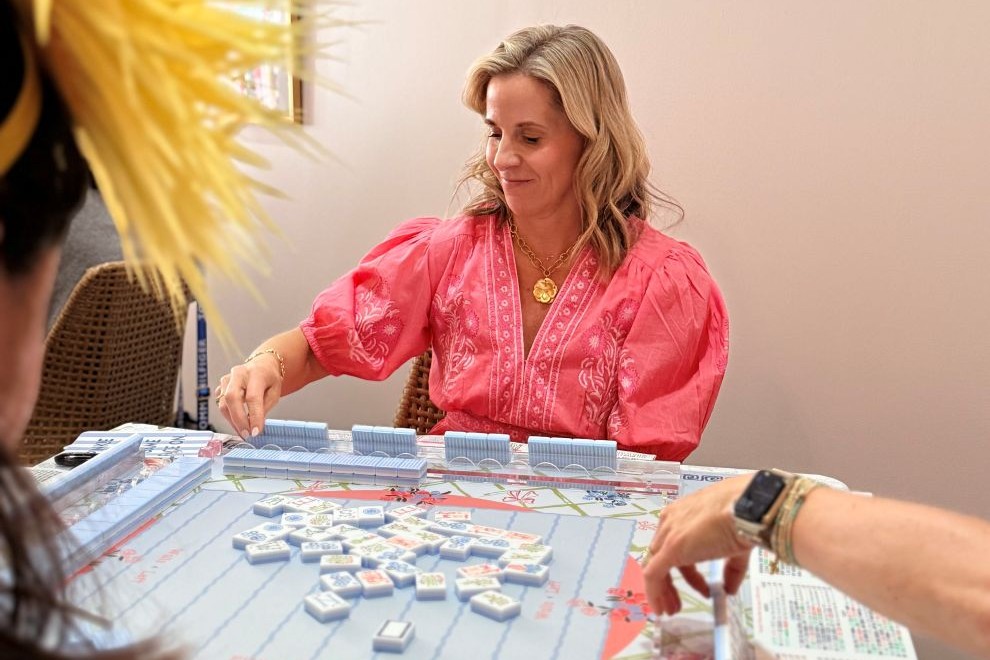
Some players are far more competitive than others, while many join in simply for the game’s social element. Some players attribute their love for mahjong to the friends they’ve made, the soothing sounds the tiles make while playing, or the strategic mindset that develops as you learn the game.
No matter your experience level or what your mahjong tile collection looks like, everyone is welcome at the mahjong tables here in Richmond. “We don’t require that you bring anything except for an open mind,” Sloman shares. “We want to make sure that everyone knows it’s accessible. We’re not making you sit down and listen to us for hours. It’s a hands-on experience.”
Merricks, now a monthly player, suggests that everyone try lessons. “It’s so much easier than trying to learn on your own, and everyone else is starting out as well,” she says. “That’s the basis for a great atmosphere — at league night, everyone is at different levels, but everyone is encouraging. You can find someone advanced who will teach you tricks, but also newer players who laugh with you when you can’t remember the difference between a bam bird and flower.”
At the surface, mahjong may seem like just a game, but it’s so much more than that. It’s a tradition with a rich history, and it can improve your concentration, strategic mindset, and even enhance your memory. It’s an escape from the day-to-day craziness, a way to relax, and, most importantly, a way to have fun.
“Mahjong isn’t just a game you play — it’s a space you enter. It teaches patience, flexibility, and trust. It gives you something to look forward to and somewhere to belong,” says Rabke. “In a world that feels fast and fragmented, sitting down at a mahjong table can feel grounding in the best possible way. If you’ve ever been curious, this is your sign to try it. There’s always room for one more.