
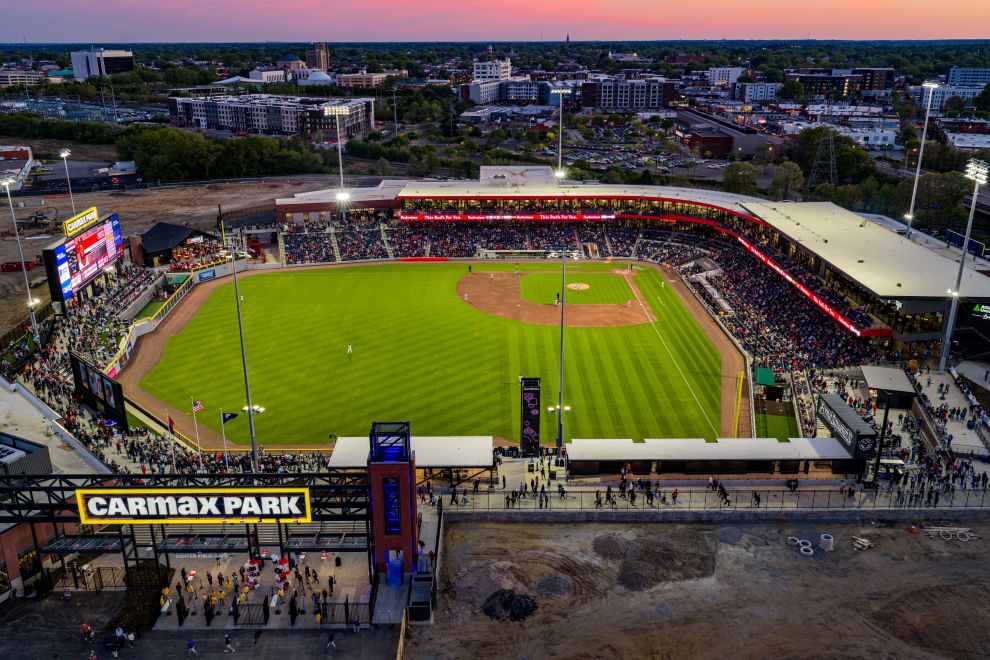
On a warm spring evening in Richmond, a baseball game is rarely just about what happens on the field. It’s kids waiting for their chance to catch a foul ball, groups of friends sipping craft beers, and a crowd cheering as free hot dogs and t-shirts are thrown into the stands.
For Ron Pomfrey, a longtime Hanover County resident and author of Baseball in Richmond, the game has always been about more than just scoring runs. “Baseball is America’s game,” he says. “It starts up in the springtime when people are ready to get out of their homes. It’s a fun event for the entire family, a couple, or even an individual to enjoy. When you get out to the ballpark, you’re making memories for the future.”
This spring, Richmonders have a new place to do just that. CarMax Park, the city’s new baseball stadium along Arthur Ashe Boulevard, marks more than just the debut of a modern ballpark — it signals the beginning of a new chapter in Richmond’s long-standing love of the game. As the centerpiece of the broader Diamond District development, the stadium is designed not only for baseball, but for the kind of everyday experiences that bring people together.
To understand what CarMax Park represents for Richmond’s future, it helps to look back at how baseball has shaped the city for generations and why that connection still matters today.
A Richmond Tradition
Pomfrey, a Richmond baseball historian, remembers a different era of the game in our city — one that laid the foundation for the experience fans know today. “Baseball has been quite the tradition in Richmond since way back when,” he says.
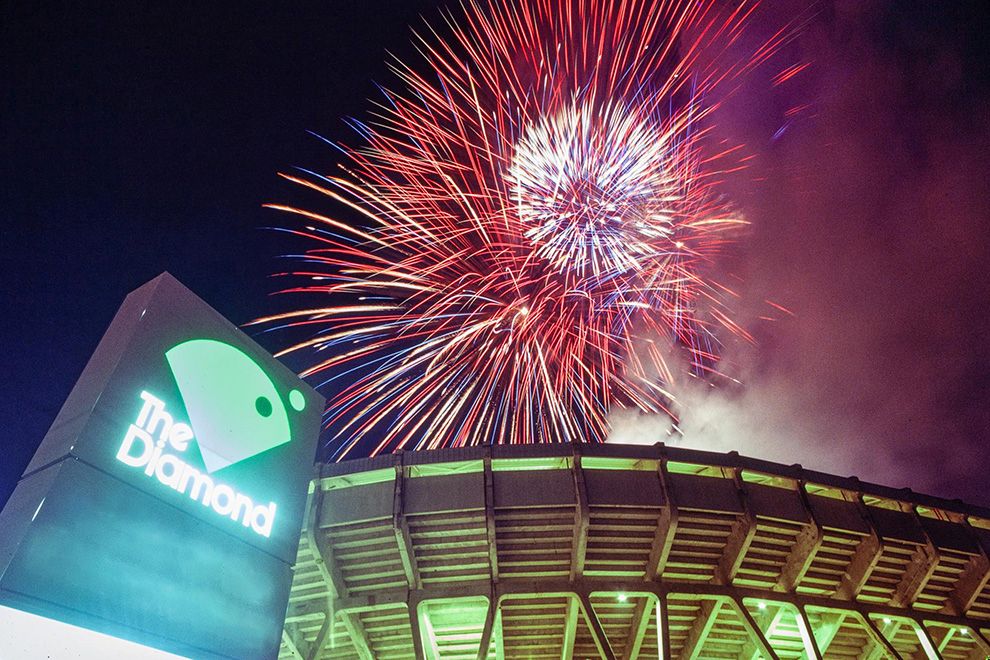
That tradition started early for Pomfrey. His father began taking him to watch the Richmond Virginians (known colloquially as the Richmond Vs) in 1955, sparking a lifelong connection to the game. He fondly recalls evenings spent running around after foul balls and collecting autographs at Parker Field (what we know as the site of The Diamond) where the Vs played from 1954 through 1964.
After the Vs and Parker Field came the introduction of The Diamond in 1985. Built on the same site as Parker Field, The Diamond was home to the Richmond Braves, a Triple-A affiliate for the Atlanta Braves from 1966 through 2008, marking a significant shift for baseball in the city. “The Diamond ushered in a new era of baseball,” Pomfrey says. “Many Richmond fans grew up with The Diamond during its 41-year existence.”
Over time, The Diamond became more than just a stadium — it became a constant in Richmond’s sports landscape. While it was originally home to the Richmond Braves, many locals associate it most closely with the Flying Squirrels, who arrived in Richmond after the Braves relocated to Georgia following their 2008 season. Pomfrey explains that the arrival of the Squirrels, a Double-A affiliate of the San Francisco Giants, was especially pivotal.
Following a $1.5 million renovation project of The Diamond in 2009, the Flying Squirrels, who got their name from a Richmond Times-Dispatch name-the-team contest, ushered in a more entertainment-focused era of baseball starting in 2010 that expanded fans’ experience beyond what was happening on the field. Pomfrey attributes that shift to Todd “Parney” Parnell, the former CEO of the Flying Squirrels, and his ability to get folks into seats and keep them engaged throughout the game. “You had entertainment between each and every inning. He knew how to keep the kids entertained for the entirety of nine innings,” notes Pomfrey.
More Than a Ballpark
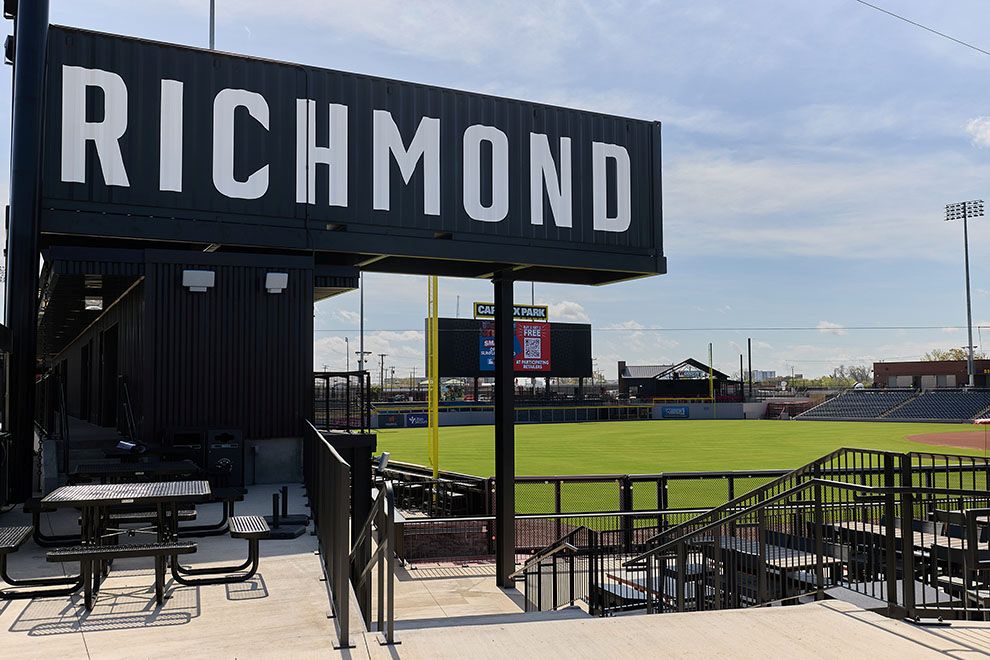
This shift toward turning baseball games into a well-rounded experience is why Pomfrey is especially excited about what’s in store with CarMax Park. He believes that the entertainment component of baseball will take off even more. “As far as CarMax Park goes, it’ll be a more fan-friendly ballpark. It’s an entertainment venue along with being a ballfield,” Pomfrey says.
That idea — that a ballpark can be more than just a place to watch a game — is central to how the project came to life.
Matt Welch, senior policy advisor for Economic Development for the City of Richmond, says CarMax Park reflects a broader vision for the city’s future. “[CarMax Park] signals Richmond’s commitment to creating places that enhance quality of life — not just for residents but for visitors and anyone choosing to live, work, or play here,” he says.
In other words, the goal isn’t just to build a stadium — it’s to create a place people actually want to spend time, whether there’s a game happening or not. “The catalyst was a shared vision for the future of Richmond — one that recognized the opportunity to modernize aging infrastructure while using a new stadium as a springboard for broader community and economic development,” Welch adds.
CarMax Park is also the anchor of the Diamond District redevelopment, a project that aims to turn the land surrounding the stadium into a mixed-use neighborhood featuring hotels, offices, and retail space. “[CarMax Park’s] opening is a major milestone in transforming more than 67 acres of underutilized land into a vibrant, mixed-use neighborhood that will generate jobs, housing, entertainment, and critical tax revenue that can be reinvested into priorities across the city,” Welch says.
While that vision is still unfolding, the idea is simple: instead of driving in for a game and leaving, visitors could spend an entire day — or even a weekend — in the area. Welch says the hope is that visitors will associate the area with more than just baseball, whether grabbing dinner or drinks before a game, watching their kids run around on the playground, or eventually even living and working in the district. “The Diamond District will become part of everyday life in Richmond, creating memories and experiences that extend far beyond the ballpark,” he says.
Welcome to CarMax Park
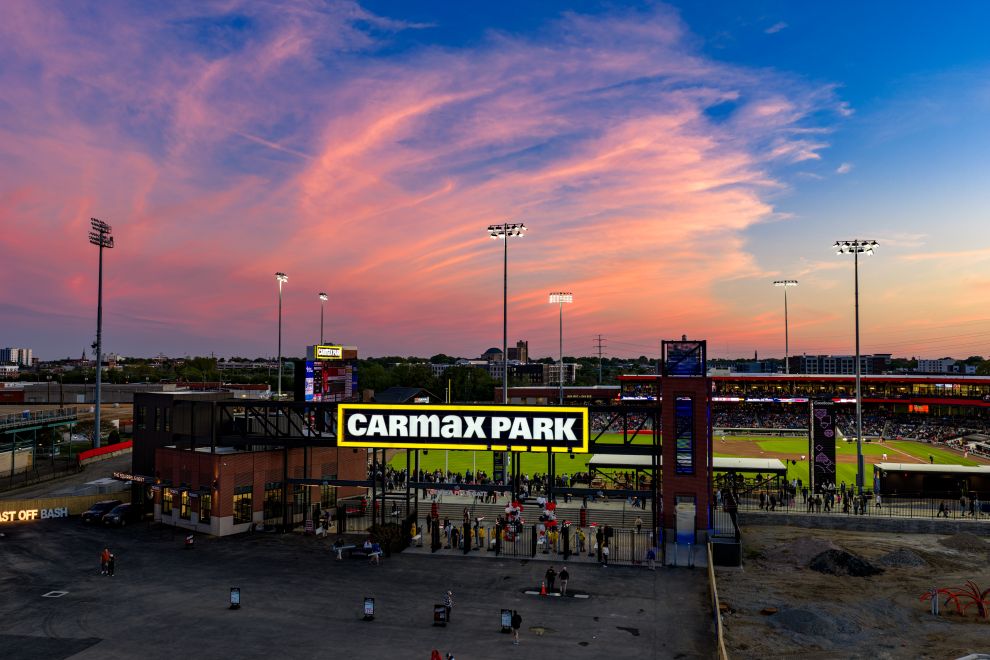
Given that CarMax Park is the anchor of the Diamond District development project, some folks may be wondering how the new stadium got its name. As many locals know, CarMax, the online used-car retailer, is famously headquartered in Richmond since 1993.
Sarah Lane, chief marketing officer of CarMax, says the decision to partner with the Flying Squirrels was rooted in a deeper connection to the community. “We decided to partner with the Squirrels because it represents a meaningful way to strengthen both our brand and our community presence,” she says. “Richmond has been our hometown for more than 30 years, and we firmly believe that our business’ success is closely connected to the city, its people, and its growth. Supporting a project like CarMax Park reflects our confidence in CarMax’s future growth and the bright future of our associates and our city.”
For Lane, that connection isn’t just professional — it’s personal. She’s made countless memories with her kids at Flying Squirrels games over the years. “This past summer, we were at one of the final fireworks nights, sitting all the way up in the highest general admission rows because it was so packed,” she recalls. “And despite the heat, everyone stayed, everyone was smiling, and it was one of those moments where you just feel how special this city is.”
Moments like that helped shape the vision for what CarMax Park could become — a place designed not just for baseball but for the kind of shared experiences that bring people back again and again. “We wanted to help create a space that the entire community can be proud of for many years to come,” says Lane.
Built for the Experience
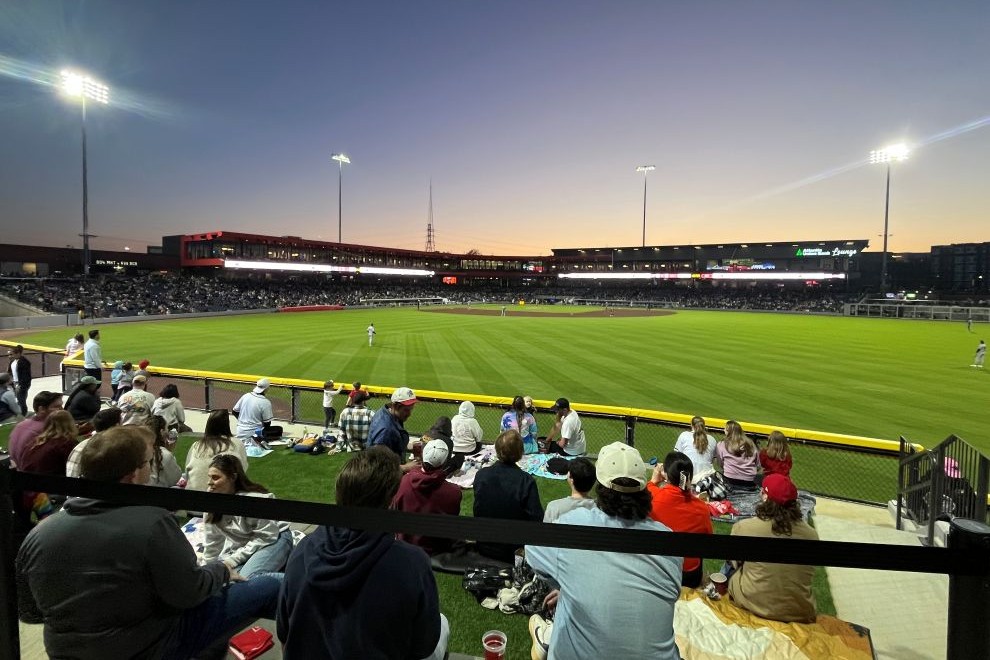
Like Lane, many people have meaningful memories and emotions tied to the legacy of baseball in Richmond, which raised the stakes for getting things right with the new stadium and the Diamond District. LaBella Associates, a New York-based architecture and engineering firm with two Richmond offices, was tapped by the owners of the Flying Squirrels as the lead designer and architect of record for the stadium.
Michael C. Montgomery, a project manager at LaBella Associates and a member of the American Institute of Architects (AIA), says the design team approached CarMax Park with a focus on how people actually experience a game day. Because The Diamond was constructed before modern accessibility standards, it didn’t adequately meet the needs of all fans, so inclusivity played a major role in shaping the new space.
Anthony Opperman, general manager of the Richmond Flying Squirrels, notes that features like a sensory room and a nursing room were included in the park design to create an inclusive fan experience.
The team at LaBella Associates also placed a strong focus on sustainability and future-proofing the stadium to respond to changing environmental conditions and evolving demands on local infrastructure. This includes designing the grading of the ballpark to manage stormwater efficiently and reduce impacts during high-rainfall events, as well as integrating renewable energy through on-site solar photovoltaic systems. “Sustainability, accessibility, and long-term resiliency were foundational principles in the design of CarMax Park. Together, these strategies create a stadium that is not only sustainable today, but resilient and adaptable for decades to come,” says Montgomery.
Price accessibility was another factor on Opperman’s mind with CarMax Park. “We have gone to great lengths to ensure that pricing is still affordable for families,” he says. “We take pride in being Richmond’s home for affordable family entertainment.” To support that goal, LaBella Associates prioritized a range of seating options as part of their 10,000-seat design. “The concourse supports a wide range of ticket price points and fan experiences, from traditional season ticket holders focused solely on the game to families attending birthday parties or casual outings,” notes Montgomery.
Opperman also had a vision of curating a memorable guest experience within CarMax Park. “If someone were to come to a game six nights in a row, they could have a different experience all six nights, depending on where they sat within the venue.”
CarMax Park was designed to feel closer to the action through a strategically created 360-degree walking concourse. “This continuous concourse allows fans to circulate the entire outfield and experience the ballpark from a variety of vantage points, creating a dynamic and ever-changing relationship with the game,” Montgomery says.
In practice, that means fans aren’t confined to one view. They can move through the space, explore, and experience the game from different angles throughout the night. Montgomery adds that the design also provides natural airflow, improved ventilation, and shaded seating areas that help mitigate heat and sun exposure, while concession stands and restrooms are strategically located to minimize wait times and improve overall circulation.
CarMax Park also features a diverse mix of food and beverage options distributed throughout the park and intentionally close to seating areas, so fans can enjoy an array of offerings without missing out on the game. “Together, these elements create a fan-first experience that prioritizes comfort without compromising the energy of live baseball,” Montgomery says.
Beyond Game Day
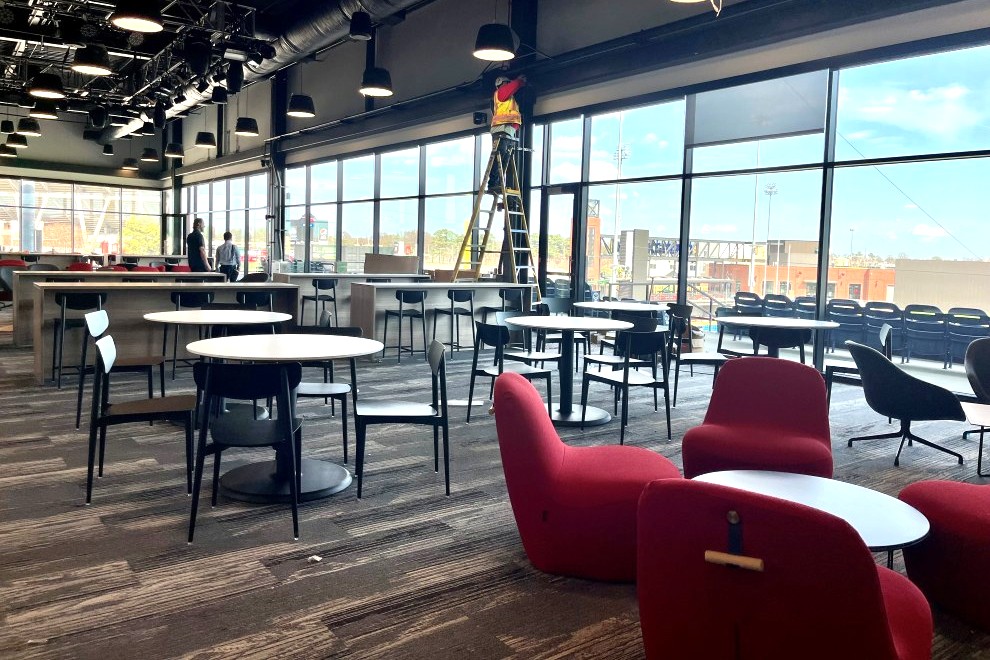
So, since baseball season only lasts for about half the year, what happens to CarMax Park during the off-season? The goal is for the stadium and the surrounding Diamond District to feel active even when there isn’t a game on the schedule.
“The ballpark is designed for year-round activation across a wide range of programming and uses, with the potential to set a new standard for dining and entertainment in Richmond for decades to come,” Montgomery explains.
And as the Diamond District continues to develop, there will be even more activities to partake in around the area and opportunities for people to gather and build traditions.
Ultimately, Welch says it best: “CarMax Park represents what’s possible when a city plans boldly and invests with intention. It honors Richmond’s past while building momentum for its future. And it’s only the beginning of what the Diamond District will deliver for generations to come.”