
The adoption of the Declaration of Independence on July 4, 1776, marked a turning point for the American colonies — a culmination of years of conflict, uncertainty, and the pursuit of a better life.
This summer, as our nation prepares to celebrate its 250th anniversary, that history will feel a little closer to home in Richmond. From June 12–14, the city’s skyline will take on a distinctive look as three tall ships sail along the James River as part of Richmond SailFest, a three-day event in partnership with the City of Richmond and the Virginia Museum of History & Culture.
For a few days, Richmond will celebrate and honor the history of these tall ships along with other sea vessels, and the riverfront will offer a glimpse into an earlier era when ships were essential for transporting goods, connecting communities, and exploring the world.
A Statewide Celebration
That history holds particular significance in Virginia, where many of the ideas that shaped the country first took root and played a crucial role in America’s independence. “The fabric of American identity was woven from these ideas which came from Virginia revolutionaries,” says historian Sam Florer, director of public programs at the Virginia Museum of History & Culture.
To commemorate the nation’s 250th anniversary, Virginia is participating in Sail250, a multi-city initiative that will bring an international fleet of ships to ports across the country. Many of those vessels are known as “tall ships” — traditional sailing ships distinguished by their large masts and rigging. Before modern engines, ships like these relied on wind power to cross oceans and connect distant parts of the world.
When the Virginia Museum of History & Culture first learned about the tall ships and the Sail250 national maritime celebration, they immediately wanted to be part of the event. “We are happy to be partnering with the City of Richmond,” says Florer.
In addition to Virginia, several other states are taking part in the Sail250 initiative, including Louisiana, Maryland, New York/New Jersey, and Massachusetts. Each of those states has their own sub-brand — Sail250 Virginia, Sail250 New Orleans, Sail250 Maryland & Airshow Baltimore, Sail4th 250, and Sail Boston, respectively.
Richmond will be one of 11 affiliate harbors in Virginia to feature some of the ships from the larger Sail250 fleet. An affiliate harbor is a partner community that hosts ships as part of the Sail250 Virginia celebration. Each affiliate harbor hosts its own festival with a small number of visiting tall ships or traditional Virginia work boats — Richmond’s Sail250 Virginia festival is SailFest. “The Richmond location is unique,” says Florer. “We are the farthest west of all the affiliate harbors. Because of that, we are accessible to residents in the western part of the state.”
Richmond joins other Virginia affiliate harbors including Norfolk, Hampton, Onancock, Yorktown, Cape Charles, Chesapeake, Portsmouth, Smithfield/Isle of Wight, and Alexandria. Karen Scherberger, president and CEO of Sail250 Virginia, says coordination across these locations has been key to the event’s scale. “When we promote this event, we take into consideration the number of ships in all the affiliate harbors,” she says.
With all of the harbors working together, the goal is to create a once-in-a-generation opportunity for visitors across the state to honor our naval heritage. Each affiliate harbor will host their own events, highlighting both the ships and the communities along the way. “This says so much about regional cooperation and working together with all of the agencies,” Scherberger says.
Sail250 Virginia will feature more than 60 ships from 20 countries, including tall ships, military vessels, tugboats, and traditional Chesapeake Bay watercraft, as well as vessels from organizations such as The National Oceanic and Atmospheric Administration, the Army Corps of Engineers, and the Virginia Pilots.
The Ships Arrive
For centuries, ships like these have played a central role in shaping history. Tall ships have been an important part of our nation’s history since Christopher Columbus sailed Spanish caravels — the Santa Maria, Pinta, and Niña — to the shores of what is now the Americas in 1492.
Virginia’s history is linked to the tall ships too. The ships that carried English settlers to Jamestown — The Discovery, The Godspeed, and The Susan Constant — helped establish one of the first permanent English settlements in North America.
Tall ships also played an important part in the American Revolution. “It reflects how the American Revolution was only able to be won with the assistance of European allies such as the French Navy, which played a crucial role in the victory at Yorktown,” Florer says.
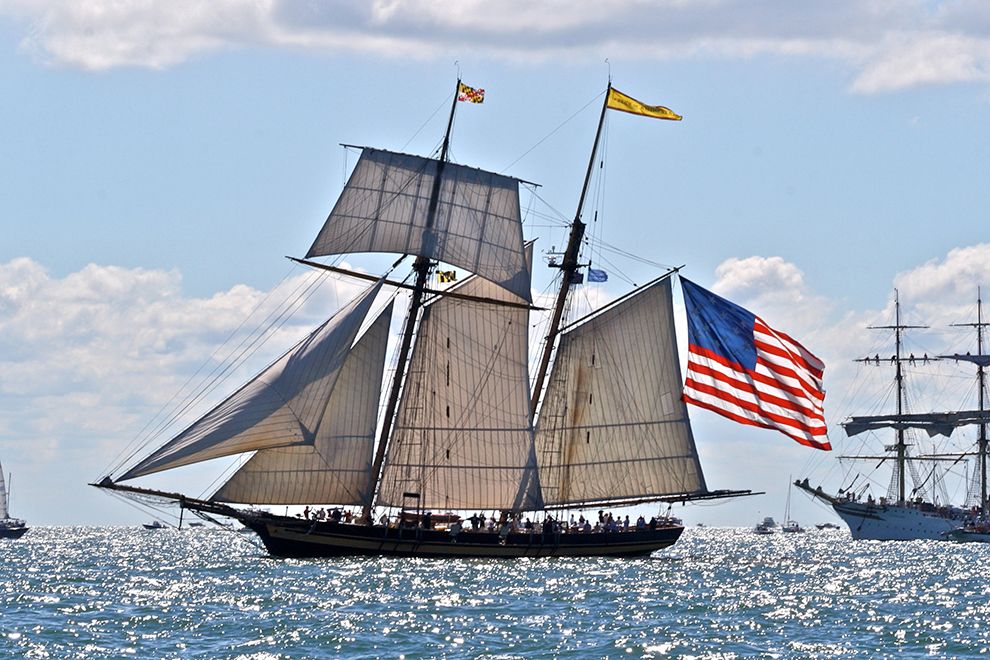
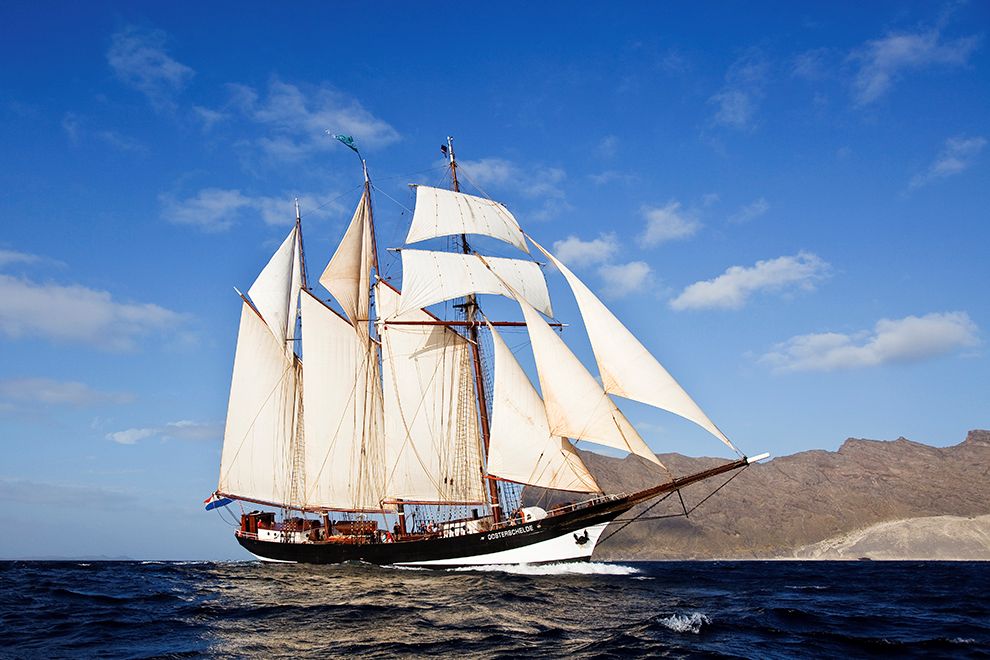
Now, this history is arriving in Richmond in a tangible way. Three tall ships will make their way to the James River for Richmond SailFest events — Oosterschelde, a historic three-masted topsail schooner from the Netherlands built in 1917; Pride of Baltimore II, a Baltimore Clipper launched in 1988; and Virginia, a schooner launched in 2004.
Seeing these ships in person offers a rare chance to experience their scale, craftsmanship, and presence that can’t be fully grasped from photos alone.
Celebrating SailFest
Richmond SailFest activities will take place at Dock Street Park and Intermediate Terminal along the James River, where visitors can experience the ships up close during a weekend of programming designed to be both educational and family-friendly.
The Virginia Museum of History & Culture has played a key role in shaping that experience. “We have been involved since the beginning. We helped establish a state commission to recognize the 250th anniversary. We’ve also been involved in convening the museum partners,” says Florer.
In addition to ship viewing opportunities, SailFest will feature live music, educational activities, and historical reenactors. “The focus of the whole experience is education and history,” Florer says. “We want people to associate fun with learning and education.” Many of the tall ships are part of that experience. “The crew will explain the process of sailing a ship as well as the history and challenges of sailing,” Florer adds.
There will be a mix of family-friendly, hands-on learning and festival-style energy along the riverfront, and the Virginia Museum of History & Culture is thrilled to be part of this once-in-a-lifetime celebration.
“We want people to think about the 250th in a meaningful way,” Florer says. “What we are hoping is that people will reflect not just on the past but how the ideals of the American Revolution have played out over history and how we are grappling with them today. Hopefully, reflecting upon the past will help us forge a more inspired future.”
In Richmond, that reflection won’t just happen in museums. It will unfold along the river, where history will be close enough to step aboard.
Check out the full schedule of events for SailFest here.