

I picture the scene from The Office vividly. A confident Michael Scott recklessly maneuvers a forklift he’s not authorized to use through the Dunder Mifflin warehouse. The warehouse foreman, Darryl, begs him to stop. Michael ignores him and slams the machine into a tall shelving unit of shipping supplies, knocking it over. That shelving unit hits another shelving unit, causing a domino effect, all collapsing into a giant mess of metal shelving, cardboard, and shipping wrap. Michael, looking at least a little guilty at his actions, turns to his shocked coworkers and says, “We’ll get somebody to clean that up.” Darryl responds in frustration, “We’re the ones that gotta clean that up!” Michael walks sheepishly away.
For a long time in parenting, you’re the only ones that gotta clean that up. You do what needs to be done because if you don’t, it’s not going to happen. An infant can’t change their own diaper or sweep the floor at the end of the night. You clean up as you go — if you can — and at the end of the day, you use what meager energy might remain to tidy up, because if you don’t do it, any mess will still be there in the morning. Some days you do more, and some days less, but no amount of magical thinking will make it just disappear.
As kids get a little bit older, you try and start to teach them to help out where they can. They “help” you fold the laundry. You sing little clean-up songs as you put away toys. You tell them that they can use the little step stool to put their dirty dishes next to the sink when they’re done with them so they can be washed later. And at the end of the day, you still finish up what you can of what’s left, because you’re the one who’s gotta clean that up.
The kids get a little bit older still, and they might even be making their own lunches for school. You might’ve gotten them to start doing their own laundry (which admittedly might sit unfolded in a laundry basket for several days, but that doesn’t really affect anyone but themselves, so who is it really bothering?). You might’ve finally gotten a dishwasher and told them that they can put their dirty dishes in the dishwasher when they’re done with them. And you tidy up at the end of the night and feel like, “Hey, maybe I’ve got this.” You might even occasionally have enough energy to stream a TV show without falling asleep in the middle of it.
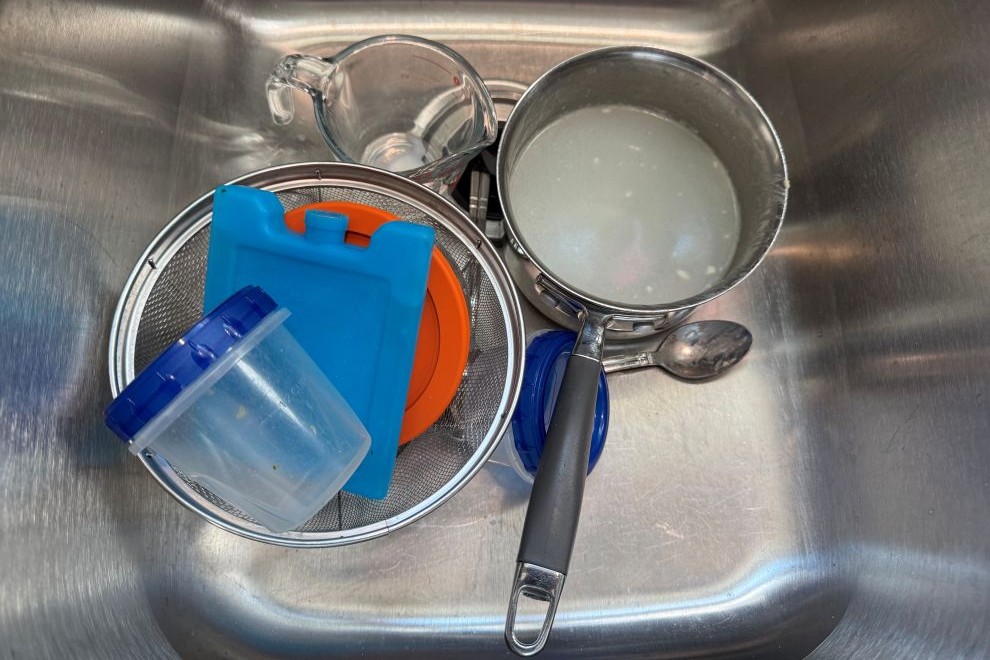
Before you know it, you’re parenting teenagers, and you simultaneously recognize just how amazingly independent your children are and how much they can do and also wonder if they’re ever just going to put their dishes directly in the dishwasher. Did I screw up? Should I just leave these messes where they are so my children experience that messes don’t just clean themselves up?
But I also need these things cleaned up for myself so I can have a pleasant time in my own house. It’s nice to be able to use a table free of clutter. Do I try to instill a lesson that I’m not sure is the right way to teach it, or do I want to spend 10 minutes of my own time and energy to improve my environment?
Then I remember that I wasn’t exactly the paragon of doing chores as a teen at my parents’ house. I certainly wasn’t a regular washer of dishes or even a doer of laundry. My kids are already better sharers of the family commons than I was at their ages. I didn’t really start to consciously clean up after myself until I was responsible for my own space — for a space where, if I didn’t clean it up, it didn’t happen. My kids are much smarter than me, so I can stop fretting — they’re going to figure it out.
So much of coming into my adulthood was realizing that “we’re the ones that gotta clean that up.” Whether it’s a mess of my own making or a problem left for me by an entitled man-child who shouldn’t have been driving the forklift in the first place, there’s no one coming to clean it up. At some point, I became one of the adults in the room; no one told me exactly when, but it happened, and I guess it’s on me.
But there is someone coming up after me. Not to clean up my messes, but for me to leave the space better than I found it (or at least try to) and to welcome them into. My oldest kid is 19, and my youngest isn’t too far behind at 16, and I want them to know and to practice that they don’t have to wait to feel like they are the “adults.” They don’t need to ask anyone’s permission to right a wrong in the world or fix something that needs fixing or clean up something that needs cleaning up.
Now, that doesn’t mean that they shouldn’t listen to the experiences of others who have been doing good work for a long time. It doesn’t mean they should try to reinvent systems and processes from scratch the way that the tech bros in Silicon Valley seem to “invent” buses and public transportation every few years. But it does mean that they shouldn’t be waiting for someone else to do it for them.
I want them to realize that “we’re the ones that gotta clean that up!” includes them, and it’s my job to help them realize that while they still have the miraculous energy of youth, they should put it to amazing use to improve whatever little corner of the world they choose to tidy up. As long as that corner also includes putting dishes in the dishwasher.