

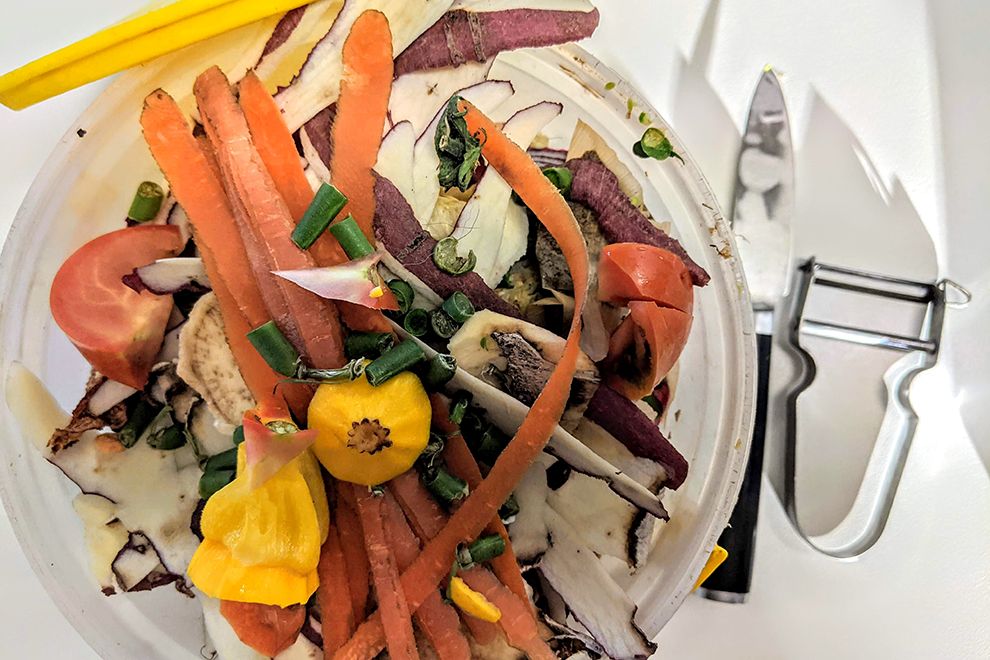
One aspect of parenting no one prepares you for is the amount of half-eaten, slightly smooshed, or altogether ignored food that lingers on your children’s plates after every meal. That — on top of the apple cores, carrot tops, onion skins, and various other kitchen scraps we create when cooking balanced, healthy meals — can result in an alarming amount of daily waste coming out of the kitchen.
Thankfully, you can turn these scraps into nutrient-rich soil for your garden through nature’s recycling system — composting. Transforming kitchen scraps and yard waste through decomposition into compost creates a rich soil amendment you can use in your garden. Best of all, unlike bagged commercial compost, the kind you make at home is free and generally more effective.
Beginning a compost system at home can seem overwhelming, but it doesn’t have to be. Here are some of the most common questions people ask about getting started with composting:
What can I put in the compost?
You can put almost all of your non-animal food scraps straight to the compost pile. Fruit and vegetable scraps, eggshells, tea bags, coffee grounds, non-glossy paper products, and grass clippings all make for great compost. You want to avoid meat, dairy, oils, breads, and animal waste in your compost. These elements attract pests and can make your compost smell bad.
Great compost is easy to achieve if you keep a healthy mix of green or wet ingredients and brown or dry elements. Things like food scraps are considered green, while dried leaves and shredded paper are brown. The rule of thumb is that you typically need twice as much brown material as green to create lovely, nutrient-rich compost. To keep things balanced, keep a pile of leaves near your compost and toss some in when adding food scraps to the bin.
What kind of compost system works best?
Keep it simple for your family. With busy schedules, this might not be the season for a composter that needs to be turned or mixed every few weeks. An easy way to compost is using an open bin. You can create one with wooden pallets or a column of wire somewhere out of the way in your yard. Open piles generally break down scraps after 9–12 months. With an open bin, always add brown materials like shredded paper on top of green additions to deter any pests or critters.
If you’re worried about pests accessing your pile, tumbling composters, enclosed compost bins, or even slightly altered trash bins can create a closed system for your materials to break down. These do require some turning but tend to be faster at breaking down materials.
If you happen to be adding a new garden bed this year, consider trench composting. For this method, you dig a trench about a foot deep and bury your kitchen scraps, covering them with garden soil. Your local garden worms can get right to work breaking down your scraps and feeding the plants above. This can also be done alongside your garden rows.
How do I know if I’m doing it right?
Balanced compost with a good mix of green and brown ingredients shouldn’t smell. If it does, that’s a hint that something’s wrong. It’s likely too wet or needs better airflow. Try mixing up the pile and adding additional brown ingredients, such as torn egg cartons, to introduce oxygen and absorb moisture.
If your pile is taking a while to break down — for example, if you can still see the pineapple top you added six months ago — try adding additional green materials like grass clippings or coffee grounds. If you need more grounds than cups of joe you drink in the morning, ask your local coffee shop if they have grounds they’re willing to give you. It’s a great addition to your compost or even to add straight into the garden.
When is it ready?
Compost is ready to use when it looks crumbly, has a rich, dark color, and you can no longer see scraps of food or plant material in it. You might find a few twigs or eggshells which take longer to break down, but it should resemble commercial garden soil. Finished compost should smell earthy but not sharp or rotten. If it smells bad, give it a little more time to finish decomposing.
Once your compost is done, you will have successfully taken that kitchen trash and transformed it into treasure — rich soil to add to your garden.